SZLINE Dermatology & Aesthetic Surgery in Busan, South Korea
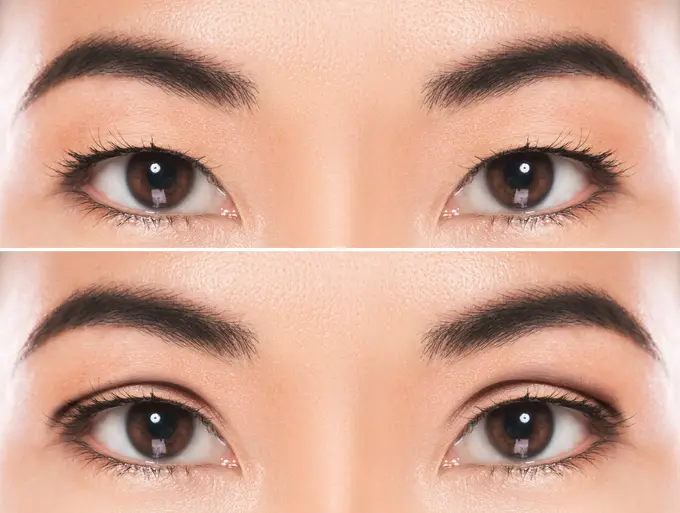
Non-incisional double eyelid surgery in Korea is best for foreigners with thin eyelid skin and minimal fat who want faster recovery. Incisional surgery is recommended for thicker or puffy eyelids and offers longer-lasting results. The safest choice depends on anatomy, not nationality.
For foreigners considering double eyelid surgery in Korea, non-incisional (suture) methods are best for patients with thin eyelid skin and minimal fat, while incisional methods are more suitable for thicker skin, excess fat, drooping, or when long-term permanence is desired.
The correct choice depends on eyelid anatomy—not nationality. Korean surgeons are known for tailoring the surgical method to individual eye structure, skin thickness, orbital fat volume, and long-term aesthetic goals.
This guide explains the medical differences, candidacy criteria, risks, recovery timelines, and how international patients can make a safe, evidence-based decision.
Table of Contents
Understanding Double Eyelid Surgery
Double eyelid surgery (Asian blepharoplasty) creates a supratarsal crease in the upper eyelid. The crease forms when the levator muscle connects to the skin, allowing the eyelid fold to appear naturally when the eyes open.
There are two primary techniques:
- Non-incisional (buried suture technique)
- Incisional (full or partial incision technique)
Both methods are widely performed in South Korea, one of the most experienced global centers for eyelid surgery.
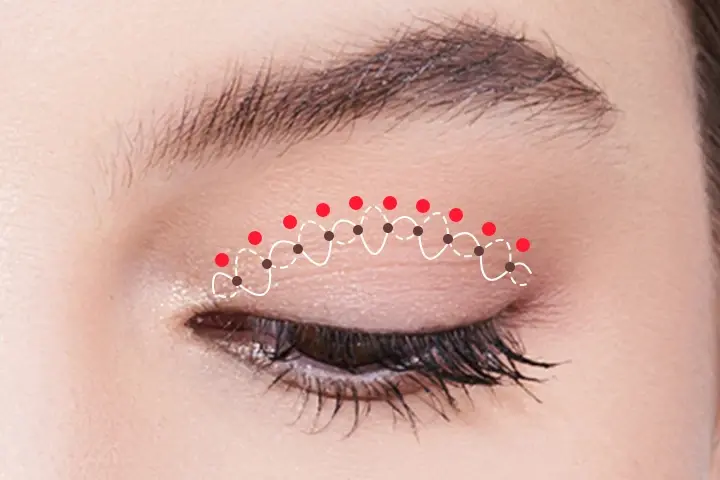
Non-Incisional Double Eyelid (Buried Suture Method)
Definition
A minimally invasive technique where small sutures are passed through tiny punctures in the eyelid to create a fold without a full skin incision.
How It Works (Mechanism)
- Surgical thread connects the dermis to the levator aponeurosis.
- Scar adhesion forms along the suture line.
- The fold becomes visible when the eye opens.
No skin or fat is removed.
Ideal Candidates
This method is appropriate for foreigners who have:
- Thin eyelid skin
- Minimal orbital fat
- No significant sagging
- Good skin elasticity
- Desire for faster recovery
It is often recommended for younger patients.
Advantages
- Shorter procedure time (20–30 minutes)
- Minimal swelling
- Faster recovery (7–14 days)
- No visible external incision line
- Reversible in early stages
Limitations
- Not suitable for thick or heavy eyelids
- Higher chance of fold loosening over time
- Limited ability to remove fat or correct ptosis
Clinical observation shows that suture loosening rates vary depending on skin thickness and lifestyle factors.
Incisional Double Eyelid Surgery
Definition
A surgical technique involving a precise incision along the designed crease, allowing removal of excess skin, fat, and sometimes muscle.
How It Works (Mechanism)
- Skin incision is made along the crease line.
- Excess tissue is removed or repositioned.
- The crease is anchored with sutures.
- Controlled scar formation stabilizes the fold permanently.
Ideal Candidates
Foreigners with:
- Thick eyelid skin
- Excess fat
- Puffy eyelids
- Drooping skin (mild dermatochalasis)
- Need for ptosis correction
- Desire for a defined, long-lasting crease
Advantages
- More permanent result
- Precise crease design
- Can remove fat and skin
- Allows correction of asymmetry
- Suitable for complex anatomy
Limitations
- Longer recovery (2–4 weeks swelling)
- Small scar (usually hidden in crease)
- Slightly longer procedure time (60–90 minutes)
When performed by experienced surgeons, visible scarring is uncommon due to natural crease placement.
Key Differences: Side-by-Side Comparison
| Feature | Non-Incisional | Incisional |
|---|---|---|
| Incision | No full incision | Full skin incision |
| Fat Removal | No | Yes |
| Best For | Thin eyelids | Thick or puffy eyelids |
| Longevity | Moderate | Long-term/permanent |
| Recovery | 1–2 weeks | 2–4 weeks |
| Revision Rate | Slightly higher | Lower |
Why Foreigners Require Individualized Assessment
Eyelid anatomy differs among populations. In clinical practice, variations include:
- Orbital fat distribution
- Brow position
- Skin thickness
- Presence of epicanthal fold
- Levator muscle strength
For example:
- Southeast Asian patients may have thicker skin requiring incisional technique.
- Caucasian patients seeking crease refinement may benefit from minimal incision.
- Middle Eastern patients often require fat contouring for balance.
Nationality alone does not determine surgical method.
Common Concerns Among International Patients
1. Will the Results Look Natural?
Natural results depend on:
- Crease height selection
- Facial proportion analysis
- Avoiding over-aggressive fold creation
Experienced surgeons measure:
- Brow-to-lash distance
- Tarsal plate height
- Eye opening symmetry
Overly high creases can appear unnatural, especially in non-Asian patients.
2. How Long Should I Stay in Korea?
- Non-incisional: 5–7 days recommended.
- Incisional: 7–10 days for suture removal and monitoring.
Swelling improves significantly after 2 weeks but subtle refinement continues for 3–6 months.
3. Is One Method Safer?
Both techniques are considered safe when performed by board-certified plastic surgeons.
Complication rates are low but may include:
- Asymmetry
- Fold loosening
- Infection (rare)
- Visible scarring (rare)
- Overcorrection
Risk is minimized by:
- Accurate preoperative design
- Conservative tissue removal
- Proper postoperative care
Real-World Clinical Scenario
Case Example:
A 26-year-old international patient with mild eyelid puffiness initially requested non-incisional surgery for quicker recovery.
Upon examination:
- Moderate orbital fat was present.
- Skin thickness was above average.
- Early asymmetry noted.
Recommendation: Partial incisional method.
Outcome: Stable crease at 12-month follow-up with symmetrical results.
This illustrates why anatomical assessment is more important than patient preference alone.
Recovery Timeline Explained
Non-Incisional
- Day 1–3: Mild swelling
- Day 7: Social recovery
- 1 month: Stable fold appearance
Incisional
- Day 1–5: Swelling and bruising
- Day 7: Suture removal
- 2–4 weeks: Social recovery
- 3–6 months: Final refinement
Cold compresses and head elevation reduce swelling.
Long-Term Results
Non-incisional folds may loosen over years depending on:
- Skin thickness
- Aging
- Mechanical stress (eye rubbing)
Incisional folds are structurally more stable due to scar adhesion and tissue removal.
Neither method permanently prevents aging-related skin changes.
When Revision Surgery Is Needed
Revision rates are slightly higher with suture methods due to loosening.
Common reasons for revision:
- Fold asymmetry
- Fold disappearance
- Excessive height
- Scar irregularity (rare)
Revisions are typically more complex and should be performed by experienced surgeons.
Evidence & Surgical Standards (2026)
Modern Korean surgical standards emphasize:
- Conservative crease height
- Micro-incision techniques
- Minimal cautery for reduced scarring
- Layered closure technique
Peer-reviewed plastic surgery literature supports individualized technique selection based on eyelid anatomy rather than fixed aesthetic templates.
How to Choose the Right Method
Step 1: Professional Consultation
Choose a clinic that:
- Performs detailed eyelid measurement
- Provides photographic simulation
- Explains risks clearly
- Avoids guaranteeing unrealistic outcomes
Step 2: Evaluate Your Priorities
If you prioritize:
- Faster recovery → Non-incisional
- Long-term stability → Incisional
- Fat removal → Incisional
- Minimal downtime → Non-incisional
Step 3: Understand That “Minimal” Is Not Always Better
Some patients choose non-incisional due to fear of scars, even when anatomy indicates incisional would provide better long-term results.
Scars from incisional surgery are typically hidden in the crease and fade significantly over time.
Final Expert Recommendation
For foreigners considering double eyelid surgery in Korea:
- Choose non-incisional if your eyelids are thin with minimal fat and you want faster recovery.
- Choose incisional if you have thick skin, puffiness, asymmetry, or desire long-term stability.
The best method is the one matched precisely to your anatomy—not the most popular or minimally invasive option.
A careful preoperative evaluation by an experienced plastic surgeon remains the most important factor in achieving safe, natural, and lasting results.
FAQs
What is the main difference between non-incisional vs incisional double eyelid for foreigners in Korea?
The main difference is tissue removal. Non-incisional (suture) surgery creates a crease without cutting skin, while incisional surgery removes excess skin or fat for more permanent results. The correct option depends on eyelid anatomy.
Which option has faster recovery for double eyelid surgery in Korea?
Non-incisional double eyelid surgery in Korea generally has faster recovery (about 1–2 weeks). Incisional surgery may require 2–4 weeks for swelling to significantly improve.
Is incisional vs suture eyelid surgery more permanent?
Incisional vs suture eyelid surgery differs in longevity. Incisional techniques are typically more stable long-term because excess tissue is removed and scar adhesion secures the crease.
How much does double eyelid surgery Korea cost in 2026?
Double eyelid surgery Korea cost in 2026 varies by technique and surgeon experience, typically ranging from $1,000 to $3,500 for foreigners, depending on complexity and whether fat removal is required.
Is Korean plastic surgery for foreigners safe?
Korean plastic surgery for foreigners is considered safe when performed by board-certified surgeons with proper preoperative evaluation. Choosing the appropriate method reduces complication and revision rates.

SZLINE Dermatology & Aesthetic Surgery in Busan, Korea
Aesthetic Surgery & Cosmetic Expertise in Busan, Korea
SZLINE Dermatology & Aesthetic Surgery is dedicated to delivering medically supervised dermatologic and aesthetic treatments grounded in clinical precision and patient safety. Our team of board-certified dermatologists and experienced plastic surgeons brings together decades of combined expertise in dermatology, aesthetic medicine, and cosmetic surgery.
Operating under structured medical protocols, SZLINE integrates evidence-based practice with individualized treatment planning. Every procedure is carefully designed according to each patient’s medical history, anatomical characteristics, and long-term aesthetic goals — ensuring balanced, natural-looking outcomes rather than excessive correction.
Our clinic is recognized by both local and international patients for transparent consultation, ethical treatment recommendations, and consistent clinical standards.
Areas of Specialization
- Anti-aging and skin rejuvenation treatments
- Advanced laser and energy-based dermatologic procedures
- Cosmetic and reconstructive plastic surgery
- Regenerative and skin restoration therapies
SZLINE combines advanced medical technologies with clinically proven techniques to enhance precision, minimize downtime, and optimize safety. All procedures are performed in a controlled medical environment with thorough pre-treatment assessment and structured post-procedure follow-up care.
A significant portion of our patients visit through referrals and returning clients, reflecting sustained trust and satisfaction with long-term results. Our commitment to responsible aesthetic medicine, realistic outcome guidance, and continuous professional development positions SZLINE as a reliable destination for dermatology and aesthetic surgery in Korea.
We prioritize patient education, informed consent, and individualized care — ensuring that every treatment decision is medically appropriate, transparent, and aligned with each patient’s well-being.
Visit SZLINE Dermatology & Aesthetic Surgery: https://BusanSkinClinic.net/