Korea Med Tour in South Korea
The hidden costs of dental implants in Korea often include bone grafting, sinus lifts, 3D CT scans, temporary crowns, sedation, and travel-related expenses. While base implant prices are competitive, total costs depend on bone condition and treatment complexity. Always request a detailed treatment plan before traveling.
Dental implants in Korea are often more affordable than in the U.S., Canada, or Australia—but the advertised base price may not include essential procedures such as bone grafting, sinus lifts, CT scans, temporary restorations, anesthesia upgrades, or long-term maintenance. For foreign patients, additional expenses can include multiple visits, extended stays, translation services, and post-treatment follow-up abroad. Understanding these variables upfront prevents unexpected financial strain and treatment delays.
Korea is internationally recognized for advanced implant dentistry, digital surgical planning, and competitive pricing. However, as with any medical procedure abroad, the total investment depends on clinical complexity—not just the implant fixture itself. This guide explains the commonly overlooked costs, why they occur, and how foreign patients can plan realistically and safely.
Table of Contents
Why Korea Is Popular for Dental Implants
South Korea is known for:
- High implant case volume per capita
- Advanced digital guided surgery
- In-house dental laboratories
- Globally recognized implant manufacturers
- Strict sterilization and infection control standards
Clinics frequently use systems from companies such as Osstem Implant and Dentium, which are internationally distributed and FDA-cleared in multiple countries.
While base implant pricing may appear significantly lower than Western markets, foreign patients should evaluate the complete treatment pathway, not just the fixture cost.
What Is Usually Included in the Advertised Implant Price?
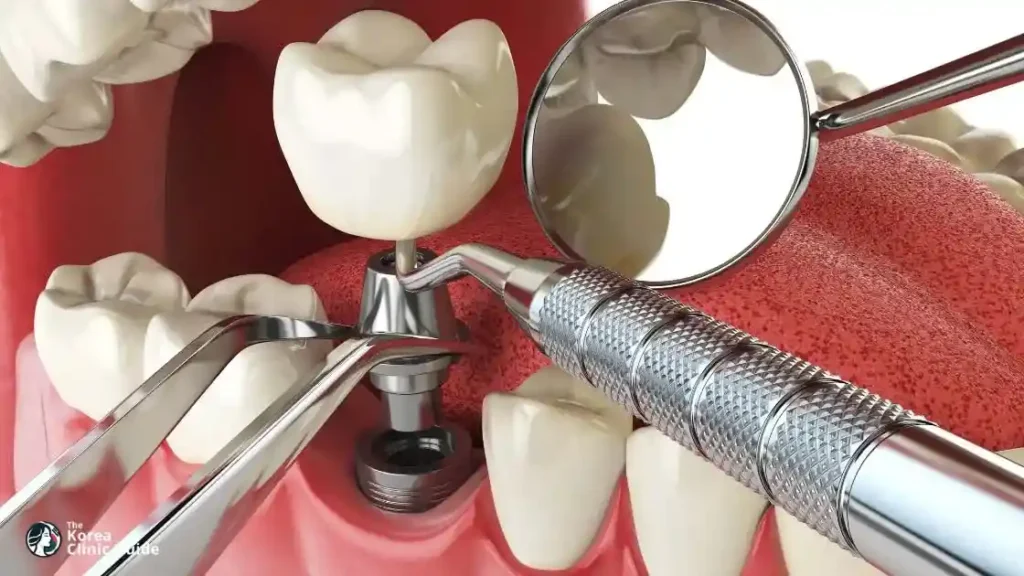
In many Korean dental clinics, the quoted implant price typically includes:
- Implant fixture (titanium post)
- Abutment (connector)
- Crown (ceramic or zirconia)
- Standard local anesthesia
However, this “package price” often excludes pre-surgical preparation and complex anatomical considerations.
The Most Common Hidden Costs of Dental Implants in Korea
1. Diagnostic Imaging (3D CT Scan)
A cone-beam computed tomography (CBCT) scan is often required for safe implant placement.
Why it matters:
3D imaging evaluates bone density, nerve position, and sinus anatomy.
Typical additional cost:
Not always included in promotional pricing.
Clinically, skipping advanced imaging increases surgical risk. Reputable clinics include or recommend CBCT regardless of marketing pricing.
2. Bone Grafting
If bone volume is insufficient, grafting becomes necessary.
Why Bone Grafting Is Needed
When a tooth has been missing for years, the jawbone shrinks (resorption). Without adequate bone height and width, the implant cannot integrate properly.
Additional Cost Factors
- Type of graft material (synthetic, xenograft, autograft)
- Volume required
- Membrane placement
- Healing period extension
Foreign patients frequently underestimate this cost because it is impossible to confirm bone condition without imaging.
3. Sinus Lift Procedure
For upper molars, sinus proximity may limit implant length.
A sinus lift elevates the sinus membrane to allow bone grafting.
This procedure is almost always billed separately.
Healing may require:
- 4–6 months before implant placement
- An additional visit
This significantly affects travel planning.
4. Temporary Teeth and Provisional Restorations
Immediate temporary crowns are sometimes marketed as included. However:
- Complex cases may require laboratory-fabricated provisionals
- Long-span bridges may incur separate fabrication costs
Foreign patients often request “teeth in a day,” but not all cases qualify for immediate loading.
5. Sedation or IV Anesthesia
Standard implant surgery uses local anesthesia.
If a patient requests:
- IV sedation
- Conscious sedation
- An anesthesiologist
This may be billed separately.
For anxious patients or multiple implant placements, sedation increases overall cost.
6. Digital Guided Surgery Fees
Korea is advanced in computer-guided implant placement.
However, surgical guide fabrication and digital planning software may be charged separately, depending on clinic structure.
Guided surgery improves:
- Precision
- Reduced incision size
- Faster recovery
- Lower complication risk
But it is not always included in entry-level implant pricing.
7. Material Upgrades (Zirconia vs Standard Crown)
Base pricing often includes standard porcelain-fused-to-metal (PFM) or monolithic zirconia crowns.
Premium aesthetic zirconia or multilayer customized crowns may cost more.
For anterior (front) teeth, aesthetic upgrades are common.
8. Extended Stay & Travel Costs
Foreign patients must factor in:
- Accommodation
- Additional days for healing checks
- Transportation
- Interpreter services (if not included)
If bone grafting or sinus lift delays final crown placement, a second trip may be required.
9. Post-Treatment Maintenance Abroad
Implants require long-term care.
Maintenance may include:
- Annual professional cleaning
- X-ray monitoring
- Replacement of crowns (10–15 years)
- Management of peri-implantitis
Not all international dentists are familiar with Korean implant systems, which may complicate future care.
Before treatment, ask:
- Is the implant brand globally supported?
- Can parts be sourced internationally?
10. Complication Management
While complication rates are low when performed by experienced clinicians, risks include:
- Implant failure (2–5% reported globally)
- Infection
- Nerve irritation
- Crown fracture
Some clinics include warranty policies; others charge for corrective procedures.
Clarify:
- What does the warranty cover?
- Does it apply if you return home?
- Are revisions free within a time window?
Realistic Total Cost Breakdown Example

Single Implant Case (Moderate Complexity)
| Component | Potential Extra Cost |
|---|---|
| CBCT Scan | Separate fee |
| Bone Graft | Additional |
| Surgical Guide | Additional |
| Temporary Crown | Additional |
| Premium Crown Upgrade | Additional |
| Follow-Up Visit | Travel cost |
The “advertised implant” may represent only 60–75% of the total final cost in moderate cases.
Clinical Insight: Why Price Transparency Varies
From professional experience in implant dentistry:
- Simple, straightforward cases can truly match advertised pricing.
- Moderate bone loss cases rarely do.
- Severe bone deficiency significantly increases cost and time.
Ethical clinics provide a written treatment plan after imaging, not a fixed price before examination.
How to Avoid Unexpected Costs
Step 1: Request a Detailed Treatment Plan
Ask for:
- Implant brand
- Need for bone graft?
- Need for sinus lift?
- Total number of visits
- Estimated healing timeline
Step 2: Confirm What Is Included
Clarify whether the quote includes:
- CT scan
- Abutment
- Crown
- Temporary restoration
- Follow-up check
Step 3: Verify Implant Brand
Globally recognized systems reduce long-term risk.
Step 4: Ask About Warranty
Understand:
- Duration
- Geographic limitations
- What voids warranty
Suggested Visual Aids for Patient Education
- Flowchart: Implant process timeline
- Diagram: Bone graft vs no graft case
- Table: Included vs excluded fees
- Map: Travel timeline planning
These tools improve transparency and informed consent.
Are Dental Implants in Korea Still Cost-Effective?
Yes—when properly planned.
Even with additional procedures, total cost often remains competitive compared to North America or Australia. However, cost savings vary by case complexity.
Korea’s strengths include:
- High procedural volume
- Digitally integrated workflows
- Advanced implant manufacturers
- Skilled prosthodontic laboratories
But foreign patients must evaluate full treatment cost, not promotional figures.
Final Summary
The hidden costs of dental implants in Korea often include bone grafting, sinus lifts, CT scans, temporary crowns, anesthesia upgrades, and travel-related expenses. While base implant prices are competitive, total treatment cost depends on anatomical complexity and follow-up needs. Requesting a detailed plan after imaging prevents unexpected charges.
Dental implants are a long-term investment in oral health. Foreign patients who prioritize clinical transparency over promotional pricing experience the best outcomes—both medically and financially.

FAQs
What are the hidden costs of dental implants in Korea?
The hidden costs of dental implants in Korea may include 3D CT scans, bone graft cost Korea procedures, sinus lifts, temporary crowns, sedation, and follow-up visits. These are often not included in the base dental implant cost in Korea.
Is the advertised dental implant cost in Korea all-inclusive?
No. The advertised dental implant cost in Korea typically covers the implant fixture and crown only. Additional procedures such as bone graft cost Korea services or guided surgery may increase the total price.
How much does bone graft cost in Korea for dental implants?
Bone graft cost Korea varies depending on the material used and the volume required. Many foreign patients undergoing dental tourism Korea implants need grafting if bone loss has occurred.
Are travel expenses part of the hidden costs of dental implants in Korea?
Yes. Dental tourism Korea implants require budgeting for flights, accommodation, extended healing time, and possible second visits, which are separate from the clinical dental implant cost in Korea.
How can foreign patients avoid unexpected dental implant costs in Korea?
To avoid hidden costs of dental implants in Korea, request a full written treatment plan after imaging. Confirm whether bone graft cost Korea procedures, CT scans, and temporary crowns are included before booking travel.

Korea Med Tour – Trusted Blog for Medical Tourism in Korea
Your Trusted Guide to Medical Tourism in Korea
Korea Med Tour is a leading medical tourism blog dedicated to providing accurate, up-to-date, and trustworthy information for international patients seeking healthcare services in South Korea. Our mission is to help travelers make informed decisions about their medical care while exploring the benefits of Korea’s world-class healthcare system.
With a focus on transparency, reliability, and expert-backed content, Korea Med Tour covers a wide range of medical fields including dermatology, plastic surgery, dental care, health checkups, and wellness services. We aim to empower readers with clear guidance on treatment options, clinic selection, cost expectations, and travel logistics.
What We Offer
- Clinic & Hospital Reviews – In-depth articles and reviews of Korea’s top medical facilities.
- Procedure Guides – Step-by-step explanations of popular medical treatments and aesthetic procedures.
- Patient Stories & Testimonials – Real experiences from international patients visiting Korea.
- Medical Travel Tips – Advice on planning your trip, accommodations, language support, and insurance.
- Health & Wellness Insights – Information on preventive care, checkups, and holistic treatments.
Why Choose Korea Med Tour
- Trusted Information – All content is based on verified sources, expert insights, and up-to-date research.
- Patient-Centered Guidance – We prioritize clarity, safety, and realistic expectations for all readers.
- International-Friendly Resources – Content is tailored for global patients, with practical tips for navigating Korea’s healthcare system.
Explore Korea Med Tour: https://KoreaMedTour.com
Your guide to safe, informed, and seamless medical travel in Korea.