

What is fertility treatment and IVF in South Korea? Fertility treatment and IVF in South Korea include advanced procedures such as IVF, ICSI, and genetic testing, delivered through specialized clinics. These treatments offer high success rates, personalized care, and cost-effective options, making Korea a leading destination for patients seeking reliable fertility solutions.
KoreaMedTour.com
Quick Summary
Fertility treatment and IVF in South Korea are highly advanced, technology-driven, and relatively cost-effective compared to Western countries—often 30–50% more affordable while maintaining high safety standards, precision reproductive medicine, and expert-led care. Treatments focus on personalized protocols, higher success rates, and efficient timelines for achieving pregnancy.
Key Insights:
- IVF cycle Korea: ~$4,000–$10,000
- IUI (intrauterine insemination): ~$500–$1,500
- ICSI (advanced fertilization): ~$1,000–$2,500 additional
- Egg freezing Korea: ~$2,000–$5,000
- Genetic testing (PGT): ~$2,000–$5,000
- IVF success rate Korea: ~40–50% (<35), ~30–40% (35–39)
- Results timeline: ~4–6 weeks per IVF cycle
- Multiple cycles may be required depending on age and condition
- Most treatments involve structured, step-by-step fertility protocols
Why It’s More Affordable:
- High patient volume in specialized fertility clinics
- Competitive reproductive medicine market
- Efficient lab systems and streamlined IVF cycles
- Government-regulated healthcare pricing structure
- Advanced technology widely adopted across clinics
Clinical Advantages:
- Personalized IVF protocols based on hormone and genetic testing
- Advanced technologies (ICSI, PGT, embryo freezing)
- High-quality embryology labs with strict standards
- Integrated care: diagnosis → stimulation → embryo transfer → follow-up
Important Considerations:
- Success rates depend heavily on age and reproductive health
- Not all patients require or qualify for advanced procedures like PGT
- Emotional and physical stress during IVF cycles should be considered
- International patients may need coordination for follow-up care
Table of Contents

What Is Fertility Treatment and IVF?
Fertility treatment refers to medical interventions designed to help individuals or couples conceive. These range from medication-based therapies to advanced assisted reproductive technologies (ART).
In vitro fertilization (IVF) is a process where:
- Eggs are retrieved from the ovaries
- Fertilized with sperm in a laboratory
- Cultured into embryos
- Transferred into the uterus
IVF is typically recommended when other treatments have not been successful or when there are specific medical conditions affecting fertility.
Why South Korea Is a Leading Destination for IVF
1. Advanced Reproductive Technology
Korean fertility clinics use:
- Time-lapse embryo monitoring systems
- Preimplantation genetic testing (PGT)
- Cryopreservation (egg and embryo freezing)
- AI-assisted embryo selection
These technologies improve embryo quality assessment and implantation success.
2. High Success Rates (Evidence-Based Outcomes)
Success rates vary depending on age and health, but Korean clinics report competitive outcomes:
- Women under 35: ~40–50% per IVF cycle
- Ages 35–39: ~30–40%
- Over 40: ~10–20%
These figures align with global benchmarks reported by organizations such as Centers for Disease Control and Prevention and European Society of Human Reproduction and Embryology.
3. Cost-Effective Treatment
Compared to countries like the United States, IVF in Korea is significantly more affordable:
- IVF cycle: $4,000 – $10,000
- ICSI add-on: $1,000 – $2,500
- Egg freezing: $2,000 – $5,000
Lower costs are driven by:
- High patient volume
- Efficient clinic operations
- Competitive healthcare market
4. Structured, Patient-Centered Care
Clinics provide:
- Dedicated fertility coordinators
- Multilingual support for international patients
- Personalized treatment plans
Clinical insight: Patients often complete multiple diagnostic and treatment steps within a shorter timeframe compared to Western systems.
Causes of Infertility (Why Treatment Is Needed)
Understanding the cause is essential for selecting the right treatment.
Common Causes in Women:
- Ovulatory disorders (e.g., PCOS)
- Blocked fallopian tubes
- Endometriosis
- Age-related decline in ovarian reserve
Common Causes in Men:
- Low sperm count
- Poor sperm motility
- Abnormal sperm morphology
Unexplained Infertility:
In some cases, no clear cause is identified, but treatment is still possible.
Step-by-Step IVF Process in Korea
1. Initial Consultation and Testing
- Hormone tests (AMH, FSH)
- Ultrasound imaging
- Semen analysis
2. Ovarian Stimulation
Hormonal injections stimulate the ovaries to produce multiple eggs.
3. Egg Retrieval
A minimally invasive procedure performed under sedation.
4. Fertilization
- Conventional IVF or
- Intracytoplasmic sperm injection (ICSI)
5. Embryo Culture
Embryos are monitored for 3–5 days in a lab.
6. Embryo Transfer
Selected embryos are transferred into the uterus.
7. Pregnancy Test
Conducted approximately 10–14 days later.
Advanced IVF Techniques Available in Korea
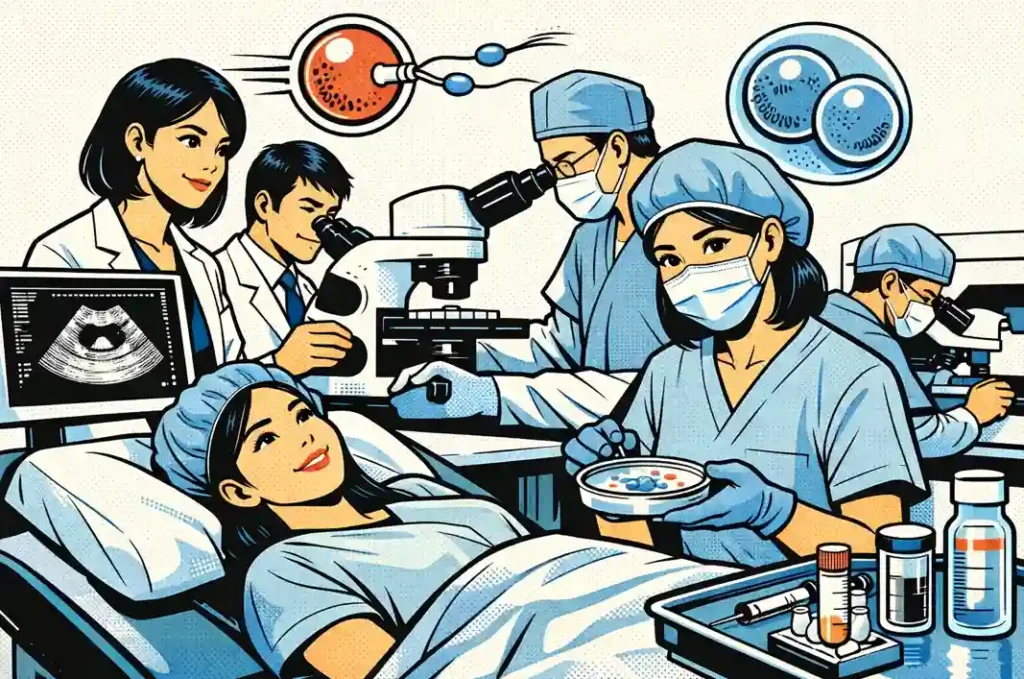
Intracytoplasmic Sperm Injection (ICSI)
Used for male infertility—injects a single sperm directly into an egg.
Preimplantation Genetic Testing (PGT)
Screens embryos for genetic abnormalities before transfer.
Clinical benefit:
- Reduces miscarriage risk
- Improves implantation rates
Egg Freezing (Fertility Preservation)
Recommended for:
- Women delaying pregnancy
- Cancer patients before treatment
Frozen Embryo Transfer (FET)
Embryos are frozen and transferred later, improving flexibility and outcomes.
Risks and Considerations
While IVF is generally safe, patients should be aware of:
- Ovarian Hyperstimulation Syndrome (OHSS)
- Multiple pregnancy (twins or more)
- Emotional and psychological stress
- Variable success rates depending on age
Important: Not every cycle results in pregnancy. Multiple cycles may be required.
Real-World Clinical Scenario
A 36-year-old international patient with unexplained infertility undergoes IVF in Korea:
- Completes diagnostics within 1 week
- Begins stimulation immediately
- Uses PGT to select healthy embryos
- Achieves pregnancy after 2 cycles
This reflects how efficient workflows and precision techniques can improve outcomes.
Legal and Ethical Considerations
South Korea has clear regulations regarding:
- Embryo handling
- Genetic testing
- Donor programs
Some restrictions may apply (e.g., donor egg/sperm regulations), so patients should confirm eligibility.
Cost Breakdown (2026 Estimate)
| Treatment Type | Estimated Cost |
|---|---|
| IVF Cycle | $4,000 – $10,000 |
| IUI | $500 – $1,500 |
| Egg Freezing | $2,000 – $5,000 |
| PGT Testing | $2,000 – $5,000 |
| Medication | $1,000 – $3,000 |
FAQ Section

What are the main fertility treatment and IVF options in South Korea?
Fertility treatment and IVF in South Korea include ovulation induction, IUI, IVF, ICSI, and genetic testing. Fertility clinics South Korea provide personalized care plans, improving IVF Korea success rate for both local and international patients.
What is the IVF Korea success rate?
The IVF Korea success rate varies by age and health but is generally competitive globally, with many fertility clinics South Korea reporting strong outcomes due to advanced technology and experienced specialists.
How much does fertility treatment and IVF in South Korea cost?
The cost of IVF in Korea typically ranges from $4,000 to $10,000 per cycle. Fertility treatment and IVF in South Korea are more affordable than in many Western countries while maintaining high-quality care.
Are fertility clinics South Korea suitable for international patients?
Yes, fertility clinics South Korea are well-equipped for international patients, offering multilingual support, streamlined processes, and advanced fertility treatment and IVF in South Korea tailored to global patients.
Why choose fertility treatment and IVF in South Korea over other countries?
Fertility treatment and IVF in South Korea stand out due to high IVF Korea success rate, advanced reproductive technologies, and competitive cost of IVF in Korea, making it an ideal choice for effective and accessible fertility care.
Key Takeaways
- South Korea offers advanced, affordable, and highly structured fertility treatment.
- IVF success rates are competitive with global standards.
- Technologies like ICSI, PGT, and AI embryo selection improve outcomes.
- Costs are significantly lower than in Western countries.
- Personalized care and efficient systems enhance patient experience.
Final Expert Insight
From a clinical perspective, the strength of fertility treatment and IVF in South Korea lies in precision, efficiency, and accessibility. The combination of advanced laboratory techniques, experienced reproductive specialists, and streamlined patient care creates an environment where both success rates and patient satisfaction are optimized.
For individuals or couples exploring fertility solutions in 2026, South Korea represents a data-driven, patient-focused, and globally competitive option—particularly for those seeking high-quality IVF treatment without the financial burden seen in many Western healthcare systems.

Korea Med Tour – Trusted Blog for Medical Tourism in Korea
Korea Med Tour is a trusted medical tourism content platform providing accurate, research-based healthcare information for international patients considering treatment in Korea.
Our editorial team specializes in global patient guidance, treatment insights, clinic selection, and medical travel planning. All content is developed using verified medical sources and structured editorial review processes to ensure clarity, safety, and reliability.
We are committed to helping international patients make informed and confident medical travel decisions when choosing Korea as their healthcare destination.