

What is robotic surgery in Korean hospitals? Robotic surgery in Korean hospitals is a minimally invasive surgical technique using advanced robotic systems to enhance precision, reduce complications, and speed recovery. In 2026, Korea is a global leader due to expert surgeons, cutting-edge technology, and high success rates across complex procedures.
KoreaMedTour.com
Quick Summary
Robotic surgery in Korean hospitals (2026) is highly advanced, minimally invasive, and globally recognized for precision and safety. While costs are moderate to high, outcomes are excellent due to expert surgeons, high-volume centers, and cutting-edge robotic systems. Treatments focus on faster recovery, reduced complications, and superior functional outcomes.
Key Insights:
- Robotic surgery Korea hospitals: ~$5,000–$15,000 depending on procedure
- Robotic prostate surgery Korea: ~$10,000–$15,000
- Robotic thyroid surgery Korea: ~$6,000–$12,000
- Robotic hysterectomy Korea: ~$7,000–$14,000
- Hospital stay: 1–3 days (minimally invasive), 3–5 days (complex cases)
- Success rate: ~90–98% depending on procedure and condition
- Recovery time: ~2–4 weeks (basic), 1–3 months (full recovery)
- Minimally invasive robotic surgery: Standard in major hospitals
- High-definition 3D precision: Enhances nerve-sparing and delicate procedures
- Return to daily activities: Often within 2–3 weeks
Why It’s Advanced & Efficient:
- High surgical volume in specialized robotic centers
- Extensive surgeon experience with thousands of cases
- Integration of AI-assisted imaging and surgical planning
- Minimally invasive techniques reducing hospital stays
- Well-developed medical tourism infrastructure
- Government-regulated healthcare ensuring safety and quality
Clinical Advantages:
- Enhanced precision with tremor-free robotic instruments
- Smaller incisions leading to reduced pain and scarring
- Lower risk of infection and surgical complications
- Improved functional outcomes (e.g., nerve preservation in cancer surgery)
- Faster rehabilitation and earlier return to normal life
- Superior visualization with magnified 3D imaging systems
Table of Contents

What Is Robotic Surgery?
Robotic surgery is a form of minimally invasive surgery (MIS) where surgeons operate using robotic arms controlled via a console. Despite the term “robotic,” the system does not act autonomously—every movement is directed by a trained surgeon in real time.
Key Components of a Robotic System
- Surgeon Console: Where the surgeon controls instruments
- Patient Cart: Holds robotic arms and surgical instruments
- 3D Vision System: Provides high-definition, magnified surgical view
Why Korea Is a Global Leader in Robotic Surgery
South Korea has invested heavily in medical technology, training, and hospital infrastructure. Institutions like Seoul National University Hospital and Asan Medical Center are internationally recognized for robotic surgery excellence.
Key Advantages of Korean Hospitals
- High surgical volume: Surgeons gain extensive hands-on experience
- Specialization: Dedicated robotic surgery centers
- Advanced cancer care: Particularly in gastric, prostate, and thyroid cancers
- Medical tourism integration: Multilingual care and streamlined services
Common Procedures Using Robotic Surgery
Robotic-assisted surgery in Korea is widely applied across multiple specialties:
1. Cancer Surgery
- Prostate cancer (radical prostatectomy)
- Stomach cancer (gastrectomy)
- Thyroid cancer (scarless transaxillary approach)
- Colorectal cancer
2. Urology
- Kidney surgery
- Bladder reconstruction
3. Gynecology
- Hysterectomy
- Endometriosis treatment
4. General Surgery
- Hernia repair
- Gallbladder removal
How Robotic Surgery Works (Step-by-Step)
Step 1: Preoperative Planning
- Imaging (CT, MRI) is used to map anatomy
- Surgeons plan instrument pathways
Step 2: Small Incisions
- Typically 5–12 mm incisions
- Ports are inserted for robotic arms
Step 3: Surgeon-Controlled Operation
- Surgeon sits at console
- Robotic arms replicate hand movements with enhanced precision
Step 4: High-Precision Dissection
- 3D magnification (up to 10–15x)
- Tremor elimination improves accuracy
Step 5: Closure and Recovery
- Minimal suturing required
- Faster healing compared to open surgery
Clinical Benefits: Evidence-Based Outcomes
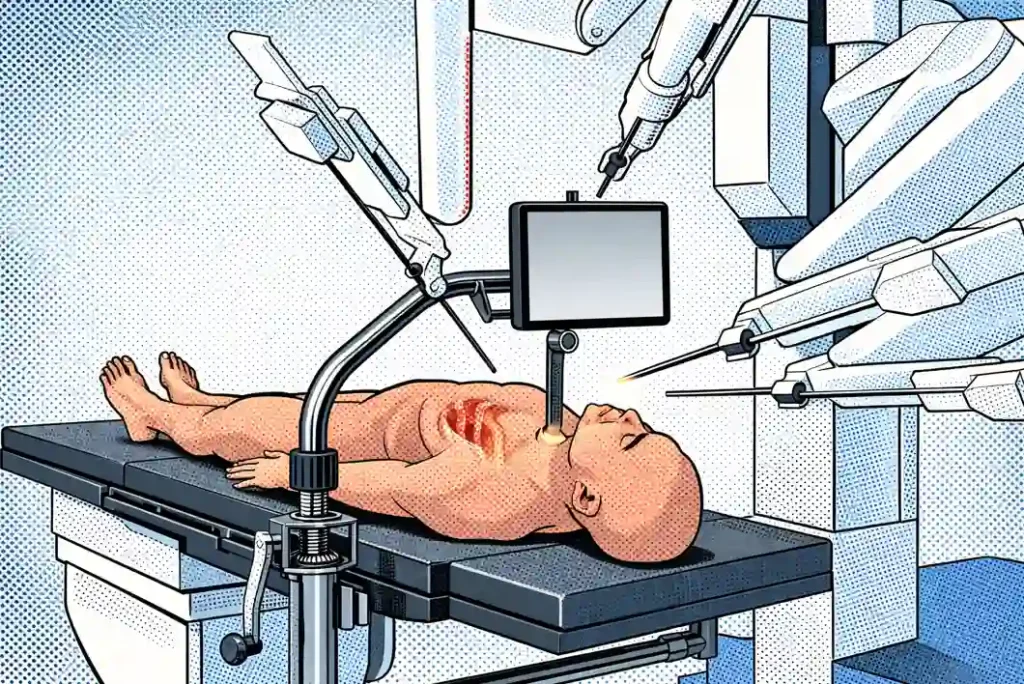
Robotic surgery is not just a technological upgrade—it delivers measurable clinical improvements.
Proven Advantages
- Reduced blood loss: Studies show significantly lower intraoperative bleeding
- Lower infection risk: Smaller incisions reduce exposure
- Shorter hospital stays: Often 1–3 days for many procedures
- Faster recovery: Return to normal activity within weeks
- Improved functional outcomes: Especially in nerve-sparing prostate surgery
Example (Real-World Use Case)
In prostate cancer surgery, robotic-assisted procedures enable precise nerve preservation, improving post-operative urinary continence and sexual function compared to traditional open surgery.
Risks and Limitations
While robotic surgery is generally safe, it is not risk-free.
Potential Risks
- Surgical complications (bleeding, infection)
- Equipment malfunction (rare but possible)
- Longer operating time in early learning phases
Limitations
- High cost: Not always fully covered by insurance
- Availability: Limited to advanced centers
- Not suitable for all patients: Complex cases may still require open surgery
Cost of Robotic Surgery in Korea (2026)
Robotic surgery is typically considered a premium procedure.
Estimated Price Range
- ₩7,000,000 – ₩20,000,000+ ($5,000–$15,000 USD)
Factors Affecting Cost
- Type of surgery
- Hospital reputation
- Surgeon expertise
- Length of hospital stay
Important: Korea’s National Health Insurance (NHI) may partially cover some procedures for residents, but many robotic surgeries remain out-of-pocket or partially reimbursed.
Robotic Surgery vs Traditional Surgery
| Feature | Robotic Surgery | Laparoscopic Surgery | Open Surgery |
|---|---|---|---|
| Incision Size | Very small | Small | Large |
| Precision | Highest | Moderate | Lower |
| Recovery Time | Fast | Moderate | Slow |
| Pain Level | Low | Moderate | High |
| Visualization | 3D HD | 2D | Direct view |
Patient Experience in Korean Hospitals
Korean hospitals are known for efficient, patient-centered care, especially for international patients.
What to Expect
- Pre-surgery consultation (often multilingual)
- Transparent pricing and scheduling
- Short hospital stays
- Post-operative monitoring with advanced imaging
Medical Tourism Advantage
Many hospitals offer:
- Airport pickup
- Translation services
- Concierge coordination
When Is Robotic Surgery Recommended?
Robotic surgery is particularly beneficial when:
- Precision is critical (e.g., cancer near nerves)
- Minimally invasive approach is preferred
- Faster recovery is a priority
- Cosmetic outcomes matter (e.g., thyroid surgery without neck scars)
Future Trends in Robotic Surgery (2026 and Beyond)
Korea continues to innovate in this field:
Emerging Developments
- AI-assisted surgical planning
- Next-generation robotic platforms beyond da Vinci Surgical System
- Remote surgery (telesurgery)
- Integration with augmented reality (AR)
These advancements aim to further improve precision, accessibility, and patient safety.
FAQ Section

Is robotic surgery in Korea hospitals safe?
Robotic surgery Korea hospitals are considered highly safe due to advanced systems, experienced surgeons, and strict clinical protocols. Compared to traditional methods, minimally invasive surgery Korea offers lower complication rates and faster recovery for most patients.
How much does robotic surgery cost in Korea?
Robotic surgery cost Korea typically ranges from ₩7,000,000 to ₩20,000,000 depending on the procedure, hospital, and surgeon expertise. Top hospitals for robotic surgery Korea may charge higher fees due to advanced facilities and global reputation.
Why choose robotic surgery in Korean hospitals?
Robotic surgery Korea hospitals provide superior precision, smaller incisions, and faster healing. Many patients choose minimally invasive surgery Korea for cancer and complex procedures due to better outcomes and shorter hospital stays.
What procedures are commonly done with robotic surgery in Korea?
Common procedures in robotic surgery Korea hospitals include prostate cancer surgery, thyroid surgery, hysterectomy, and colorectal surgery. Best hospitals for robotic surgery Korea specialize in high-volume, complex cases with excellent outcomes.
Is Korea a good destination for robotic surgery medical tourism?
Yes, robotic surgery Korea hospitals are a top choice for medical tourism due to advanced technology, competitive robotic surgery cost Korea, and internationally accredited hospitals offering multilingual patient support.
Key Takeaways
From a clinical and systems perspective, robotic surgery in Korea exemplifies how technology, surgical expertise, and healthcare infrastructure converge to improve patient outcomes. However, the true determinant of success remains surgeon experience, case selection, and institutional quality—not the robot itself.
- Robotic surgery in Korea represents cutting-edge, minimally invasive care with global recognition.
- It is widely used for cancer, urology, gynecology, and general surgery.
- Benefits include precision, faster recovery, and reduced complications, though costs are higher.
- Korea’s advanced hospitals and experienced surgeons make it a top destination for robotic procedures worldwide.
If you are considering robotic surgery, focus on hospital track record, surgeon volume, and outcome data, rather than technology branding alone.

Korea Med Tour – Trusted Blog for Medical Tourism in Korea
Korea Med Tour is a trusted medical tourism content platform providing accurate, research-based healthcare information for international patients considering treatment in Korea.
Our editorial team specializes in global patient guidance, treatment insights, clinic selection, and medical travel planning. All content is developed using verified medical sources and structured editorial review processes to ensure clarity, safety, and reliability.
We are committed to helping international patients make informed and confident medical travel decisions when choosing Korea as their healthcare destination.