

BSM Eye Care Ophthalmology
LASIK in Gangnam Seoul Korea is a femtosecond laser vision correction procedure that reshapes the cornea to treat myopia, hyperopia, and astigmatism. With advanced diagnostics and wavefront-guided precision, most patients experience rapid recovery within days and long-term visual stability when properly screened.
LASIK in Gangnam Seoul Korea is one of the most sought-after laser eye surgery Seoul options for patients seeking freedom from glasses or contact lenses. Leading Gangnam LASIK clinics use femtosecond LASIK Korea systems combined with detailed corneal imaging to ensure safe flap creation, customized refractive correction, and predictable visual outcomes in 2026.
Table of Contents

What Is LASIK?
LASIK (Laser-Assisted In Situ Keratomileusis) is a refractive surgical procedure designed to correct:
- Myopia (nearsightedness)
- Hyperopia (farsightedness)
- Astigmatism
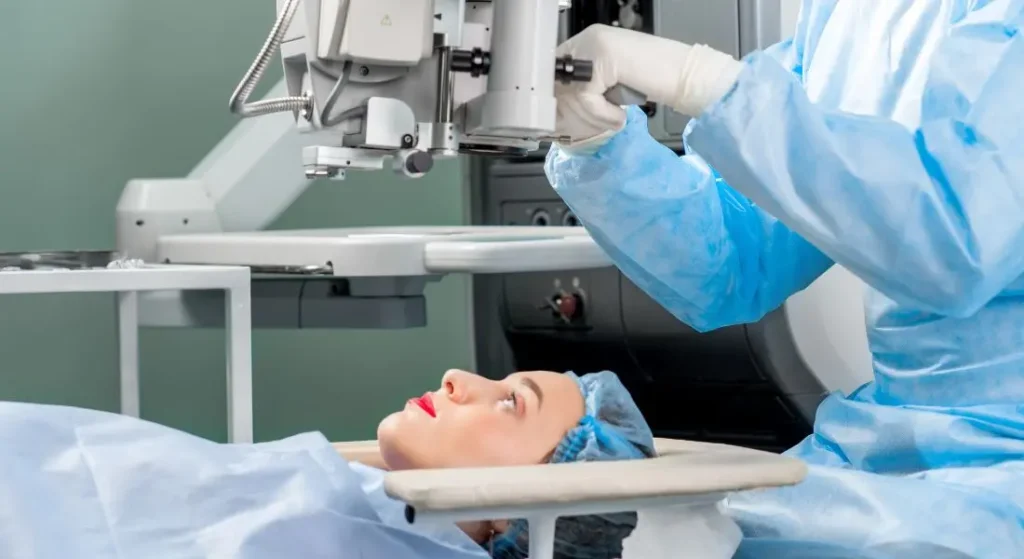
It reshapes the cornea using an excimer laser after creating a thin corneal flap, typically with a femtosecond laser. By altering the corneal curvature, light focuses correctly on the retina, reducing or eliminating dependence on glasses or contact lenses.
Modern LASIK in 2026 commonly includes:
- Femtosecond flap creation (blade-free)
- Wavefront-guided or topography-guided customization
- Eye-tracking laser systems for precision
Why Gangnam Is a Leading Destination for LASIK
Gangnam, located in southern Seoul, has developed into a high-density medical district with strong subspecialization in ophthalmology and refractive surgery.
Key strengths include:
- Advanced corneal imaging technology
- Surgeons with high procedural volume
- Dedicated dry eye diagnostic systems
- Structured follow-up programs
- Competitive pricing compared to Western countries
Clinics such as GS Eye Center, Dream Eye Center, and Bright St. Mary’s Eye Clinic are known for offering femtosecond LASIK and advanced screening protocols for both domestic and international patients.
How LASIK Works: Step-by-Step
Understanding the process reduces anxiety and clarifies expectations.
1. Comprehensive Preoperative Evaluation
This is the most critical step. A proper LASIK candidate must undergo:
- Corneal topography (shape mapping)
- Pachymetry (corneal thickness measurement)
- Tear film analysis
- Pupil size assessment
- Refractive stability verification (≥12 months)
Patients with keratoconus, unstable prescriptions, or severe dry eye may not qualify.
2. Femtosecond Flap Creation
A femtosecond laser creates a precise corneal flap (usually 90–120 microns thick). This step is blade-free in modern LASIK.
3. Excimer Laser Reshaping
The flap is lifted, and the excimer laser reshapes corneal tissue according to the patient’s refractive error and customized treatment profile.
4. Flap Repositioning
The flap is placed back into position without sutures. Natural adhesion occurs within minutes.
Total surgical time per eye: approximately 10–15 minutes.
Recovery Timeline
One of LASIK’s major advantages is rapid recovery.
| Stage | Expected Outcome |
|---|---|
| 24 hours | Significant visual improvement |
| 3–5 days | Functional clarity for most daily tasks |
| 1–2 weeks | Stabilized vision |
| 1–3 months | Final refinement and night vision adaptation |
Patients are typically advised to remain in Seoul for 2–3 days for follow-up.
Who Is a Good Candidate for LASIK in 2026?
Ideal candidates typically:
- Are 18 years or older
- Have stable prescription for at least one year
- Have adequate corneal thickness
- Do not have progressive corneal disease
- Have realistic expectations
Patients with thin corneas may be better suited for surface procedures like LASEK.
Benefits of LASIK
1. Fast Visual Recovery
Most patients resume normal activities within days.
2. High Predictability
Modern wavefront-guided systems improve accuracy.
3. Long-Term Stability
For stable prescriptions, results are generally durable.
4. Minimal Discomfort
Most patients report mild irritation rather than pain.
Risks and Considerations
While LASIK is considered safe, potential risks include:
- Temporary dry eye
- Night glare or halos
- Undercorrection or overcorrection
- Rare flap complications
- Very rare corneal ectasia (screening minimizes this risk)
Proper diagnostic screening significantly reduces complications.
Real-World Clinical Example
A 29-year-old professional working in Gangnam presented with -5.50D myopia and mild astigmatism. After comprehensive evaluation confirmed sufficient corneal thickness and stable refraction, femtosecond LASIK was performed.
Outcome:
- 20/20 vision at 1 week
- Mild dry eye managed with lubricating drops
- Stable refraction at 6-month follow-up
This case highlights the importance of appropriate candidate selection and postoperative management.
LASIK vs SMILE vs LASEK: Quick Comparison
| Feature | LASIK | SMILE | LASEK |
|---|---|---|---|
| Flap Created | Yes | No | No |
| Recovery Speed | Fast | Fast | Slower |
| Best for Thin Corneas | Not ideal | Moderate | Yes |
| Dry Eye Risk | Moderate | Lower | Lower |
| Discomfort | Minimal | Minimal | Moderate early healing |
A personalized consultation determines which option is safest.
Cost of LASIK in Gangnam (2026)
Estimated cost per eye:
₩1,500,000 – ₩3,000,000
Pricing depends on:
- Laser platform
- Wavefront customization
- Surgeon experience
- Included aftercare
Compared internationally, Seoul offers competitive pricing with high technological standards.
Dry Eye Management Before and After LASIK
Preexisting dry eye is common among heavy digital device users. Gangnam clinics routinely screen for:
- Meibomian gland dysfunction
- Tear film instability
- Inflammatory markers
Treating dry eye before LASIK improves surgical outcomes and patient satisfaction.
Is LASIK Permanent?
LASIK permanently reshapes the cornea. However:
- Natural aging (presbyopia) occurs after 40
- Rare regression may occur in high prescriptions
- Enhancement procedures are possible if corneal thickness allows
Choosing the Right LASIK Clinic in Gangnam
Look for:
- Advanced corneal imaging systems
- Femtosecond laser capability
- Wavefront-guided technology
- Transparent complication management protocol
- Structured postoperative follow-up
Avoid clinics offering surgery without detailed diagnostic testing.
Final Expert Perspective (2026)
LASIK in Gangnam Seoul Korea remains one of the most refined and widely performed refractive procedures globally. With advanced imaging, femtosecond precision, and structured aftercare, outcomes are predictable and recovery is fast for properly selected candidates.
The critical factor is not simply location—but diagnostic rigor, surgeon expertise, and patient-specific planning. Individuals considering LASIK should undergo comprehensive evaluation and discuss all refractive options before making a decision.

FAQs
Is LASIK in Gangnam Seoul Korea safe in 2026?
Yes. LASIK in Gangnam Seoul Korea is considered safe when performed at a reputable Gangnam LASIK clinic using femtosecond LASIK Korea technology and thorough preoperative corneal screening.
How much does LASIK in Gangnam Seoul Korea cost?
The cost of LASIK in Gangnam Seoul Korea typically ranges depending on customization level and technology used. Advanced laser eye surgery Seoul with wavefront-guided systems may increase pricing.
How long does recovery take after LASIK in Gangnam Seoul Korea?
Most patients undergoing LASIK in Gangnam Seoul Korea notice significant improvement within 24 hours, with stable vision achieved within 1–2 weeks at an experienced Gangnam LASIK clinic.
What is the difference between femtosecond LASIK Korea and traditional LASIK?
Femtosecond LASIK Korea uses a blade-free laser to create the corneal flap, improving precision and
Is LASIK in Gangnam Seoul Korea better than SMILE?
LASIK in Gangnam Seoul Korea allows wavefront customization and fast recovery, while SMILE may reduce flap-related concerns. A consultation at a Gangnam LASIK clinic determines the safest option based on corneal structure.
BSM Eye Care Clinic in Gangnam, Korea
Advanced Vision Correction & Ophthalmic Excellence in Korea
BSM Eye Care Clinic has provided comprehensive ophthalmic and vision correction services in Korea with the expertise and pride of a first-generation refractive surgery center. Built on decades of accumulated surgical experience, our clinic has established a strong reputation for precision, safety, and consistently reliable visual outcomes.
Operating under the supervision of experienced ophthalmic surgeons, we combine evidence-based medical protocols with advanced diagnostic and laser technologies to deliver safe and structured treatment plans. Every procedure is carefully customized according to each patient’s ocular condition, corneal stability, and long-term visual health goals.
Our clinic is recognized by both Korean patients and international visitors for delivering medically supervised refractive surgery and comprehensive eye care in a transparent, patient-centered environment.
Areas of Specialization
- SMILE LASIK and advanced refractive surgery
- Cataract and presbyopia correction
- Comprehensive pre-operative diagnostic evaluation
- Long-term post-operative vision management
A significant portion of our patients visit through referrals and long-term follow-up care, reflecting sustained trust and measurable clinical outcomes. Through continuous adoption of advanced ophthalmic technologies and ongoing clinical research, BSM Eye Care Clinic remains committed to elevating surgical precision and patient safety standards.
We prioritize thorough consultation, transparent risk disclosure, and realistic outcome guidance — ensuring every patient receives ophthalmic care grounded in medical expertise, ethical responsibility, and long-term vision health management.
Visit BSM Eye Care Clinic: https://koreaEyeClinic.com/