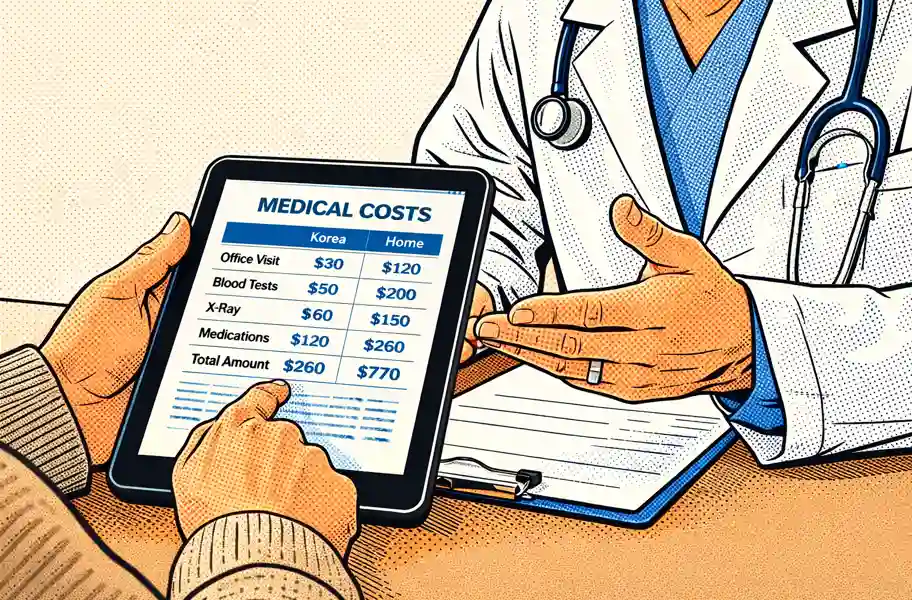


How much does a skin booster cost in Korea?
KoreaMedTour.com
Skin booster treatments in Korea typically cost ₩150,000–₩700,000 per session in 2026, depending on the product, dosage, treatment area, physician and clinic. Popular options such as Rejuran and Juvelook generally range from ₩200,000–₩600,000, while premium combination treatments can cost more.
Quick Summary
There is no single standard price for Skin Booster Rejuvenation in Korea because costs vary depending on the product, dosage, treatment area, injection technique, clinic, physician, and whether VAT or additional services are included.
As a practical 2026 planning guide, international patients can expect:
Typical Skin Booster Cost in Korea = ₩150,000–₩700,000 per session
Popular treatments may fall within these approximate ranges:
- Basic HA Skin Booster: ₩150,000–₩300,000
- Rejuran: ₩200,000–₩500,000+
- Juvelook: ₩250,000–₩600,000
- Profhilo: ₩350,000–₩700,000
- Skinvive: ₩400,000–₩600,000
- Premium Combination Treatments: ₩700,000–₩1,500,000+
A useful approach is to confirm three numbers before booking:
- Expected treatment cost — the exact product, dosage, treatment area, injection technique, and number of sessions.
- Maximum treatment budget — the amount you are prepared to spend if the physician recommends additional sessions or complementary treatments.
- Total Korea travel budget — flights, accommodation, transportation, meals, VAT, translation or medical-tourism support, and other expenses.
The important point is that the cheapest Skin Booster Korea Cost is not necessarily the best value. Compare the exact product, dosage, physician expertise, treatment protocol, expected results, safety considerations, VAT, and total cost before choosing a clinic.
Table of Contents
How Much Does Skin Booster Treatment Cost in Korea?
For international patients planning an aesthetic treatment in Korea, the following is a useful 2026 budgeting range:
| Skin booster category | Approximate Korea price/session |
|---|---|
| Basic hydration / HA booster | ₩110,000–₩300,000 |
| PDRN treatments | ₩200,000–₩400,000 |
| Rejuran Healer | ₩200,000–₩500,000+ |
| Rejuran HB+ | ₩300,000–₩600,000+ |
| Juvelook Skin | ₩250,000–₩600,000 |
| Profhilo | ₩350,000–₩700,000 |
| Exosome-based boosters | ₩200,000–₩600,000+ |
| Skinvive | ₩400,000–₩600,000+ |
| Premium combination programs | ₩700,000–₩1,500,000+ |
These are reference ranges rather than standardized national prices. For example, one Seoul clinic’s September 2026 menu lists Juvelook Skin at ₩350,000 and a Rejuran Healer 4cc + Rejuran Eye 2cc program at ₩790,000, excluding 10% VAT. Another Sinsa/Gangnam price list shows Rejuran Healer 2cc at ₩300,000, Juvelook Skin 2cc at ₩250,000 and Skinvive 2cc at ₩450,000.
What Is Skin Booster Rejuvenation?
Skin booster rejuvenation is a minimally invasive aesthetic treatment designed primarily to improve skin quality rather than dramatically change facial shape.
Unlike traditional dermal fillers, which are generally used to restore or create volume in specific anatomical areas, many skin boosters are administered more superficially or in a distributed pattern across the skin.
Depending on the product, skin boosters may target:
- Dehydrated or dull-looking skin
- Fine lines
- Reduced elasticity
- Uneven skin texture
- Early signs of photoaging
- Mild skin laxity
- Poor skin radiance
- Certain aspects of skin barrier quality
The 2026 medical literature describes several mechanisms, including hydration, collagen production, elastogenesis, tissue remodeling and anti-inflammatory effects, depending on the material used.
The important distinction is that different skin boosters work differently. A hyaluronic-acid-based product should not automatically be considered equivalent to a PN treatment or a collagen-stimulating product.
Popular Skin Booster Treatments in Korea
1. Rejuran
Rejuran is one of the best-known skin rejuvenation injections in Korea and is associated with polynucleotide (PN) technology.
It is commonly selected by patients concerned about:
- Fine lines
- Skin elasticity
- Texture
- General skin quality
- Signs of aging
Clinical research on polynucleotides is promising but should not be overstated. A systematic review published in 2025 identified nine studies involving 219 patients and found promising improvements in wrinkles, texture and elasticity, but also emphasized that the evidence quality was generally low to moderate and that treatment protocols varied.
A more recent systematic review covering randomized trials through January 2026 similarly found encouraging results for PN/PDRN treatments but emphasized small sample sizes and heterogeneous protocols.
Typical Rejuran cost in Korea
A practical 2026 range is approximately:
₩200,000–₩500,000+ per session
The amount matters substantially. A 2cc treatment should not be directly compared with a 4cc treatment simply because both are advertised as “Rejuran.”
2. Juvelook
Juvelook is a Korean injectable product combining PDLLA and hyaluronic acid. The manufacturer describes its approved use as temporary improvement of facial wrinkles through subcutaneous injection and identifies different formulations, including Juvelook Skin and Juvelook Volume.
Because Juvelook is a biostimulatory material rather than simply a conventional hydration injection, patients often consider it when their primary concerns involve:
- Fine lines
- Skin texture
- Collagen-related skin quality
- Early laxity
- Overall rejuvenation
Typical cost
Approximately:
₩250,000–₩600,000 per treatment
However, the price can be substantially different depending on whether the clinic is charging per vial, per cc, or for a complete treatment protocol.
3. Hyaluronic Acid Skin Boosters
Hyaluronic acid (HA) is naturally associated with the skin’s ability to retain water.
Some HA-based injectable products are specifically designed for skin quality rather than conventional volumizing filler treatment.
One important example is Skinvive by Juvéderm. The U.S. FDA approved Skinvive for intradermal injection to improve cheek skin smoothness in adults 21 and older; the FDA reports that the clinical study involved 209 people and demonstrated improvement lasting at least six months.
As of 2026, its U.S. FDA indication has also been expanded to include intradermal and/or subdermal injection for improving the appearance of neck lines in adults over 21.
Typical Korea cost
A reasonable 2026 planning range is:
₩400,000–₩600,000+
The price depends heavily on the product volume and whether additional procedures are included.
What Determines the Cost of Skin Boosters in Korea?
The biggest mistake patients make is comparing the headline price alone.
Seven factors can significantly change the final bill.
1. Product
A basic hydration injection can cost considerably less than a branded PN, PDLLA or premium HA product.
2. Dosage
“Rejuran treatment” does not tell you how much product you are receiving.
For example:
- 1cc
- 2cc
- 4cc
can represent very different treatment plans.
3. Treatment area
Full-face treatment generally requires more product than treatment limited to:
- Under-eyes
- Cheeks
- Forehead
- Neck
- Specific scars
4. Injection technique
Clinics may use:
- Manual needle injection
- Specialized injection devices
- Cannulas
- Microneedling-assisted delivery
- Other device-assisted approaches
These are not necessarily interchangeable.
5. Doctor experience and clinic positioning
A high-volume aesthetic clinic may advertise a lower introductory price, while a dermatologist-led clinic with extensive consultation and individualized planning may charge more.
The lower price does not automatically mean inferior treatment, and the highest price does not automatically mean better results.
6. Anesthesia and aftercare
Some clinics include:
- Topical anesthetic
- Cooling
- LED or calming care
- Post-treatment mask
- Aftercare products
Others charge separately.
7. VAT
This is particularly important for international patients.
Some published Korean clinic prices exclude 10% VAT, while other price guides publish VAT-inclusive prices.
Always ask:
“Is the quoted price VAT included?”
Why Can Two Korean Clinics Have Very Different Prices?
Suppose Clinic A advertises a skin booster for ₩199,000, while Clinic B quotes ₩450,000.
That does not necessarily mean Clinic B is charging more for the same treatment.
You should compare:
Product → dosage → treatment area → technique → physician → anesthesia → aftercare → VAT
For example, a ₩250,000 treatment using 2cc cannot reasonably be compared with a ₩500,000 full-face protocol using a substantially larger amount of product.
Some 2026 Korean price guides show Rejuran 2cc prices ranging approximately from ₩199,000 to ₩480,000, illustrating how wide the market can be even for the same broad treatment category.
How Many Skin Booster Sessions Are Usually Needed?
There is no universal number of sessions because treatment schedules depend on:
- The product
- Patient age
- Skin condition
- Treatment objective
- Previous procedures
- Physician protocol
- Response to treatment
Many Korean aesthetic programs are structured as a series of treatments rather than a single session, particularly when the objective is progressive skin-quality improvement.
Patients should therefore calculate:
Total treatment cost = price per session × number of planned sessions
For example:
| Program | Approximate budget |
|---|---|
| 1 session at ₩250,000 | ₩250,000 |
| 3 sessions at ₩250,000 | ₩750,000 |
| 3 sessions at ₩400,000 | ₩1,200,000 |
| 3 sessions at ₩600,000 | ₩1,800,000 |
This is often more useful than asking only, “How much is one skin booster treatment in Korea?”
Skin Booster vs. Dermal Filler: What Is the Difference?
This is a particularly important distinction for international patients.
Skin booster
Generally focuses on:
- Skin hydration
- Texture
- Elasticity
- Fine lines
- Overall skin quality
Traditional dermal filler
Generally focuses more on:
- Volume restoration
- Facial contour
- Lip enhancement
- Cheek projection
- Chin augmentation
- Nasolabial fold correction
There can be overlap, especially with HA-based injectable products.
Therefore, the correct treatment should be chosen based on the anatomical problem and treatment objective, not simply the popularity of a product.
Are Skin Boosters Safe?
Most patients experience relatively mild temporary reactions, but skin booster injections are still medical procedures.
Common short-term effects may include:
- Redness
- Swelling
- Tenderness
- Bruising
- Small injection marks
- Temporary bumps or papules
A comprehensive review of injectable skin boosters reports that these reactions are generally transient, but also notes that complications can vary according to the material and injection technique.
Rare but potentially serious complications can occur with injectable aesthetic procedures, particularly when products are inadvertently introduced into blood vessels. Vascular complications can cause tissue injury and, in very rare circumstances, visual complications. Proper patient selection, anatomical knowledge, sterile technique and rapid recognition of complications are therefore essential.
Seek urgent medical attention if you experience:
- Severe or increasing pain
- Significant skin discoloration
- Blanching or unusual mottling
- Rapidly worsening swelling
- Vision changes
- Neurological symptoms
- Signs of infection
Do not assume severe symptoms are simply a normal part of recovery.
Who May Be a Good Candidate?
Skin booster rejuvenation may be considered by adults who are primarily concerned about skin quality rather than major structural facial changes.
Potential candidates may include people with:
- Early to moderate photoaging
- Dry or dehydrated-looking skin
- Fine lines
- Reduced elasticity
- Rough texture
- Dull complexion
- Mild age-related changes
However, an in-person medical consultation is important.
Patients should tell the doctor about:
- Allergies
- Current medications
- Previous injectable treatments
- Previous adverse reactions
- Active skin infections
- Autoimmune or inflammatory conditions
- Pregnancy or breastfeeding where relevant
- Previous filler or implant procedures
The suitability of a specific injectable depends on the individual and the approved indications of the product.
What Should International Patients Ask a Korean Clinic?
Before booking, ask for the complete treatment specification, not just the promotional price.
A useful checklist is:
- What exact product will be injected?
- Is it genuine and traceable?
- How many cc or vials are included?
- Which facial areas are included?
- Who performs the injection?
- Is a dermatologist or qualified physician performing the procedure?
- Is consultation included?
- Is numbing included?
- Is VAT included?
- Are there additional anesthesia or aftercare fees?
- How many sessions does the doctor recommend?
- What happens if a complication occurs after I return home?
This approach is much more reliable than choosing a clinic solely because it advertises the lowest price.
Is Korea Cheaper for Skin Boosters?
Korea has a highly developed medical-aesthetic market, particularly in Seoul, where skin-quality treatments are offered by a large number of dermatology and aesthetic clinics.
However, “cheaper” should not be the only reason to choose Korea.
The more meaningful comparison is:
Price + product authenticity + physician expertise + treatment protocol + safety + follow-up
Promotional pricing can make the initial price attractive, but an inappropriate product or insufficient dosage may provide poor value even when the advertised price is low.
What Results Should You Expect?
Patients should have realistic expectations.
Skin boosters are generally designed to improve skin quality, not completely transform facial anatomy.
Depending on the product, treatment may contribute to improvements in:
- Hydration
- Skin smoothness
- Fine lines
- Elasticity
- Texture
- Radiance
- Overall skin quality
The magnitude and duration of improvement vary significantly.
FAQ Section

How much does a skin booster cost in Korea in 2026?
The Skin Booster Korea Cost generally ranges from ₩150,000 to ₩700,000 per session. The final price depends on the product, dosage, treatment area, clinic and physician. Premium combination treatments may cost more.
How much does Rejuran cost in Korea?
The Rejuran Cost Korea typically ranges from approximately ₩200,000 to ₩500,000 or more per session. Price differences usually reflect the amount used, treatment area, clinic and whether anesthesia or aftercare is included.
How much does Juvelook cost in Korea?
The Juvelook Cost Korea is generally around ₩250,000–₩600,000 per session. The price can vary according to the Juvelook formulation, dosage, injection method and clinic.
Is Skin Booster treatment cheaper in Seoul, Korea?
The Skin Booster Cost Seoul can be competitive because Seoul has a large and highly developed aesthetic medical market. However, patients should compare the product, dosage, physician, VAT and included services rather than choosing a clinic based solely on the lowest price.
How many skin booster treatments are needed in Korea?
The number of treatments depends on the product and individual skin concerns. Many Korean skin booster treatments are performed as a series rather than a single session. A physician should determine the appropriate treatment frequency after evaluating the patient’s skin condition and goals.
Skin Booster Cost in Korea: 2026 Bottom Line
For most international patients, a reasonable budget for skin booster rejuvenation in Korea is approximately ₩200,000–₩600,000 per session.
Budget treatments can start around ₩110,000–₩150,000, while premium products, larger treatment volumes and combination protocols can exceed ₩700,000–₩1,500,000.
The most important factor is not the advertised price. It is determining exactly what you are paying for.
A practical 2026 budget
Basic treatment: ₩150,000–₩300,000
Popular branded booster: ₩250,000–₩600,000
Premium treatment: ₩600,000–₩1,000,000+
Combination/full-face program: ₩700,000–₩1,500,000+
For a three-session program, a realistic planning budget could therefore range from roughly ₩600,000 to ₩1,800,000+, depending on the product and protocol.
The best approach is to request a written quotation showing the product name, dosage, treatment area, physician, VAT and all additional charges before making a booking.
References
- SKINVIVE by JUVÉDERM — FDA Premarket Approval Database
Official regulatory information confirming the FDA indication for intradermal cheek treatment and the 2026 expanded indication involving neck lines. - JUVELOOK Official Product Information
Manufacturer information describing JUVELOOK as a medical device containing PDLLA + HA, including its intended use and product formulations.

Korea Med Tour – Trusted Blog for Medical Tourism in Korea
Korea Med Tour is a trusted medical tourism content platform providing accurate, research-based healthcare information for international patients considering treatment in Korea.
Our editorial team specializes in global patient guidance, treatment insights, clinic selection, and medical travel planning. All content is developed using verified medical sources and structured editorial review processes to ensure clarity, safety, and reliability.
We are committed to helping international patients make informed and confident medical travel decisions when choosing Korea as their healthcare destination.