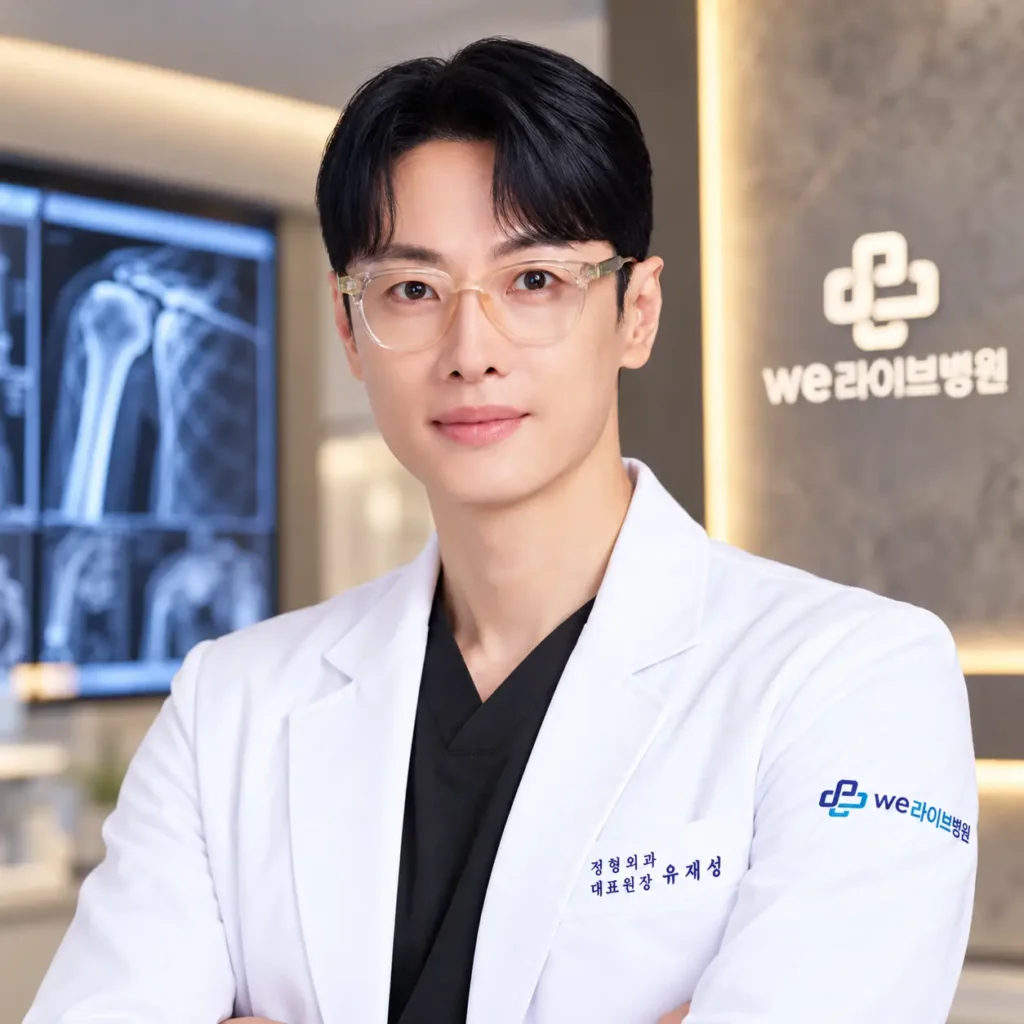

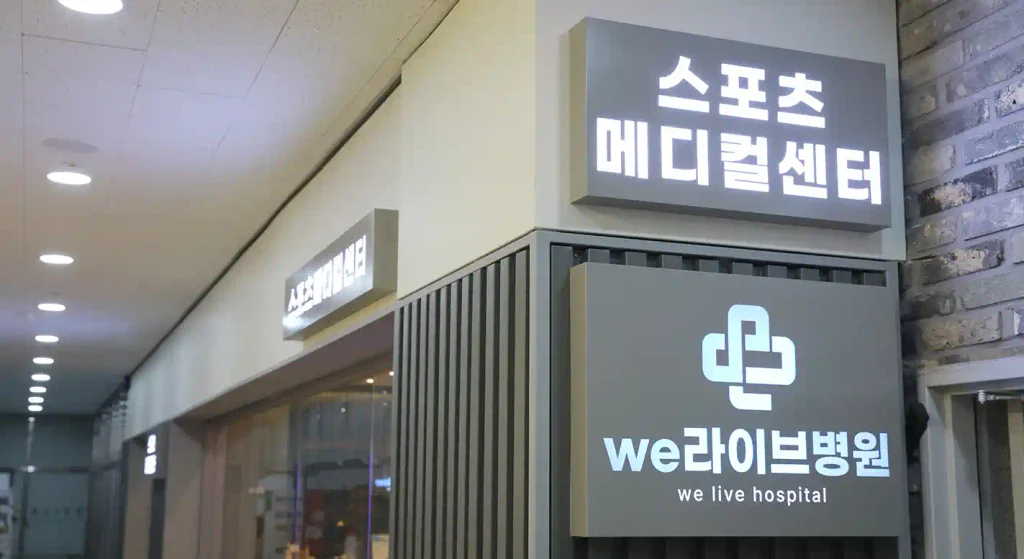
Dr. Jae Sung Yoo is an orthopedic surgeon in Korea and Chief Director of WeLive Hospital, specializing in shoulder and joint conditions, sports injuries, joint preservation, and minimally invasive orthopedic surgery. His approach combines more than 30,000 orthopedic surgeries, international academic research, and sports medicine experience with a focus on functional recovery and return to life.
KoreaMedTour.com
This exclusive KoreaMedTour interview features Dr. Jae Sung Yoo, Chief Director and orthopedic specialist at WeLive Hospital, discussing joint preservation, sports injury treatment, minimally invasive surgery, regenerative orthopedics, and orthopedic care for international patients.
For international patients considering orthopedic treatment in Korea, choosing a surgeon involves more than looking at a procedure or hospital name. Understanding a physician’s clinical philosophy, surgical experience, research background, and approach to recovery can be equally important.
In this exclusive KoreaMedTour interview, Dr. Jae Sung Yoo, Chief Director and orthopedic specialist at WeLive Hospital, discusses his approach to shoulder and joint conditions, sports injuries, minimally invasive surgery, regenerative orthopedics, robotic joint replacement, and the treatment journey for international patients.
Dr. Yoo describes a treatment philosophy centered on preserving the patient’s own joint whenever possible, restoring damaged tissue when appropriate, minimizing unnecessary surgical damage, and ultimately helping patients return to their everyday lives.
His guiding principle is:
“Preserve the Joint. Restore the Tissue. Return to Life.”
Table of Contents
Meet Dr. Jae Sung Yoo
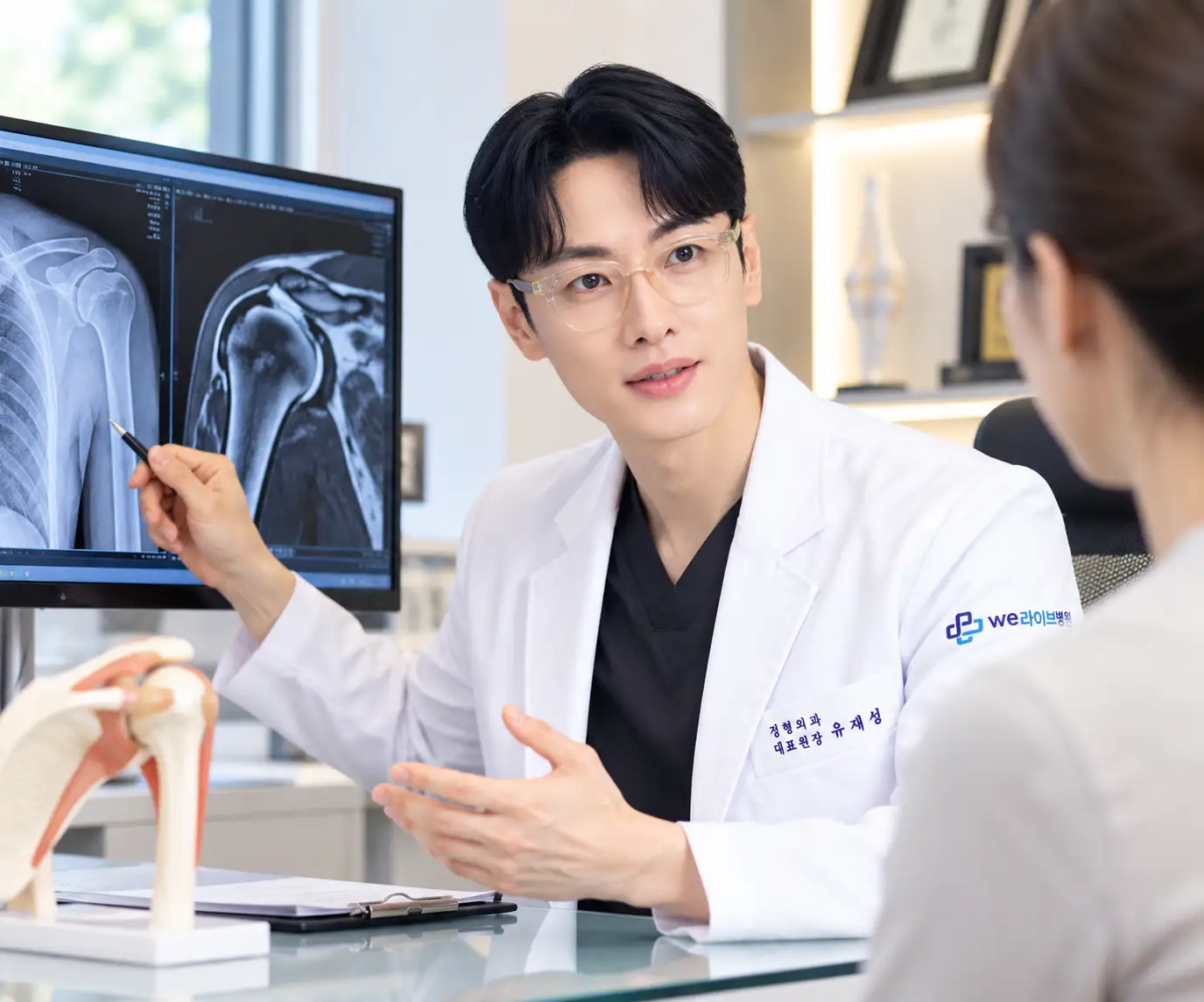
Dr. Jae Sung Yoo is the Chief Director of WeLive Hospital and an orthopedic specialist with a clinical focus on shoulder, joint, and sports injuries.
Before joining WeLive Hospital, Dr. Yoo worked as a professor at a university hospital, where he treated patients while conducting orthopedic research. According to Dr. Yoo, he has performed more than 30,000 orthopedic surgeries.
His academic background also includes more than 100 SCI(E)-level international publications. He currently participates as an editorial board member and reviewer for international SCI(E) journals, allowing him to continuously review emerging orthopedic research and new treatment approaches.
Dr. Yoo has also worked in elite sports medicine, including experience as a team doctor for the Korean national team, a medical professional associated with the Hanwha Eagles, a field doctor for KT Wiz, a physician for Chungnam Asan FC, and a medical doctor for the KLPGA Tour.
He believes that combining research, surgical experience, and real-world sports medicine can contribute to more comprehensive patient care.
Q1. Could you introduce yourself to international patients?
Dr. Yoo:
Hello. I am Jae Sung Yoo, Chief Director of WeLive Hospital and an orthopedic specialist.
I have specialized in the treatment and research of shoulder, joint, and sports injuries while working as a professor at a university hospital. I have performed more than 30,000 orthopedic surgeries.
In addition to clinical practice, I have published more than 100 SCI(E)-level international academic papers and continue to serve as an editorial board member and reviewer for international SCI(E) journals.
This allows me to continuously review new orthopedic treatments and research being published around the world.
I have also worked in various elite sports environments, including as a Korean national team doctor and as medical staff for professional baseball, professional soccer, and professional golf.
My greatest strength is connecting these experiences in research, surgery, and sports medicine with actual patient treatment.
Q2. What is your philosophy when treating orthopedic patients?
Dr. Yoo:
The principle I consider most important is to preserve the patient’s joint and tissue whenever possible and provide only the treatment that is actually necessary.
The more surgical experience I gain, the more I realize that not every patient needs surgery.
If surgery is not necessary, I prefer to begin with non-surgical treatment.
When surgery is required, I prioritize arthroscopic and minimally invasive procedures whenever appropriate, with the goal of minimizing damage to healthy tissue.
For selected patients, regenerative approaches such as cell-based treatments or biological augmentation may also be considered when the goal is to support cartilage or tendon recovery.
My treatment philosophy can be summarized simply:
Preserve the Joint. Restore the Tissue. Return to Life.
Q3. How does your research experience influence patient treatment?
Dr. Yoo:
Orthopedic medicine is developing very rapidly.
New surgical techniques, biomaterials, cell-based treatments, and robotic surgery technologies are continuously being introduced. Therefore, I believe that simply adopting a new technology is not enough.
It is important to determine whether a treatment has meaningful scientific evidence behind it.
Through publishing more than 100 international academic papers and working as an editor and reviewer for SCI(E) journals, I continuously review research submitted from different parts of the world.
This experience helps me avoid automatically adopting every new treatment.
Instead, I compare research findings with real-world clinical experience and select treatments that are appropriately supported by evidence.
I am particularly interested in research that can actually change patient outcomes rather than research conducted simply for the sake of research.
Q4. How does treating national and professional athletes relate to treating ordinary patients?
Dr. Yoo:
For an athlete, treatment is not simply about eliminating pain.
An athlete needs to run, throw, make physical contact, compete, and perform at their previous level. Therefore, an important part of treatment is Return to Sports—helping the athlete safely return to their previous level of activity.
Through my work with national athletes and professional baseball, soccer, and golf players, I have treated a wide range of acute and chronic sports injuries.
The same principle can be applied to everyday patients.
For an athlete, returning to competition may be the goal.
For an office worker, it may be returning to work.
For a golfer, it may be returning to golf.
For someone who enjoys traveling, it may simply mean being able to walk freely and travel again.
Ultimately, I am interested in moving beyond Return to Sports toward Return to Life.
Q5. What orthopedic treatment areas are you currently most interested in?
Dr. Yoo:
One of my major areas of interest is joint preservation and regenerative orthopedics.
Orthopedic treatment is gradually moving from simply removing damaged tissue or replacing a joint with an artificial joint toward preserving and restoring a patient’s own cartilage and tendons whenever possible.
For selected patients with cartilage damage in the knee, cell-based cartilage regenerative treatment may be considered.
For tendon injuries such as rotator cuff injuries, various biological augmentation approaches are also being studied to support tissue healing.
I continue to conduct clinical research involving biological augmentation and tissue regeneration, particularly in the areas of rotator cuff injuries and sports injuries.
However, I do not apply a treatment simply because it is considered “new.”
The patient’s indication and the available scientific evidence must come first.
Q6. Why do you consider minimally invasive surgery important for international patients?
Dr. Yoo:
I believe this is particularly important for patients traveling to Korea from overseas.
International patients have additional burdens beyond the surgery itself. They need to travel to Korea by air, stay during treatment, and eventually return home.
Therefore, when the same treatment objective can be achieved, using arthroscopic or minimally invasive techniques to reduce damage to healthy tissue and facilitate efficient recovery can be important.
During my work with national and professional athletes, I have always considered how to provide sufficient treatment while minimizing unnecessary tissue damage and safely restoring function.
I apply the same principle when treating international patients.
Q7. What kind of treatment system is particularly suitable for international patients?
Dr. Yoo:
For international patients, the distance they travel and the amount of time they need to stay in Korea can themselves become part of the treatment burden.
Therefore, if MRI, CT, X-ray images, and previous medical records can be reviewed before the patient arrives in Korea, it may be possible to plan the necessary examinations and treatment approach in advance.
After arrival, the goal is to connect diagnosis, necessary testing, treatment or surgery, and initial rehabilitation as efficiently as possible.
When surgery is necessary, minimally invasive techniques may be considered when appropriate to reduce unnecessary hospitalization and recovery burdens.
After the patient returns home, rehabilitation exercises, restricted movements, follow-up examination timing, and the appropriate timing for returning to sports should also be planned.
For this reason, international orthopedic care should not be viewed simply as providing a single surgery.
It should be designed as one continuous treatment process—from preparation before entering Korea through recovery after returning home.
Q8. What are your greatest strengths in shoulder and sports injury treatment?
Dr. Yoo:
I would describe my experience in three areas.
1. More than 30,000 surgeries
This represents my practical surgical experience.
2. International academic research
My experience with SCI(E) journals includes research, editorial work, and peer review.
3. Sports medicine experience
My work with national and professional athletes has provided direct experience in sports medicine and functional recovery.
There are things that cannot be learned from academic papers alone.
There are also things that cannot be learned exclusively in the operating room.
And there are lessons that can only be learned while treating athletes on the field.
I try to combine these three types of experience when making decisions from diagnosis through surgery, rehabilitation, and functional recovery.
Q9. What is your view on robotic joint replacement surgery?
Dr. Yoo:
I consider a robot to be a tool that helps a surgeon perform surgery more precisely rather than a device that replaces the surgeon.
Every patient has different bone anatomy and joint alignment.
A robotic system can help analyze these differences, plan the procedure, and implement the surgical plan with greater precision.
However, I believe an even more important question comes first:
Does the patient actually need joint replacement surgery?
If the joint can still be preserved, conservative treatment and regenerative treatment should be considered first.
If joint damage has progressed to the point where preservation is difficult, joint replacement may then be considered.
Rather than deciding on a specific treatment first and fitting the patient to it, I believe the treatment stage should be determined according to the patient’s individual joint condition.
Q10. What should patients understand before deciding to have orthopedic surgery?
Dr. Yoo:
At least three things should be clearly understood:
- What is the exact diagnosis?
- Why is surgery necessary?
- Are there alternatives to surgery?
Patients should also understand how much rehabilitation will be required after surgery and when they may be able to return to everyday activities and exercise.
An MRI image alone should not determine whether surgery is necessary.
The treatment decision should consider the patient’s:
- Symptoms
- Physical examination
- Imaging results
- Age
- Occupation
- Activity and exercise level
These factors should be considered together when determining the appropriate treatment.
Q11. What should international patients consider when choosing WeLive Hospital?
Dr. Yoo:
Rather than simply thinking, “I am going to Korea for surgery,” I believe patients should consider:
Who will make the diagnosis?
What evidence will be used to determine the treatment?
How will the patient be helped to return to everyday life after treatment?
I have worked in clinical care and research as a university hospital professor, while continuing to review the latest research as an editorial board member and reviewer for SCI(E) international journals.
At the same time, my experience as a national team doctor and medical professional in professional baseball and soccer has allowed me to experience the process from injury treatment to return to competition.
At WeLive Hospital, my goal is to connect these experiences through three principles:
Evidence. Experience. Recovery.
In other words, scientific evidence, real-world clinical experience, and functional recovery should be connected as one treatment process.
Q12. What would you like to say to international patients?
Dr. Yoo:
After performing more than 30,000 surgeries, one of the most important things I have learned is that a bigger surgery does not necessarily mean better treatment.
Good treatment means providing the patient with exactly the treatment that is necessary.
Whenever possible, I want to preserve the patient’s own joint, support the potential recovery of damaged cartilage and tendons, and, when surgery is necessary, minimize damage to healthy tissue through minimally invasive techniques.
The ultimate goal of treatment is not simply to make an MRI or X-ray look better.
For a national athlete, the goal may be returning to the field.
For an everyday patient, it may be returning to family life, traveling, working, exercising, and living normally again.
For patients who travel all the way to Korea for treatment, I believe treatment also includes helping them achieve a good clinical outcome while minimizing the inconvenience of travel and their stay, so they can safely return to their home country and everyday life.
Preserve the Joint. Restore the Tissue. Return to Life.
This is my vision of modern orthopedic treatment and the direction that WeLive Hospital pursues.
FAQ Section
Who is Dr. Jae Sung Yoo?
Dr. Jae Sung Yoo is an orthopedic surgeon in Korea and Chief Director of WeLive Hospital. His clinical specialties include shoulder and joint conditions and sports injuries. He reports more than 30,000 orthopedic surgeries and more than 100 SCI(E)-level international publications. 인터뷰 답변
What orthopedic treatments does Dr. Jae Sung Yoo specialize in?
Dr. Jae Sung Yoo focuses on orthopedic care including shoulder and joint conditions, sports injuries, joint preservation, arthroscopic surgery, minimally invasive surgery, and regenerative orthopedics. His treatment approach emphasizes selecting treatment according to each patient’s condition and clinical indication.
Does Dr. Jae Sung Yoo treat sports injuries in Korea?
Yes. Dr. Jae Sung Yoo has experience treating sports injuries in national and professional sports settings, including work with national athletes and professional baseball, soccer, and golf teams. His approach emphasizes functional recovery and a safe return to sports or everyday activities.
What is joint preservation in orthopedic treatment?
Joint preservation aims to preserve the patient’s own joint and healthy tissue whenever appropriate rather than moving directly to joint replacement. Dr. Jae Sung Yoo considers non-surgical treatment, arthroscopic or minimally invasive procedures, and selected regenerative approaches according to the patient’s condition and available evidence.
Can international patients receive orthopedic treatment in Korea?
International patients can plan orthopedic treatment in Korea by reviewing existing MRI, CT, X-rays, and medical records before traveling. Dr. Jae Sung Yoo emphasizes coordinating diagnosis, treatment, initial rehabilitation, and post-return recovery planning as one continuous treatment process.
Orthopedic Care in Korea for International Patients
Dr. Yoo’s interview highlights an approach that places the individual patient’s condition and treatment goals at the center of orthopedic decision-making.
For international patients, the process described in the interview includes several important stages:
Before Traveling to Korea
- Review existing MRI, CT, X-ray, and medical records
- Consider the patient’s previous diagnosis and treatment history
- Plan necessary examinations and potential treatment options
During the Visit to Korea
- Clinical diagnosis and evaluation
- Additional imaging or examinations when necessary
- Treatment or surgery when indicated
- Initial rehabilitation planning
After Treatment
- Rehabilitation exercises
- Guidance regarding restricted movements
- Follow-up examination planning
- Return-to-sports or return-to-activity planning
- Continued recovery after returning home
This approach reflects Dr. Yoo’s view that international orthopedic treatment should be considered as a complete patient journey rather than an isolated surgical procedure.
Why Joint Preservation Matters in Modern Orthopedics
One of the recurring themes in Dr. Yoo’s interview is joint preservation.
His philosophy is not to begin with a particular operation and then determine how to apply it. Instead, the treatment approach should be selected according to the patient’s condition.
This can mean considering:
- Non-surgical treatment when appropriate
- Joint-preserving approaches
- Arthroscopic surgery
- Minimally invasive surgery
- Regenerative or biological approaches for selected patients
- Joint replacement when preservation is no longer appropriate
The interview also emphasizes that newer technology should not automatically be considered better simply because it is newer.
Scientific evidence, patient indications, clinical experience, and the patient’s individual goals remain important considerations.
From Return to Sports to Return to Life
Perhaps the most distinctive theme of Dr. Yoo’s approach is the concept of “Return to Life.”
His experience with elite athletes naturally emphasizes functional recovery.
But he applies the same philosophy to everyday patients.
A successful recovery may mean:
- Returning to work
- Playing golf again
- Walking comfortably
- Traveling
- Exercising
- Spending time with family
- Returning to normal daily activities
In this sense, orthopedic treatment is not simply about correcting an image on an MRI or X-ray.
It is about helping patients regain the physical function they need for their own lives.
Meet the Doctor Behind the Treatment Philosophy
Dr. Jae Sung Yoo
Chief Director, WeLive Hospital
Orthopedic Specialist
Primary areas discussed in this interview:
- Shoulder disorders
- Joint conditions
- Sports injuries
- Arthroscopic surgery
- Minimally invasive orthopedic surgery
- Joint preservation
- Regenerative orthopedics
- Rotator cuff injuries
- Cartilage injuries
- Sports medicine
- Robotic joint replacement
- Functional recovery and rehabilitation
His professional background, as described in this interview, combines more than 30,000 orthopedic surgeries, more than 100 SCI(E)-level international publications, international journal editorial and peer-review activities, and experience treating national and professional athletes.
A Message for International Patients
For patients considering orthopedic treatment in Korea, the most important question may not simply be “Which surgery should I have?”
It may be:
“Do I actually need surgery?”
“Can my joint be preserved?”
“What evidence supports the recommended treatment?”
“What will recovery look like after treatment?”
“When can I return to the activities that matter to me?”
Dr. Yoo’s interview presents a treatment philosophy built around these questions.
Rather than focusing solely on the operation itself, his approach connects diagnosis, evidence, clinical experience, treatment, rehabilitation, and functional recovery.
For international patients, this philosophy extends beyond the operating room—from reviewing medical records before traveling to Korea to planning recovery after returning home.
Preserve the Joint. Restore the Tissue. Return to Life.
That is the central message Dr. Jae Sung Yoo shares with international patients through KoreaMedTour.
This interview is based on responses provided directly by Dr. Jae Sung Yoo, Chief Director and orthopedic specialist at WeLive Hospital. Medical treatment decisions should be made after an individual consultation and evaluation by a qualified medical professional.
References
- Dr. Jae Sung Yoo, Chief Director and Orthopedic Specialist, WeLive Hospital — Exclusive Interview with KoreaMedTour.
- KoreaMedTour — What to Expect When Visiting a Korean Hospital.

Korea Med Tour – Trusted Blog for Medical Tourism in Korea
Korea Med Tour is a trusted medical tourism content platform providing accurate, research-based healthcare information for international patients considering treatment in Korea.
Our editorial team specializes in global patient guidance, treatment insights, clinic selection, and medical travel planning. All content is developed using verified medical sources and structured editorial review processes to ensure clarity, safety, and reliability.
We are committed to helping international patients make informed and confident medical travel decisions when choosing Korea as their healthcare destination.