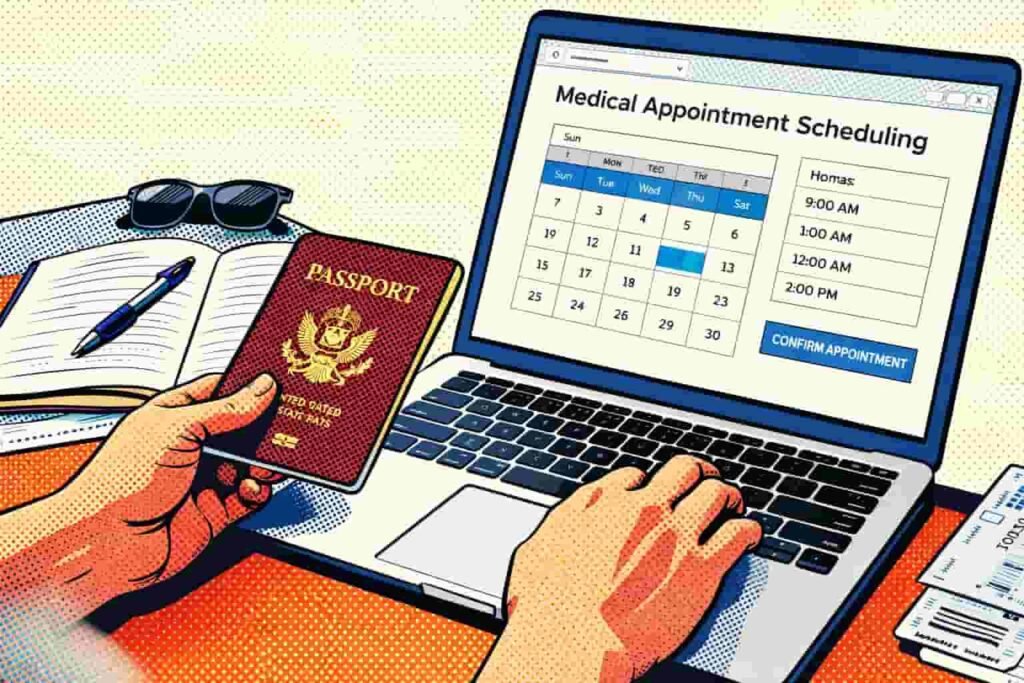


What are patient support services in Korea?
KoreaMedTour.com
Patient support services in Korea help international patients navigate medical care from consultation to follow-up. Services may include appointment coordination, medical interpretation, hospital registration, transportation, accommodation, visa guidance, payment assistance, medical documents, and postoperative follow-up.
Quick Summary
Patient support services in Korea help international patients navigate the Korean healthcare system by combining medical coordination with essential administrative, communication, transportation, and travel-related assistance. Depending on the hospital or registered provider, services may include medical consultation and appointment scheduling, hospital registration, multilingual medical interpretation, airport transfers, accommodation assistance, medical visa guidance, payment support, medical documentation, medication information, and post-treatment follow-up. Major destinations such as Seoul and Busan offer extensive medical infrastructure and international-patient services. Choosing the right support service should focus not only on convenience or price, but also on qualified healthcare providers, patient safety, transparent costs, appropriate treatment planning, and continuity of care.
Key advantages:
- Convenient access to Korean hospitals, specialized clinics, international healthcare centers, and medical facilities
- Coordinated medical consultations, appointments, treatment schedules, and international-patient services
- Professional medical interpretation and multilingual communication for international patients
- Assistance with hospital registration, medical documents, prescriptions, payment procedures, and administrative requirements
- Airport pickup and transportation between Incheon International Airport, hotels, hospitals, and clinics when available
- Accommodation assistance with options located near major hospitals and medical districts
- Medical visa information and documentation guidance for eligible international patients
- Personalized patient coordination based on the treatment plan, procedure, recovery period, and length of stay
- Easier access to diagnostic testing, pharmacies, follow-up appointments, and postoperative care
- Transportation and mobility assistance for surgery patients, elderly travelers, caregivers, and patients with limited mobility
- Better recovery planning by coordinating hospital visits and minimizing unnecessary travel during treatment
- Support with communication between international patients and Korean healthcare providers
- More organized medical travel through support before arrival, during treatment, and after discharge
Common use cases:
Patient support services in Korea are commonly used by international patients seeking plastic surgery, dermatology, ophthalmology, dentistry, health screenings, orthopedics, rehabilitation, fertility treatment, cancer care, cardiovascular treatment, and other specialized medical services.
They can be particularly useful for patients undergoing procedures such as rhinoplasty, eyelid surgery, facial contouring, facelift procedures, breast surgery, laser and skin treatments, pigmentation and acne-scar treatment, skin lifting, LASIK, SMILE LASIK, cataract surgery, dental implants, oral surgery, joint treatment, spine care, fertility and IVF programs, comprehensive health checkups, and other treatments requiring multiple consultations or follow-up visits.
Patient support becomes especially valuable when treatment requires preoperative examinations, multiple hospital visits, postoperative monitoring, accommodation near the medical facility, medical interpretation, transportation, caregiver assistance, or follow-up care before returning home.
What patient support services may include:
Before arrival:
Online inquiry, medical record submission, preliminary consultation coordination, treatment information, appointment scheduling, cost estimates, medical visa guidance, travel preparation, and communication with the healthcare provider.
During the medical trip:
Airport transfer where available, hotel and hospital transportation, hospital registration assistance, medical interpretation, appointment coordination, diagnostic testing coordination, treatment scheduling, payment and administrative assistance, medication information, and communication support.
After treatment:
Follow-up appointment coordination, postoperative transportation, medical documentation, prescription information, communication with the treating healthcare provider, and guidance for continuing care after returning home.
Important: Patient support services vary significantly between hospitals, clinics, and registered providers. International patients should request a written and itemized explanation of the services provided and confirm the healthcare institution, physician, treatment plan, estimated costs, included and excluded services, potential additional charges, recovery requirements, cancellation terms, emergency procedures, and follow-up arrangements before traveling to Korea. Patient coordinators can facilitate communication and logistics, but diagnosis, treatment decisions, informed consent, and clinical care should remain with qualified medical professionals.
Table of Contents

What Are Patient Support Services in Korea?
Patient support services in Korea are non-clinical and care-coordination services designed to help international patients access, understand, and navigate Korean healthcare before, during, and after medical treatment.
Depending on the hospital, clinic, or officially registered patient-attraction organization, services may include:
- Medical consultation and appointment scheduling
- Multilingual communication and interpretation
- Hospital registration assistance
- Medical document translation or preparation
- Airport pickup and transportation coordination
- Hotel and accommodation assistance
- Medical visa guidance
- Treatment schedule coordination
- Payment and administrative assistance
- Insurance-related documentation
- Follow-up appointment coordination
- Assistance with complaints or medical disputes
- Emergency communication support
Importantly, patient support should not be confused with medical treatment. A coordinator or interpreter helps the patient communicate with the healthcare team and navigate administrative processes, while diagnosis, treatment decisions, informed consent, and clinical care remain the responsibility of qualified healthcare professionals.
Why Do International Patients Need Support in Korea?
Traveling to another country for healthcare introduces challenges that do not normally exist during domestic medical care.
A patient may have to manage:
- A different healthcare system
- Language barriers
- Different medical terminology
- Visa and immigration requirements
- Transportation between airports, hotels, and hospitals
- Treatment schedules
- Medical records from another country
- Payment and insurance procedures
- Post-treatment care
- Unexpected complications or changes in travel plans
These issues can become especially important for patients undergoing surgery, cancer treatment, fertility treatment, orthopedic procedures, dental treatment, rehabilitation, or multiple-stage procedures.
A strong patient-support system therefore functions as a coordination layer between the patient, medical institution, travel arrangements, and administrative services.
Main Types of Patient Support Services in Korea
1. Pre-Treatment Consultation and Appointment Support
The patient journey generally begins before the patient arrives in Korea.
A patient-support coordinator may help collect:
- Previous medical records
- Diagnostic imaging
- Laboratory results
- Medication information
- Previous treatment history
- Allergies
- Passport information where administratively required
- Preferred treatment dates
- Questions for the medical team
The coordinator can then help communicate the information to the appropriate department and arrange an appointment.
However, patients should distinguish between administrative pre-consultation and a medical diagnosis. A website, coordinator, or overseas agency should not replace an examination by a licensed physician.
Practical example
A patient considering orthopedic surgery may send previous MRI images and medical records before traveling. The international healthcare team can determine which department should review the information and arrange an appropriate appointment. The final diagnosis and treatment recommendation should be made after appropriate clinical assessment by the Korean medical team.
2. Multilingual Interpretation
Language support is one of the most important components of international patient care.
Korean medical institutions serving international patients may provide interpretation in languages such as:
- English
- Chinese
- Japanese
- Russian
- Mongolian
- Vietnamese
- Arabic
- Other languages depending on the institution
The Medical Korea Information Center in Seoul and at Incheon Airport provides information and consultation in English, Chinese, Japanese, and Russian.
Some accredited hospitals also provide dedicated international healthcare centers and multilingual coordinators. Medical Korea’s hospital directory, for example, identifies institutions offering services such as interpretation, airport transportation, hotel assistance, and international patient coordination.
Why professional interpretation matters
Medical interpretation is more than translating individual words.
A professional interpreter needs to communicate:
- Symptoms
- Medical history
- Treatment options
- Risks and possible complications
- Medication instructions
- Post-treatment restrictions
- Follow-up recommendations
Patients should also have an opportunity to ask questions directly to their physician.
For complex treatment, medical interpretation should support informed communication rather than simply translating marketing materials.
3. Airport Pickup and Transportation Assistance
Transportation is another common concern for international patients.
Depending on the provider, patient support can include:
- Airport pickup
- Airport-to-hotel transportation
- Airport-to-hospital transportation
- Hotel-to-hospital transportation
- Transportation for follow-up visits
- Mobility assistance for patients with limited movement
Some Korean hospitals specifically list airport and hotel transportation among their international-patient services.
For surgical patients, transportation planning can be particularly important.
A patient who has recently undergone surgery may not be suitable for ordinary public transportation or a long walking route. The appropriate transportation method should therefore be considered according to the patient’s clinical condition and the treating physician’s instructions.
4. Hotel and Accommodation Assistance
International patients often need accommodation close to their medical institution.
Patient-support teams may help identify hotels based on:
- Distance from the hospital
- Accessibility
- Length of stay
- Family accommodation
- Wheelchair accessibility
- Transportation availability
- Recovery requirements
- Follow-up appointment schedules
The goal is not simply to find a hotel. The accommodation should fit the patient’s medical itinerary.
For example, a patient requiring several postoperative checks may benefit from staying near the hospital rather than choosing accommodation based solely on tourism convenience.
Some Korean hospitals provide hotel reservation assistance as part of their international patient services.
5. Medical Visa Assistance
For international patients who need a visa, medical visa information can be an important part of the support process.
Medical Korea currently identifies two relevant medical visa categories:
- C-3-3: generally for medical treatment or related purposes when the stay is 90 days or less
- G-1-10: for longer-term medical treatment or rehabilitation, including cases requiring stays beyond 90 days
Immediate family members may also qualify in certain circumstances when they accompany a patient who requires care.
The exact visa requirements depend on the patient’s circumstances and Korean immigration rules. Patients should verify requirements with the Korean embassy or consulate responsible for their application rather than relying exclusively on a clinic or travel agency.
6. Hospital Registration and On-Site Coordination
Arriving at a Korean hospital for the first time can be confusing, particularly in a large medical center.
International patient coordinators may assist with:
- Hospital registration
- Identification and document verification
- Department navigation
- Appointment confirmation
- Interpretation
- Payment procedures
- Diagnostic testing coordination
- Pharmacy or medication instructions
- Follow-up appointment scheduling
Some international healthcare centers operate as a central point of contact throughout the patient’s visit.
This can reduce administrative friction and help patients focus on the medical consultation itself.
7. Medical Records and Documentation
Medical documentation is an important part of international healthcare.
Depending on the patient’s needs, support may involve requesting or preparing:
- Medical certificates
- Treatment summaries
- Diagnostic reports
- Imaging reports
- Prescriptions
- Receipts
- Payment statements
- Documents required for insurance
- Follow-up recommendations
Patients should ask before treatment which documents will be available in English or another preferred language.
It is also useful to clarify whether translation is performed by the hospital, an external translator, or another service provider.
8. Insurance and Payment Support
International patients may have private international health insurance, travel insurance, employer-sponsored coverage, or self-pay arrangements.
Patient-support teams may help explain:
- Estimated treatment costs
- Payment methods
- Required deposits
- Insurance documentation
- Receipts
- Medical certificates
- Direct-billing arrangements where available
However, insurance coverage should never be assumed.
The patient should confirm directly with the insurer whether the specific procedure, hospital, physician, diagnostic test, or postoperative care is covered.
Some Korean hospitals listed by Medical Korea provide direct-billing arrangements with selected international insurers or assistance companies.
9. Post-Treatment and Follow-Up Support
Patient support should not end when the patient leaves the treatment room.
Depending on the procedure, follow-up support may include:
- Scheduling postoperative appointments
- Communicating postoperative instructions
- Arranging medical documents
- Coordinating medication information
- Communicating with the treating institution after returning home
- Helping arrange additional appointments if medically necessary
This is particularly important when a patient remains in Korea for only a limited period.
For example, after a surgical procedure, the patient may need wound checks, dressing changes, suture removal, laboratory testing, imaging, or medication adjustments. These requirements should be incorporated into the travel schedule rather than treated as an afterthought.
10. Emergency and Complaint Support
International patients should know what to do if something goes wrong.
The official Medical Korea support system provides counseling related to complaints concerning Korean medical institutions, medical disputes, and possible transfer to the Korea Medical Dispute Mediation and Arbitration Agency. It also provides guidance concerning illegal patient-attraction activities.
This is particularly important because a patient should not depend solely on the individual person or agency that arranged the treatment.
A reliable patient-support system should clearly explain:
- Who to contact during an emergency
- Which hospital department is responsible
- How to obtain medical records
- How complaints are handled
- Where to obtain independent assistance
- What to do if communication breaks down
Choosing a Safe Patient Support Service in Korea
Not every company advertising medical tourism or patient assistance provides the same level of service.
International patients should consider the following checklist.
1. Check whether the medical institution is officially registered
Korea operates a registration system for medical institutions serving foreign patients. The system is designed to help establish standards for international patient services and reduce risks associated with unqualified providers.
2. Look for appropriate accreditation
The Korean Accreditation Program for Hospitals Serving Foreign Patients (KAHF) evaluates international-patient-specific services and patient-safety systems.
Accreditation is not a guarantee of a particular medical outcome, but it can provide useful information about the institution’s systems for international patients.
3. Confirm who actually provides interpretation
Ask whether interpretation is:
- In-person
- Telephone-based
- Video-based
- Hospital-employed
- Professionally contracted
For complex medical decisions, patients should understand exactly how communication will be handled.
4. Request transparent pricing
Before treatment, obtain written information about:
- Consultation fees
- Diagnostic costs
- Treatment fees
- Medication
- Hospitalization
- Follow-up visits
- Transportation
- Interpretation
- Additional services
Avoid relying solely on verbal estimates.
5. Be cautious about guaranteed outcomes
Medical treatment cannot ethically be presented as a guaranteed result.
Claims such as “100% guaranteed,” “no risk,” or “permanent results” should be treated cautiously.
The more credible approach is to explain expected benefits, limitations, possible complications, alternatives, and follow-up requirements.
Patient Support vs. Medical Treatment: What Is the Difference?
A useful way to understand patient support is to divide the international healthcare journey into three layers.
| Area | Main responsibility |
|---|---|
| Medical care | Physician and healthcare professionals |
| Patient coordination | Hospital international center or authorized support provider |
| Travel logistics | Patient, hospital, or travel/support provider |
Patient coordinators can make healthcare easier to access, but they should not independently diagnose disease, prescribe medication, determine surgical indications, or replace informed consent with a physician.
This distinction is fundamental to patient safety.
How the Korean International Patient System Works

The Korean system includes government-supported infrastructure for international patients.
Medical Korea provides information on:
- Registered medical institutions
- International patient services
- Medical visa information
- Medical tourism information
- Complaint counseling
- Medical dispute support
- Illegal patient-attraction reporting
The government also requires registered institutions serving foreign patients to maintain medical malpractice liability insurance, strengthening protections for international patients.
The Ministry of Health and Welfare also describes interpretation and multilingual consultation as components of international patient services and notes the use of accreditation for institutions serving foreign patients.
A Typical International Patient Journey in Korea
A well-organized patient journey can be summarized as follows:
Step 1: Initial inquiry
The patient identifies a medical concern and contacts a hospital or registered patient-support provider.
Step 2: Medical information review
Relevant medical records, imaging, medications, and previous treatment information are collected.
Step 3: Appointment coordination
The appropriate medical department and physician are identified, and an appointment is arranged.
Step 4: Travel planning
Visa requirements, flights, airport transportation, accommodation, and treatment dates are coordinated.
Step 5: Arrival in Korea
The patient receives airport, transportation, and hospital navigation support where available.
Step 6: Medical consultation
The physician performs the appropriate examination and explains diagnosis and treatment options.
Step 7: Treatment
The patient receives medical care according to the treatment plan.
Step 8: Recovery and follow-up
Post-treatment instructions, medication information, follow-up appointments, and documentation are coordinated.
Step 9: Return home
The patient receives appropriate medical records and follow-up recommendations for continued care.
Why Patient Support Is Becoming More Important in 2026
The scale of international healthcare in Korea has changed significantly.
In 2024, Korea recorded approximately 1.17 million foreign patients from 202 countries, representing a 93.2% increase compared with 2023. Japan, China, the United States, Taiwan, and Thailand were among the leading source markets.
Medical Korea’s cumulative data also show that dermatology, internal medicine, plastic surgery, health screening, obstetrics and gynecology, orthopedics, and other specialties represent significant portions of international patient activity.
As patient volumes increase, international healthcare is no longer simply about providing treatment. The patient experience surrounding treatment—communication, accessibility, coordination, transparency, and continuity of care—has become an important part of the healthcare journey.
This is especially relevant for patients traveling alone, elderly patients, patients requiring surgery, families traveling with children, and patients receiving complex or multi-stage treatment.
FAQ Section
What are patient support services in Korea?
Patient support services in Korea help international patients navigate the healthcare system before, during, and after treatment. Services may include hospital appointment coordination, international patient services, medical interpretation, transportation, accommodation, visa guidance, payment assistance, medical documentation, and follow-up coordination.
What services are available for international patients in Korea?
International patient services in Korea can include medical appointment scheduling, multilingual interpretation, hospital registration, airport transportation, hotel assistance, medical visa guidance, insurance documentation, payment support, and postoperative follow-up. Available services vary by hospital and registered healthcare provider.
Do Korean hospitals provide support for foreign patients?
Yes. Many Korean hospitals serving international patients operate dedicated international healthcare centers or patient-support teams. Depending on the hospital, Korea hospital assistance for foreigners may include interpretation, appointment coordination, transportation, accommodation assistance, medical documentation, and communication with international patients.
How can international patients arrange medical treatment in Korea?
International patients can begin by contacting a hospital’s international patient center or an appropriately registered medical support provider. Medical tourism support in Korea may help coordinate medical records, consultations, appointments, interpretation, travel arrangements, and follow-up care. Patients should verify the healthcare provider and treatment details before making travel arrangements.
How can I choose reliable patient support services in Korea?
When choosing patient support services in Korea, international patients should check whether the healthcare institution is appropriately registered, whether multilingual communication is available, how medical interpretation is provided, whether prices are transparent, and how emergency and follow-up care are handled. Patients should also avoid providers making unrealistic guarantees about medical outcomes.
Final Takeaway
The best patient support service is not simply an airport pickup or a multilingual website.
A high-quality system should provide continuity from the first inquiry through treatment and follow-up.
For international patients, the most valuable characteristics are:
- Clear communication
- Qualified medical interpretation
- Transparent pricing
- Verified healthcare providers
- Appropriate patient-safety systems
- Reliable transportation
- Practical accommodation assistance
- Accurate visa information
- Proper medical documentation
- Post-treatment coordination
- Clear emergency and complaint procedures
Korea has established a government-supported infrastructure for international healthcare that includes registered institutions, accreditation programs, information centers, medical visa guidance, and complaint-support mechanisms.
For patients considering treatment in Korea in 2026, the most important question should therefore not be simply “Which hospital can treat me?” but also “How will I be supported before, during, and after my treatment?”
A well-designed patient-support system can make the international healthcare journey more understandable and coordinated while keeping the most important principle at the center: clinical decisions should remain with qualified medical professionals, and patients should have clear information to make informed healthcare decisions.
References
- Medical Korea — Registration System for Medical Institutions
Explains Korea’s registration system for medical institutions serving foreign patients, patient-safety measures, and medical malpractice liability insurance requirements.
Medical Korea — Registration System - Medical Korea — Registered Hospitals
Official searchable directory of registered Korean medical institutions serving foreign patients. The directory is updated as of July 2026 and currently lists more than 4,000 institutions.
Medical Korea — Registered Hospitals - Medical Korea — Accredited Hospitals
Useful for supporting claims about international-patient accreditation, interpretation, airport pickup, hotel assistance, patient escort, medical visa support, and other services offered by accredited institutions.
Medical Korea — Accredited Hospitals

Korea Med Tour – Trusted Blog for Medical Tourism in Korea
Korea Med Tour is a trusted medical tourism content platform providing accurate, research-based healthcare information for international patients considering treatment in Korea.
Our editorial team specializes in global patient guidance, treatment insights, clinic selection, and medical travel planning. All content is developed using verified medical sources and structured editorial review processes to ensure clarity, safety, and reliability.
We are committed to helping international patients make informed and confident medical travel decisions when choosing Korea as their healthcare destination.