
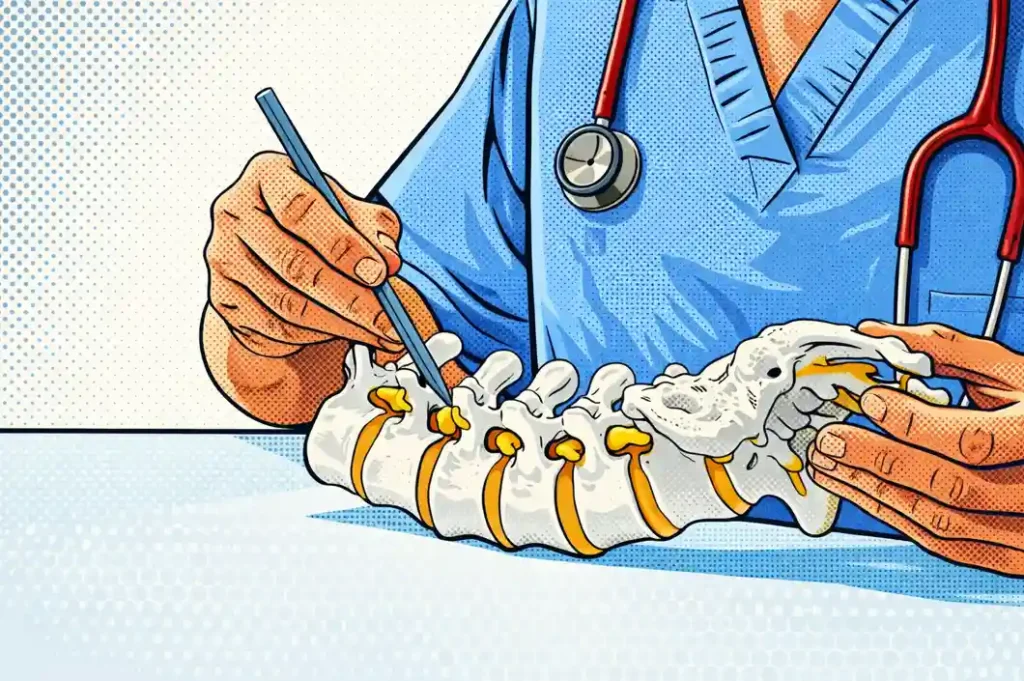

What is spine treatment in Korea for Russian patients?
KoreaMedTour.com
Spine treatment in Korea for Russian patients provides specialist evaluation and individualized care for conditions such as herniated discs, spinal stenosis, nerve compression, and spinal disorders. Korean hospitals may offer advanced diagnostics, surgical and non-surgical treatment, Russian-language interpretation, international-patient coordination, and follow-up planning.
Quick Summary
- Spine treatment in Korea for Russian patients provides access to specialist diagnosis and evidence-based care for back and neck conditions
- Leading Korean spine hospitals offer advanced diagnostic imaging, non-surgical treatments, minimally invasive procedures, and spine surgery when medically indicated
- Common conditions treated include herniated discs, spinal stenosis, nerve compression, degenerative disc disease, spondylolisthesis, and spinal deformities
- International patient centers can provide Russian-language interpretation, appointment coordination, medical record assistance, and treatment support
- Russian patients can often submit MRI scans and medical records before traveling to Korea for preliminary specialist review
- Treatment costs vary according to the diagnosis, procedure, hospitalization, implants, diagnostics, rehabilitation, and follow-up care, so patients should request an itemized treatment estimate
- Important considerations include accurate diagnosis, treatment indications, medical risks, visa requirements, travel arrangements, recovery time, and post-treatment follow-up
- Korea can be an option for Russian patients seeking specialized spine care, modern medical facilities, multilingual support, and coordinated international patient services
Table of Contents

Why Russian Patients Consider Spine Treatment in Korea
South Korea has developed a substantial international-patient healthcare system over the past decade. Medical Korea reports that more than 5.05 million foreign patients cumulatively received medical services in Korea between 2009 and 2024. Among cumulative patients, Russia accounted for 16,622 patients, Kazakhstan for 14,475, Mongolia for 25,731, and Uzbekistan for 3,328.
This regional patient base is relevant to Russian-speaking patients because international healthcare systems in Korea have developed practical experience with cross-border medical care, including:
- Pre-arrival medical record review
- Online consultations
- Diagnostic imaging assessment
- Treatment planning
- Russian-language interpretation at participating institutions
- Hospital admission coordination
- Medical certificates and treatment documentation
- Airport and hotel transportation assistance at some institutions
- Post-treatment follow-up coordination
Medical Korea also operates information services for international patients, including Russian-language support. Its Incheon International Airport information center provides services in Russian and can assist with information about medical institutions and medical-service reservations.
However, international-patient support should never be confused with a guarantee of a particular medical outcome. A high-quality treatment pathway begins with an accurate diagnosis and an appropriate indication for treatment.
What Spine Conditions Can Be Treated in Korea?
“Spine treatment” is a broad term covering conditions affecting the cervical, thoracic, and lumbar spine.
Common conditions evaluated by spine specialists include:
| Condition | Typical symptoms | Possible treatment approach |
|---|---|---|
| Herniated disc | Back/neck pain, radiating leg or arm pain, numbness | Conservative care, rehabilitation, selected procedures or surgery |
| Lumbar spinal stenosis | Leg pain, numbness, walking limitation | Rehabilitation, medication, selected procedures or decompression |
| Cervical spinal stenosis | Neck pain, arm symptoms, weakness, gait problems | Observation in selected cases, rehabilitation, surgery when indicated |
| Degenerative disc disease | Back or neck pain, reduced mobility | Non-surgical treatment first in many cases |
| Spondylolisthesis | Back pain, nerve symptoms, instability | Observation, rehabilitation, selected surgery |
| Spinal deformity | Abnormal spinal alignment, pain, functional limitations | Observation, rehabilitation, or corrective surgery depending on severity |
| Vertebral fracture | Acute pain, deformity, neurological symptoms | Conservative or surgical treatment depending on stability |
| Spinal tumors/infection | Persistent or progressive symptoms | Specialist investigation and condition-specific treatment |
Importantly, not every disc bulge seen on an MRI requires treatment. Imaging findings must be interpreted alongside symptoms and physical examination.
This distinction is particularly important for international patients who may arrive with an MRI report but without a complete clinical assessment.
Why Diagnosis Comes Before Spine Surgery
A common misconception is that a severe-looking MRI automatically means surgery is required.
That is not how evidence-based spine care works.
For example, a patient may have a lumbar MRI showing disc degeneration but experience pain caused primarily by muscular dysfunction or another musculoskeletal condition. Another patient may have a relatively specific disc herniation that compresses a nerve and produces characteristic radiating leg pain.
The two patients can have very different treatment plans despite having abnormalities on MRI.
NICE guidance recommends specialist imaging when the result is likely to change management rather than routinely imaging every episode of low-back pain.
A Korean spine specialist will typically consider:
- Location of pain
- Duration of symptoms
- Radiation into the arm or leg
- Numbness or sensory changes
- Muscle weakness
- Walking limitation
- Reflex or neurological findings
- Previous treatment
- MRI or CT findings
- Overall health and surgical risk
This creates a much more clinically useful question:
Does the patient’s clinical picture match the anatomical abnormality seen on imaging?
That relationship is critical when deciding whether surgery is appropriate.
Non-Surgical Spine Treatment in Korea
Surgery is only one part of modern spine care.
For many patients with chronic primary low back pain, evidence-based treatment emphasizes non-surgical management. The World Health Organization recommends approaches such as education and self-management support, exercise programs, selected physical therapies, psychological interventions, and appropriate medications depending on the individual clinical situation.
A Korean spine treatment pathway may therefore include:
1. Specialist evaluation
The physician reviews symptoms, neurological findings, medical history, previous treatment, and imaging.
2. Medication management
Depending on the diagnosis, clinicians may consider appropriate analgesic or anti-inflammatory medication while taking into account contraindications and other medical conditions.
3. Rehabilitation
Exercise-based rehabilitation can focus on:
- Core and trunk strength
- Mobility
- Postural control
- Functional movement
- Muscle conditioning
- Return to daily activities
4. Interventional treatment
Selected patients may be considered for procedures targeting specific pain generators or nerve-related symptoms. These should be based on a clear clinical indication rather than performed simply because a patient requests an injection.
5. Surgery when appropriate
Surgery becomes more relevant when there is a clear structural problem that corresponds with symptoms and when the expected benefit outweighs the risks of the procedure.
When Might Spine Surgery Be Recommended?
The decision depends heavily on the specific diagnosis.
For patients with sciatica caused by nerve compression, for example, NICE recommends considering spinal decompression when non-surgical treatment has not improved pain or function and radiological findings are consistent with the symptoms.
Potential surgical indications can include situations such as:
- Persistent disabling nerve pain despite appropriate conservative management
- Significant neurological deficit
- Progressive weakness
- Certain forms of spinal cord compression
- Severe spinal stenosis with appropriate clinical findings
- Structural instability
- Specific fractures
- Certain tumors or infections
- Selected spinal deformities
Emergency symptoms require urgent medical assessment
A patient should not delay medical attention while arranging international travel if there is:
- New or rapidly worsening limb weakness
- Loss of bladder or bowel control
- Saddle-area numbness
- Severe neurological deterioration
- Major trauma with suspected spinal injury
- Fever or systemic illness associated with severe spinal pain
These symptoms can indicate a potentially serious neurological or systemic condition.
Common Spine Procedures in Korea
The exact procedure depends on the diagnosis rather than nationality.
Minimally Invasive Spine Procedures
Selected patients may be candidates for minimally invasive techniques designed to reduce tissue disruption compared with certain traditional approaches.
Potential advantages can include smaller surgical exposure and, in appropriately selected cases, shorter recovery. However, “minimally invasive” does not automatically mean “risk-free” or “better for everyone.”
The appropriate technique depends on anatomy, disease severity, surgeon expertise, and treatment goals.
Discectomy
A discectomy may be considered when a herniated disc is compressing a nerve and causing clinically significant symptoms that meet surgical criteria.
Decompression
Decompression surgery aims to relieve pressure on neural structures. It may be considered in appropriately selected patients with conditions such as symptomatic spinal stenosis.
Spinal Fusion
Fusion is designed to stabilize selected spinal segments. It is a more substantial procedure than simple decompression and requires careful consideration of indications, risks, recovery, and long-term consequences.
It should not be presented as a universal solution for ordinary back pain. NICE specifically advises against routinely offering spinal fusion for low back pain outside a randomized controlled trial context.
What Russian Patients Should Prepare Before Traveling to Korea
One of the most practical ways to improve the efficiency of an international spine consultation is to organize medical information before the flight.
A patient should ideally prepare:
- Passport information
- Previous diagnosis
- MRI or CT images
- Radiology reports
- X-ray images where relevant
- Previous medical records
- List of current medications
- Previous surgery records
- Previous injection or rehabilitation history
- Relevant laboratory results
- Information about allergies
- Information about chronic medical conditions
MRI images are especially important
If possible, provide the actual MRI image files, not only a translated written report.
A report may say that there is a “disc protrusion,” but the treating specialist may need to see:
- Which spinal level is involved
- Whether the nerve is compressed
- Degree of canal narrowing
- Foraminal narrowing
- Alignment
- Degenerative changes
- Other structural abnormalities
This can make pre-arrival medical review substantially more informative.
Russian-Language Medical Support in Korea
Language is an important part of safe international healthcare.
Medical Korea’s accredited and participating international-patient institutions include facilities offering Russian interpretation and international healthcare coordination. The official provider directory lists institutions with services such as Russian interpretation, international healthcare centers, airport transportation, hotel coordination, and medical-document assistance.
However, patients should verify exactly what language services are available at the specific hospital and on the specific treatment date.
A useful Russian-language patient pathway should ideally cover:
Initial inquiry → medical record review → appointment → diagnosis → treatment decision → admission/procedure → discharge → medication instructions → follow-up
For complex spine surgery, interpretation should cover more than administrative conversations. Patients need to understand:
- The diagnosis
- Treatment alternatives
- Surgical objective
- Expected benefits
- Potential complications
- Recovery process
- Restrictions after surgery
- Follow-up schedule
Medical Visa and Travel Planning for Russian Patients
Patients traveling to Korea specifically for medical treatment should confirm the applicable visa requirements before making travel arrangements.
Medical Korea currently describes medical-tourism visa categories including C-3-3 for shorter treatment/travel periods and G-1-10 for longer treatment or rehabilitation periods, subject to the applicable requirements.
The application process can involve documentation such as:
- Passport
- Visa application
- Diagnosis or medical documentation
- Confirmation of treatment from a Korean medical institution
- Financial-support documentation
- Family relationship documents where applicable
Visa requirements can change, and eligibility depends on the patient’s circumstances. Therefore, Russian patients should verify current requirements with the relevant Korean embassy/consulate or official Korean immigration channels before travel.
How Much Does Spine Treatment in Korea Cost?
There is no medically responsible single price for “spine treatment in Korea.”
The final cost can vary substantially depending on:
- Diagnosis
- Number of spinal levels
- Diagnostic testing
- Outpatient versus inpatient treatment
- Type of procedure
- Surgical complexity
- Implant requirements
- Length of hospitalization
- Anesthesia
- Rehabilitation
- Medications
- Additional medical conditions
- Follow-up requirements
For an international patient, the most useful approach is to request an itemized medical estimate rather than relying on an advertised package price.
The estimate should clarify whether it includes:
- Initial consultation
- MRI/CT or other diagnostic tests
- Laboratory tests
- Surgeon fees
- Anesthesia
- Operating-room costs
- Implants
- Hospitalization
- Medication
- Rehabilitation
- Follow-up consultation
A low initial quote may not represent the final cost if essential diagnostic or hospital charges are excluded.
How to Choose a Korean Spine Hospital
Russian patients should evaluate hospitals based on clinical suitability and transparency, not marketing claims alone.
1. Check international-patient accreditation
Korea maintains an official system for identifying medical institutions serving foreign patients. The Medical Korea directory provides information about accredited institutions and international-patient services.
2. Verify the spine department
Look for relevant expertise in:
- Neurosurgery
- Orthopedic spine surgery
- Spine rehabilitation
- Pain medicine
- Neurology when relevant
3. Ask who will actually treat you
Patients should know the physician’s specialty and role rather than choosing a hospital solely because it advertises “advanced spine technology.”
4. Request a diagnosis-based treatment plan
A credible provider should explain:
Diagnosis → severity → treatment options → rationale → risks → expected recovery
5. Ask about alternatives
If surgery is proposed, ask:
- What happens if I do not have surgery?
- What non-surgical options remain?
- Why is surgery recommended now?
- What specific symptom is the surgery expected to improve?
- What are the major risks?
- How long is hospitalization expected to be?
- When can I safely fly home?
These questions help distinguish individualized medical care from procedure-focused marketing.
A Practical Example: Russian Patient With Lumbar Disc Herniation
Consider a hypothetical 48-year-old Russian patient who has experienced six weeks of lower-back pain radiating down one leg.
An MRI performed in Russia shows an L4–L5 disc herniation.
The patient might assume:
“My MRI shows a herniated disc, so I need surgery.”
But a specialist assessment should ask additional questions.
Is there:
- Persistent leg-dominant pain?
- Neurological deficit?
- Muscle weakness?
- Sensory loss?
- Reflex changes?
- Imaging-confirmed nerve compression?
- Failure of appropriate conservative treatment?
If symptoms are improving and there is no significant neurological deficit, surgery may not be necessary.
If severe persistent sciatica corresponds closely with nerve compression and appropriate conservative treatment has failed, decompression may become a reasonable consideration.
This illustrates an important principle of international spine care:
The MRI is evidence, not the diagnosis by itself.
What Recovery May Look Like After Spine Surgery

Recovery depends on the procedure and the patient’s health.
After selected minimally invasive procedures, some patients may resume basic activities relatively quickly, while more extensive reconstruction can require a substantially longer recovery period.
The timeline may involve:
Early phase
- Pain control
- Wound monitoring
- Mobilization
- Neurological observation
Intermediate phase
- Gradual increase in walking
- Activity restrictions
- Rehabilitation when indicated
- Medication adjustment
Longer-term phase
- Progressive strengthening
- Return to work
- Functional rehabilitation
- Follow-up imaging when clinically necessary
Patients traveling internationally should not schedule their return flight solely according to a generic “recovery time.”
The treating physician should determine whether the patient is medically fit to fly based on the procedure, complications, mobility, wound condition, thrombosis risk, and overall recovery.
Why Follow-Up Planning Matters for International Patients
A domestic patient can return to the hospital easily if a problem develops. An international patient cannot always do this.
Therefore, Russian patients should establish a follow-up plan before leaving Korea.
The plan should identify:
- Date of the next consultation
- Wound-care instructions
- Medication schedule
- Activity restrictions
- Warning symptoms
- Contact information
- When imaging is required
- Who will communicate with the patient’s doctor in Russia if necessary
A strong international treatment pathway should continue beyond the operating room.
Questions Russian Patients Should Ask Before Booking
Before committing to treatment in Korea, consider asking the hospital:
- What is my exact diagnosis?
- Does my MRI finding explain my symptoms?
- Is surgery necessary?
- What non-surgical alternatives are available?
- What procedure is being recommended and why?
- What are the major risks?
- What is the expected hospitalization period?
- What is included in the estimated cost?
- Is Russian interpretation available during consultations and hospitalization?
- Can my medical records be provided in English or Russian?
- How long should I remain in Korea after treatment?
- When is it medically safe to fly?
- What happens if I develop a problem after returning to Russia?
- Who should I contact for urgent questions?
- What follow-up schedule is recommended?
Red Flags When Choosing a Medical Provider
Patients should be cautious when a provider:
- Guarantees a surgical result
- Claims that everyone with a disc herniation needs surgery
- Uses “100% safe” language
- Promises guaranteed pain elimination
- Focuses exclusively on discounts
- Cannot explain the diagnosis
- Refuses to discuss alternatives
- Provides a price without explaining what is included
- Pressures the patient to book surgery immediately
- Does not provide a clear follow-up plan
High-quality medical communication should acknowledge uncertainty when uncertainty exists.
FAQ Section

Is Spine Treatment in Korea for Russian Patients available in Russian?
Yes. Spine Treatment in Korea for Russian Patients is available through Korean medical institutions that serve international patients. Participating hospitals may provide Russian-language interpretation, international patient coordinators, medical-record assistance, appointment scheduling, and treatment coordination. Russian patients should confirm the availability of interpretation before booking a consultation or surgery.
What spine conditions can Russian patients treat in Korea?
Spine Treatment in Korea for Russian Patients may include evaluation and treatment for herniated discs, spinal stenosis, degenerative disc disease, spondylolisthesis, spinal deformities, vertebral fractures, and nerve compression. Depending on the diagnosis, treatment may include medication, rehabilitation, interventional procedures, minimally invasive spine procedures, decompression, or spinal fusion.
How much does spine surgery in Korea cost for Russian patients?
The cost of spine surgery in Korea for Russian patients varies according to the diagnosis, surgical technique, number of spinal levels, implants, anesthesia, hospitalization, diagnostic testing, rehabilitation, and follow-up care. Instead of relying on a general advertised price, Russian patients should request an itemized treatment estimate from the selected Korean spine hospital.
Can Russian patients send MRI scans before traveling to Korea?
Yes. Many international-patient programs can review MRI scans and medical records before Russian patients travel to Korea. Providing the original MRI images, radiology report, previous treatment records, medication information, and surgical history can help the spine specialist assess the case and determine whether an in-person examination or additional diagnostic testing is required.
How should Russian patients choose a Korean spine hospital?
Russian patients choosing a spine hospital in Korea should evaluate the hospital’s spine specialty, physician expertise, international-patient services, Russian-language interpretation, diagnostic capabilities, treatment alternatives, transparent pricing, and post-treatment follow-up. Patients should also confirm that the recommended procedure is supported by their diagnosis and clinical findings rather than choosing a hospital solely because it advertises advanced or minimally invasive spine surgery.
Final Takeaway
Spine treatment in Korea for Russian patients should be approached as a complete medical pathway rather than simply as a search for a spine operation.
The most reliable process is:
1. Send medical records and MRI → 2. Obtain specialist assessment → 3. Confirm the diagnosis → 4. Compare non-surgical and surgical options → 5. Receive a transparent cost estimate → 6. Arrange Russian-language support → 7. Travel to Korea → 8. Complete diagnosis and treatment → 9. Follow a structured recovery plan → 10. Coordinate follow-up after returning to Russia.
Korea’s international healthcare infrastructure provides established support for foreign patients, including Russian-language services at participating institutions. At the same time, evidence-based spine care requires restraint: not every back-pain patient needs an operation, and not every abnormal MRI requires intervention.
For patients considering treatment abroad, the strongest decision is one based on a documented diagnosis, appropriately matched treatment, transparent risks and costs, qualified specialists, and a clear plan for recovery and follow-up.
Medical information in this article is for educational purposes and does not replace an examination or individualized medical advice from a qualified physician. Treatment indications, surgical risks, recovery periods, and costs vary by patient and medical institution.
References
- World Health Organization (WHO), Guideline for non-surgical management of chronic primary low back pain in adults.
- NICE, Low back pain and sciatica in over 16s: assessment and management (NG59).
- Ministry of Health and Welfare, Republic of Korea, 2024 Foreign Patient Statistics.
- Medical Korea, official information on foreign patients, international-patient services, accredited institutions and medical visas.

Korea Med Tour – Trusted Blog for Medical Tourism in Korea
Korea Med Tour is a trusted medical tourism content platform providing accurate, research-based healthcare information for international patients considering treatment in Korea.
Our editorial team specializes in global patient guidance, treatment insights, clinic selection, and medical travel planning. All content is developed using verified medical sources and structured editorial review processes to ensure clarity, safety, and reliability.
We are committed to helping international patients make informed and confident medical travel decisions when choosing Korea as their healthcare destination.