


Which is best: SMILE, LASIK, or LASEK in Korea?
KoreaMedTour.com
There is no single best laser eye surgery for everyone. SMILE is flap-free and may benefit selected patients concerned about dry eye, LASIK typically offers the fastest visual recovery, while LASEK may suit certain corneal or lifestyle needs. The best option depends on your eye health and examination results.
Quick Summary
SMILE vs LASIK vs LASEK in Korea are three established approaches to laser vision correction, but they differ in surgical technique, corneal tissue management, recovery, and suitability. SMILE is a flap-free procedure using a small corneal incision, LASIK creates a corneal flap for laser reshaping, and LASEK is a surface-ablation procedure. The most appropriate option depends on the patient’s refractive error, corneal thickness and shape, ocular-surface health, lifestyle, age, and comprehensive ophthalmic examination rather than the procedure’s popularity or price.
Key Insights
- SMILE: Small Incision Lenticule Extraction removes a corneal lenticule through a small incision without creating a LASIK-style corneal flap
- LASIK: Creates a thin corneal flap and uses an excimer laser to reshape the underlying corneal tissue, generally allowing very rapid visual recovery
- LASEK: A surface-ablation technique that works through the corneal epithelium and generally involves a slower early recovery
- Visual outcomes: Appropriately selected patients can achieve excellent visual outcomes with all three procedures, although individual results vary
- Dry eye: SMILE may have advantages over LASIK in certain objective measures of corneal sensitivity and tear-film stability, but no procedure eliminates dry-eye risk
- Recovery: LASIK generally provides the fastest early visual recovery, SMILE typically offers relatively rapid recovery, while LASEK requires longer epithelial healing
- Flap considerations: SMILE and LASEK do not create a LASIK-style corneal flap, which may be relevant for selected patients with particular occupational or lifestyle considerations
- Patient suitability: Treatment selection depends on corneal thickness, corneal topography or tomography, refractive error, tear-film health, pupil characteristics, prescription stability, and overall ocular health
- International patients: Patients traveling to Korea should arrange comprehensive preoperative testing, medical history review, treatment planning, and postoperative follow-up before deciding on surgery
- Important consideration: The newest or fastest procedure is not automatically the best treatment; clinical suitability, safety, evidence, surgeon expertise, and long-term follow-up should guide the decision
Why It’s Safe & Trusted
- Laser vision correction should be performed only after a comprehensive ophthalmic evaluation by a qualified eye-care professional
- Preoperative assessment can identify conditions that may increase surgical risk, including significant dry eye, abnormal corneal shape, inadequate corneal thickness, unstable refraction, or other ocular conditions
- Corneal topography and tomography can help evaluate corneal shape and identify abnormalities that may affect surgical eligibility
- Corneal thickness measurements are important when determining whether sufficient tissue is available for the planned procedure
- Ocular-surface evaluation is particularly important for patients with pre-existing dry-eye symptoms or tear-film abnormalities
- Patients should receive clear information about potential benefits, limitations, side effects, complications, alternatives, and expected recovery before informed consent
- LASIK has an extensive clinical history, while SMILE and surface-ablation procedures such as LASEK provide alternative approaches for appropriately selected patients
- Patients should not choose laser eye surgery solely because of promotional claims, low prices, celebrity endorsements, or claims that one procedure is universally superior
- International patients should confirm how postoperative monitoring will be managed after returning to their home country
- Patients should discuss whether the proposed procedure is appropriate for their prescription, corneal anatomy, ocular-surface condition, lifestyle, and long-term visual goals
- Elective refractive surgery should be considered only when the expected benefits and risks are acceptable for the individual patient
- No laser vision correction procedure can guarantee perfect vision or eliminate the future need for glasses or contact lenses
Clinical Advantages
- Rapid visual recovery: LASIK generally provides the fastest early visual recovery among the three procedures
- Flap-free correction: SMILE provides corneal refractive correction without creating a conventional LASIK flap
- Surface-based alternative: LASEK can provide a flap-free approach for selected patients when the ophthalmologist considers surface ablation appropriate
- Refractive correction: SMILE, LASIK, and LASEK can correct selected levels of myopia and astigmatism depending on the patient’s anatomy and the treatment platform
- Potential ocular-surface benefits: SMILE may preserve certain aspects of corneal innervation and tear-film function better than LASIK in some studies
- Established clinical experience: LASIK has been extensively studied and used worldwide for refractive correction
- Individualized treatment planning: Modern refractive surgery can incorporate corneal topography, tomography, pachymetry, refraction, pupil assessment, and ocular-surface findings into treatment selection
- Lifestyle considerations: Flap-free procedures may be relevant for selected patients involved in activities where corneal-flap considerations are important
- Comprehensive screening: Detailed preoperative testing can help determine whether laser vision correction is appropriate or whether an alternative should be considered
- International patient coordination: Korean eye clinics serving international patients may provide examination, treatment planning, interpretation, scheduling, and postoperative coordination
- Personalized decision-making: The best procedure is determined by the patient’s clinical characteristics rather than by a universal ranking of SMILE, LASIK, and LASEK
Best Candidates for SMILE, LASIK, or LASEK in Korea
- International patients with stable refractive errors who are seeking laser vision correction in Korea
- Patients with myopia or astigmatism within the treatment range of the selected procedure and laser platform
- Patients with adequate corneal thickness and appropriate corneal shape
- Individuals with a healthy or appropriately managed ocular surface
- Patients seeking rapid visual recovery who may be appropriate candidates for LASIK
- Patients who prefer a flap-free procedure and are anatomically suitable for SMILE
- Selected patients who may benefit from a surface-ablation approach such as LASEK
- Individuals who understand that procedure selection depends on comprehensive eye examination results
- Patients who can provide previous eye records, prescription history, contact-lens information, and relevant medical history
- International patients who can remain in Korea for the required examination, treatment, and initial postoperative monitoring
- Patients who understand the potential need for continued eye care after returning to their home country
- Individuals seeking a professional second opinion when they have been recommended a specific refractive procedure elsewhere
Additional medical evaluation may be particularly important for patients with significant dry eye, irregular corneal topography, suspected keratoconus, previous ocular surgery, unstable prescription, systemic conditions affecting healing, or other factors that may influence refractive surgery safety.
Expected Outcomes
- Improved uncorrected distance vision for appropriately selected patients
- Reduced dependence on glasses or contact lenses
- Rapid early visual recovery for many LASIK patients
- Relatively rapid visual recovery for many appropriately selected SMILE patients
- Successful refractive correction following LASEK after the required epithelial healing and visual stabilization period
- Potentially improved ocular-surface recovery with SMILE compared with LASIK in selected objective measures
- Reduced dependence on contact lenses for patients who are suitable candidates for laser vision correction
- Improved convenience for patients whose work, sports, travel, or daily activities are affected by glasses or contact lenses
- Individualized correction based on refractive error, corneal characteristics, ocular-surface health, and treatment goals
- Structured postoperative monitoring to identify healing issues, refractive changes, dry-eye symptoms, or other complications
- Potential for enhancement or additional vision correction in selected patients when clinically appropriate
Important: Outcomes vary substantially according to age, refractive error, corneal thickness and shape, ocular-surface health, pupil characteristics, previous eye conditions, surgical technique, treatment parameters, surgeon expertise, and individual healing response. No laser eye surgery can guarantee a specific visual outcome.
Bottom Line
SMILE vs LASIK vs LASEK in Korea is not simply a comparison of three competing technologies. Each procedure uses a different approach to reshape the cornea and has its own advantages, limitations, recovery profile, and eligibility considerations.
SMILE provides a flap-free lenticule-extraction approach and may offer advantages for selected patients concerned about corneal nerves or ocular-surface effects. LASIK remains a well-established option with generally very rapid early visual recovery. LASEK provides a surface-ablation alternative that may be appropriate for selected patients who require or prefer a flap-free approach.
For international patients, the most important factor is not choosing the procedure advertised as the newest, fastest, or cheapest. The real value comes from matching the right procedure to the right eye through comprehensive examination and individualized treatment planning.
Before traveling to Korea, patients should prepare their current prescription, previous eye examinations, contact-lens history, medical history, medication information, and treatment goals. During consultation, they should ask about corneal thickness, corneal topography or tomography, dry-eye status, expected recovery, potential complications, alternatives, and postoperative care.
The best approach is to evaluate clinical suitability, evidence, safety, surgeon experience, recovery requirements, expected visual outcomes, cost, and long-term follow-up together.
For international patients considering laser vision correction in Korea, a qualified ophthalmologist should determine whether SMILE, LASIK, LASEK, PRK, or another vision-correction option is appropriate after a complete eye examination.
Table of Contents
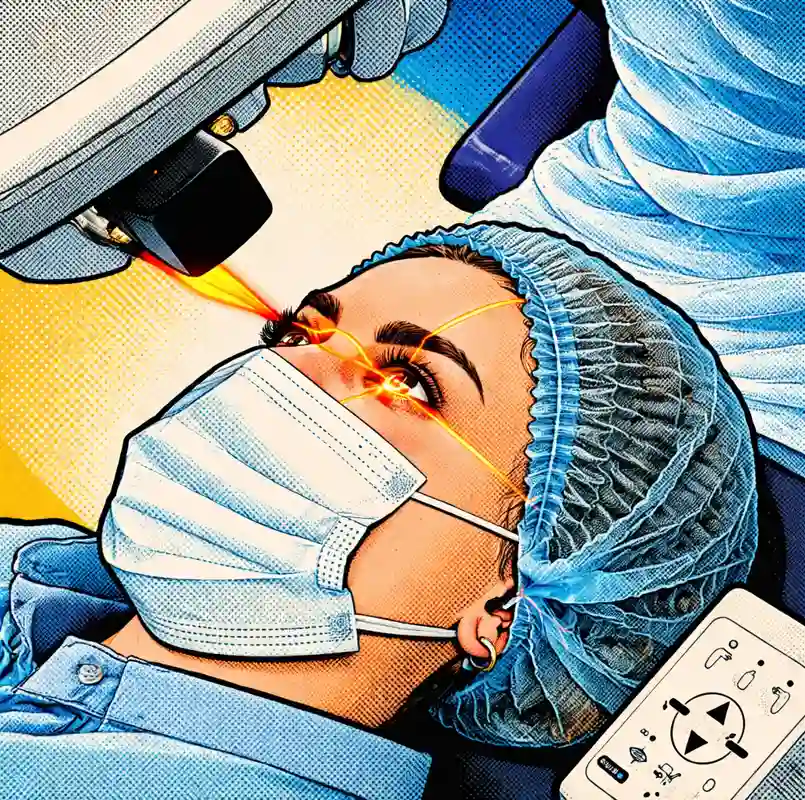
What Are SMILE, LASIK, and LASEK?
SMILE, LASIK, and LASEK are forms of corneal refractive surgery. They correct vision by changing the shape of the cornea so that incoming light focuses more accurately on the retina.
The main difference is how the surgeon accesses and reshapes the corneal tissue.
| Procedure | Main technique | Corneal flap | Typical recovery profile | Key consideration |
|---|---|---|---|---|
| SMILE | Removes a small corneal lenticule through a small incision | No | Generally rapid | Flap-free, potentially less ocular-surface disruption |
| LASIK | Creates a corneal flap and reshapes underlying tissue | Yes | Usually very rapid | Fast visual recovery but flap and dry-eye considerations |
| LASEK | Reshapes the cornea after removing/repositioning the surface epithelium | No | Slower | Surface procedure that may suit selected corneas/lifestyles |
These differences are important because refractive surgery is not simply a choice between three equivalent technologies. The anatomy of the individual eye determines which options are appropriate.
SMILE in Korea
SMILE, or Small Incision Lenticule Extraction, uses a femtosecond laser to create a small lens-shaped piece of corneal tissue called a lenticule inside the cornea. The surgeon then removes the lenticule through a small incision.
Unlike LASIK, SMILE does not require creation of a large corneal flap. This is one of its defining characteristics.
According to comparative evidence summarized by the American Academy of Ophthalmology’s EyeWiki, randomized trials have found similar visual and refractive outcomes between SMILE and femtosecond LASIK in appropriately selected patients. A randomized paired-eye study reported comparable efficacy, predictability, and safety at 12 months. A systematic review of randomized controlled trials also found no significant differences in several major final visual outcomes.
Potential advantages of SMILE
SMILE may be attractive for patients who:
- Prefer a flap-free procedure
- Have concerns about postoperative dry-eye symptoms
- Participate in activities where corneal flap considerations are relevant
- Have refractive characteristics suitable for SMILE
- Want a relatively quick recovery without a LASIK flap
The flap-free design may also have advantages for corneal nerve preservation and ocular-surface stability.
A 2025 meta-analysis of 18 studies found that lenticule extraction procedures such as SMILE were associated with better tear-film stability and corneal sensitivity measures than femtosecond LASIK at certain postoperative time points, although patient-reported dry-eye symptom differences were not statistically significant in every measure.
That distinction is important.
Better objective tear-film measurements do not mean that every SMILE patient will experience less dry eye than every LASIK patient.
Individual outcomes vary.
LASIK in Korea
LASIK, or Laser-Assisted In Situ Keratomileusis, is one of the most established forms of laser vision correction.
During LASIK, a thin corneal flap is created. The surgeon then uses an excimer laser to reshape the underlying corneal tissue before repositioning the flap.
One of the major advantages of LASIK is its generally rapid visual recovery. Many appropriately selected patients experience useful vision very soon after surgery, although the exact recovery timeline varies.
LASIK can provide highly predictable refractive correction when patients are appropriately selected. Comparative evidence shows that SMILE and LASIK can achieve similar final visual outcomes in many patients.
Why do some patients still choose LASIK?
LASIK remains relevant because:
- Visual recovery is generally fast
- It has a long clinical history
- It can correct a broad range of refractive errors depending on the laser platform and patient’s anatomy
- Treatment planning can be highly customized
- There is extensive clinical experience with the procedure
However, the presence of a flap creates considerations that do not apply in the same way to SMILE.
LASIK can also aggravate pre-existing dry eye. The FDA specifically advises patients with dry eyes to discuss the condition carefully before surgery, while ophthalmology guidance emphasizes optimizing the ocular surface before refractive surgery.
LASEK in Korea
LASEK, or Laser-Assisted Sub-Epithelial Keratomileusis, is a surface-ablation procedure.
Instead of creating a LASIK flap or extracting an intrastromal lenticule as in SMILE, LASEK involves working through the corneal epithelium and reshaping the underlying corneal tissue.
Because there is no LASIK-style corneal flap, LASEK can be considered in selected patients for whom a flap-based procedure is less desirable.
However, the trade-off is generally a slower and more uncomfortable early recovery than LASIK.
Patients may experience:
- More discomfort during the early healing period
- Temporary blurred vision
- Longer epithelial healing
- A longer period before vision stabilizes
The terminology surrounding surface ablation can also be confusing because PRK and LASEK are closely related techniques. Comparative ophthalmology literature has found broadly similar clinical outcomes between LASEK and PRK, with some differences in early corneal haze that may not persist at later follow-up.
Therefore, patients should ask the clinic exactly which surface-ablation technique is being proposed rather than assuming that every clinic uses the terms PRK, LASEK, and surface laser surgery interchangeably.
SMILE vs LASIK vs LASEK: Which Is Better?
There is no single winner.
The better procedure is the one that provides an appropriate balance of visual outcome, corneal safety, ocular-surface health, recovery expectations, and long-term suitability for the individual patient.
SMILE may be attractive when:
- A flap-free procedure is preferred
- Dry-eye risk is an important consideration
- The patient’s refractive error is suitable
- Corneal anatomy meets the requirements
- The patient accepts that visual recovery may differ from LASIK
LASIK may be attractive when:
- Very rapid visual recovery is a major priority
- Corneal anatomy is appropriate
- The ocular surface is healthy
- There are no significant contraindications to flap-based surgery
LASEK may be attractive when:
- A flap-free surface procedure is preferred
- Corneal anatomy or lifestyle makes LASIK less desirable
- The patient accepts a longer recovery period
- The surgeon determines that surface ablation provides an appropriate safety profile
This is why a clinic that automatically recommends the same procedure to every patient may not be following an individualized approach.
SMILE vs LASIK: Which Is Better for Dry Eyes?
Dry eye is one of the most important issues to evaluate before refractive surgery.
LASIK can temporarily disrupt corneal nerves and the normal corneal-lacrimal feedback system. Dry-eye symptoms can include burning, foreign-body sensation, fluctuating vision, redness, and light sensitivity.
The American Academy of Ophthalmology’s EyeWiki notes that postoperative dry-eye symptoms commonly improve within months, but some patients can experience persistent symptoms.
Comparative evidence suggests that SMILE can preserve certain aspects of corneal innervation and tear-film function better than LASIK. However, this does not mean SMILE eliminates dry-eye risk.
This distinction is particularly important for patients who:
- Already have dry eyes
- Spend many hours looking at digital screens
- Wear contact lenses extensively
- Have meibomian gland dysfunction
- Have ocular-surface inflammation
A proper preoperative evaluation should identify and treat significant ocular-surface disease before proceeding.
Which Procedure Has the Fastest Recovery?
For patients who prioritize rapid visual recovery, LASIK is generally known for the fastest early recovery among these three procedures.
SMILE can also provide relatively rapid recovery, although the exact timeline varies between patients.
LASEK generally requires more patience because the corneal epithelium must heal after surface treatment.
A simplified comparison is:
LASIK → fastest typical early visual recovery
SMILE → relatively rapid recovery
LASEK → slower early recovery
These are general patterns rather than guarantees. Visual stabilization depends on refractive error, corneal healing, ocular-surface health, treatment parameters, and individual biology.
Is SMILE Safer Than LASIK?
It is more accurate to say that SMILE and LASIK have different risk profiles rather than declaring one universally safer.
SMILE avoids creation of a corneal flap, which can be advantageous in certain patients. Comparative studies also suggest less disruption of some corneal nerve and ocular-surface parameters after SMILE.
However, LASIK has extensive clinical experience and can provide excellent outcomes in appropriately screened patients.
The most important safety factor is therefore not simply the procedure name.
It is:
Patient selection + accurate measurements + appropriate treatment planning + surgeon experience + postoperative care.
Who May Not Be a Good Candidate for Laser Eye Surgery?
Not everyone seeking vision correction should undergo refractive surgery.
The FDA identifies several factors that require careful assessment, including:
- Unstable prescription
- Significant dry eye
- Thin corneas
- Keratoconus or suspicious corneal topography
- Certain systemic diseases
- Conditions affecting wound healing
- Previous ocular surgery
- Certain medications
- Large pupils in low-light conditions
- Unrealistic expectations
Pregnancy and breastfeeding can also be associated with refractive instability, making timing an important consideration.
This is why a comprehensive preoperative examination is more important than selecting a procedure based on advertising.
What Eye Tests Should Be Done Before SMILE, LASIK, or LASEK?
For an international patient traveling to Korea, the preoperative examination should be a central part of the treatment decision.
Depending on the clinic and patient, evaluation may include:
1. Refraction
Determines the current prescription and degree of myopia, hyperopia, and astigmatism.
2. Corneal Topography
Maps the shape and curvature of the cornea.
3. Corneal Tomography
Provides more detailed information about corneal structure and helps identify abnormalities.
4. Corneal Thickness
Pachymetry measures corneal thickness, an important consideration for tissue removal and corneal safety.
5. Tear-Film and Dry-Eye Evaluation
Assesses the ocular surface before surgery.
6. Pupil Assessment
Large pupils can be associated with glare, halos, starbursts, and other night-vision symptoms in some patients.
7. Dilated Eye Examination
The surgeon may assess the overall health of the eye and retina when clinically appropriate.
Importantly, contact lenses can temporarily alter corneal shape. The FDA notes that patients may need to stop wearing contact lenses before baseline measurements because the effect can persist for weeks depending on the lens type.
What Are the Risks of SMILE, LASIK, and LASEK?
Refractive surgery is elective surgery, so patients should understand the potential risks before deciding.
Possible complications and side effects can include:
- Dry eye
- Fluctuating vision
- Glare
- Halos
- Starbursts
- Reduced contrast sensitivity
- Undercorrection
- Overcorrection
- Regression
- Infection
- Inflammation
- Corneal haze, particularly with surface-ablation procedures
- Need for enhancement
- Rare but serious loss of visual quality
The FDA emphasizes that some patients may continue to require glasses or contact lenses after refractive surgery and that serious complications, although uncommon, can occur.
Therefore, phrases such as “100% safe,” “guaranteed 20/20 vision,” or “no side effects” should be treated cautiously.
There are no guarantees in refractive surgery.
Choosing Laser Eye Surgery in Korea as an International Patient
Korea is a major destination for medical tourism, but international patients should evaluate an eye clinic using the same principles they would use anywhere else.
Do not choose a clinic solely because of:
- The lowest advertised price
- A limited-time promotion
- A celebrity endorsement
- A social-media ranking
- A claim that one procedure is universally superior
Instead, ask:
Before traveling
- Which procedures does the clinic offer?
- What diagnostic tests are included?
- Can the clinic review previous eye records?
- How long should contact lenses be discontinued before examination?
- What happens if the patient is not suitable for surgery?
During consultation
- What is my corneal thickness?
- Is my corneal topography normal?
- Do I have dry eye?
- Which procedure is recommended and why?
- What are the alternatives?
- What are the expected recovery stages?
- What complications should I understand?
After surgery
- How many follow-up visits are recommended?
- How long should I remain in Korea?
- What happens if a complication develops after returning home?
- Can the Korean ophthalmologist coordinate with a local eye doctor if necessary?
For international patients, postoperative continuity of care is particularly important because the patient may leave Korea shortly after treatment.
Is Laser Eye Surgery in Korea Worth Considering?
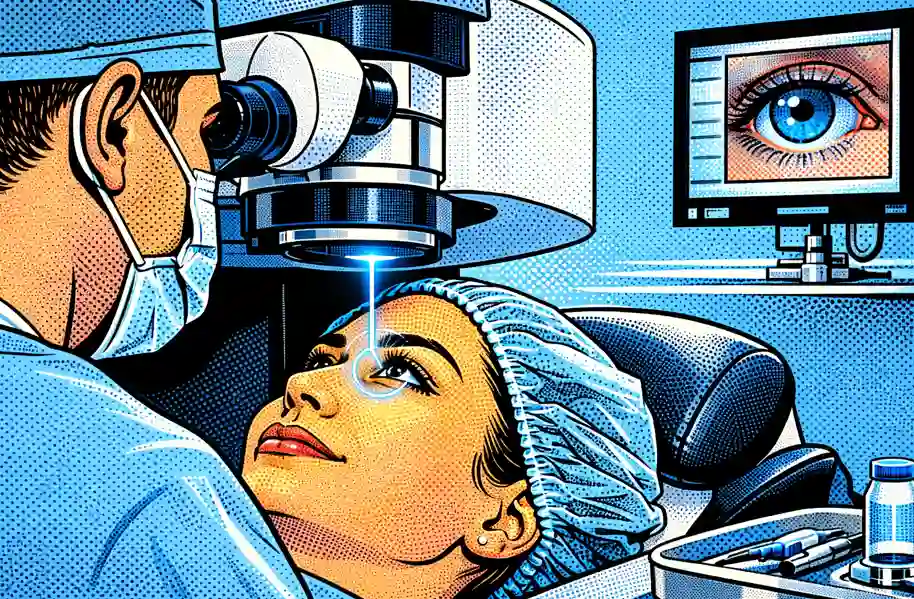
For a suitable patient, laser vision correction can significantly reduce dependence on glasses or contact lenses.
However, “worth it” should not be determined by cost alone.
The real comparison should be:
Expected visual benefit + safety + suitability + recovery + long-term follow-up
rather than:
Lowest price = best treatment
A lower-cost procedure is not necessarily better if the patient is poorly suited to it. Likewise, the newest technology is not automatically the safest choice for every eye.
The correct procedure is determined by the patient’s anatomy and clinical requirements.
Practical Example: How the Decision May Differ Between Patients
Consider three hypothetical patients.
Patient A: Healthy cornea, normal tear film, wants fast recovery
If testing confirms appropriate anatomy and no contraindications, LASIK may be a reasonable option because rapid visual recovery is an important priority.
Patient B: Active lifestyle and concern about dry eye
If the patient is anatomically suitable, SMILE may be considered because it avoids creation of a LASIK flap and may preserve aspects of corneal innervation and ocular-surface function better than LASIK.
Patient C: Corneal characteristics make flap-based surgery less desirable
A surface-ablation approach such as LASEK may be considered if the ophthalmologist determines that it offers an appropriate balance of safety and visual correction.
These examples illustrate an important principle:
The same prescription does not necessarily mean the same procedure.
Two people with identical myopia can have different corneal thickness, topography, tear-film quality, pupil size, and lifestyle requirements.
SMILE vs LASIK vs LASEK: Quick Decision Guide
| Your priority | Procedure that may be considered |
| Fastest typical visual recovery | LASIK |
| Flap-free laser vision correction | SMILE or LASEK |
| Concern about ocular-surface disruption | SMILE may be considered |
| Surface-ablation approach | LASEK |
| Active/contact-sport lifestyle | Flap-free options may warrant discussion |
| Pre-existing dry eye | Requires careful evaluation before any procedure |
| Thin or abnormal cornea | May rule out some procedures entirely |
| High expectations for night vision | Detailed pupil/corneal assessment is important |
This table is a discussion guide, not a treatment recommendation. A patient may fall into more than one category, and objective examination results take priority.
Why the Preoperative Examination Matters More Than the Procedure Name
One of the most useful ways to think about refractive surgery is that technology is only one part of the treatment.
The process is:
Eye examination
↓
Corneal and ocular-surface assessment
↓
Candidate screening
↓
Procedure selection
↓
Customized treatment planning
↓
Surgery
↓
Postoperative monitoring
A high-quality procedure performed on an unsuitable candidate is still an inappropriate treatment.
Conversely, an appropriately selected patient receiving a well-planned procedure can have excellent outcomes.
This is why the FDA recommends comparing doctors and procedures, understanding risks and limitations, and not basing the decision solely on price or promotional claims.
FAQ Section

Is SMILE better than LASIK in Korea for laser eye surgery?
SMILE is not universally better than LASIK. SMILE eye surgery in Korea is flap-free and may offer advantages for selected patients, particularly regarding certain measures of corneal sensitivity and tear-film stability. LASIK generally provides very rapid visual recovery. The appropriate procedure depends on individual eye anatomy, prescription, ocular-surface health, and lifestyle.
What is the difference between SMILE vs LASIK vs LASEK in Korea?
The primary difference is how the cornea is accessed and reshaped. SMILE removes a corneal lenticule through a small incision without creating a flap. LASIK creates a corneal flap before laser reshaping. LASEK is a surface-ablation procedure that works through the corneal epithelium. Recovery and suitability differ between patients.
Which is faster for recovery: SMILE, LASIK, or LASEK in Korea?
LASIK generally provides the fastest early visual recovery, while SMILE also typically allows relatively rapid recovery. LASEK usually requires a longer healing period because it is a surface-ablation procedure. Actual recovery varies according to prescription, corneal condition, ocular-surface health, treatment parameters, and individual healing.
Is SMILE better for dry eyes than LASIK or LASEK in Korea?
No laser procedure completely eliminates dry-eye risk. Some studies suggest SMILE may have advantages over LASIK in certain objective measures of corneal sensitivity and tear-film stability, but individual results vary. Patients with existing dry eye should undergo a detailed ocular-surface evaluation before choosing SMILE, LASIK, or LASEK.
How should international patients choose between SMILE, LASIK, and LASEK in Korea?
International patients should first undergo a comprehensive eye examination rather than selecting a procedure based on price or online rankings. Important factors include corneal thickness, corneal topography, refractive error, dry-eye status, pupil characteristics, prescription stability, recovery requirements, and postoperative follow-up. A qualified ophthalmologist should determine whether SMILE, LASIK, LASEK, or another option is appropriate.
Final Takeaway
When comparing SMILE vs LASIK vs LASEK in Korea, there is no procedure that is automatically the best for every patient.
LASIK is well known for rapid visual recovery and has extensive clinical experience. SMILE offers a flap-free approach and may provide advantages in certain ocular-surface and corneal-nerve measures. LASEK is a surface-ablation technique that may be appropriate for selected patients who are not ideal candidates for flap-based surgery or who have specific corneal or lifestyle considerations.
The most important step is therefore not choosing a procedure from an online ranking.
It is obtaining a comprehensive ophthalmic examination and individualized treatment recommendation.
For international patients considering laser vision correction in Korea, the decision should include not only visual correction but also corneal safety, dry-eye status, recovery time, surgeon experience, diagnostic testing, communication, and postoperative follow-up.
The best laser eye surgery is not necessarily the newest, fastest, or cheapest procedure. It is the procedure that is appropriate for your individual eyes.
Medical Disclaimer: This article is for general educational purposes and does not replace an examination or diagnosis by a qualified ophthalmologist. Eligibility for SMILE, LASIK, LASEK, PRK, or another refractive procedure must be determined through an individual eye examination. Surgical risks, benefits, indications, and available technologies can vary by patient, device, and clinic.
Reference
- American Academy of Ophthalmology (AAO) — LASIK and refractive surgery information
- PubMed — Peer-reviewed comparative research on SMILE, LASIK, and LASEK
- Korean ophthalmology clinics and medical institutions — Korea-specific procedure and international-patient information

Korea Med Tour – Trusted Blog for Medical Tourism in Korea
Korea Med Tour is a trusted medical tourism content platform providing accurate, research-based healthcare information for international patients considering treatment in Korea.
Our editorial team specializes in global patient guidance, treatment insights, clinic selection, and medical travel planning. All content is developed using verified medical sources and structured editorial review processes to ensure clarity, safety, and reliability.
We are committed to helping international patients make informed and confident medical travel decisions when choosing Korea as their healthcare destination.