
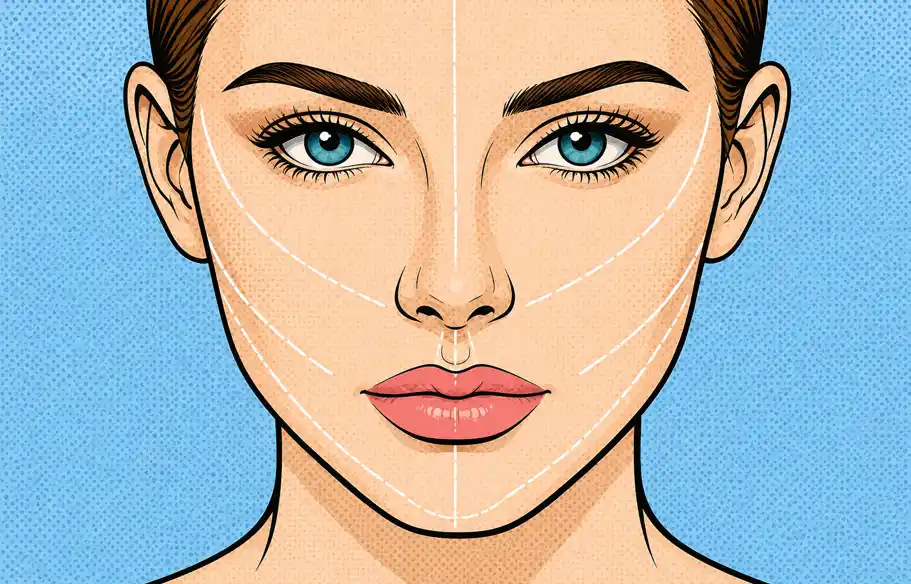

What is a facial contour lifting clinic in Korea?
KoreaMedTour.com
A facial contour lifting clinic in Korea provides treatments designed to improve facial laxity, sagging and jawline definition. Options may include HIFU, RF, thread lifting, injectables and facelift surgery. The appropriate treatment depends on skin elasticity, facial fat, tissue descent, volume loss and the patient’s desired outcome.
Quick Summary
Facial Contour Lifting Clinics in Korea offer a range of non-surgical and surgical approaches for improving facial laxity, sagging, jawline definition, and overall facial contour. Treatment options may include HIFU, radiofrequency (RF), thread lifting, injectables, fat-reduction treatments, and facelift surgery. The most appropriate approach depends on skin elasticity, facial fat distribution, tissue descent, facial volume, muscle structure, age, lifestyle, and individual aesthetic goals rather than treatment popularity or price.
Key Insights
- Facial contour lifting: A group of aesthetic treatments designed to improve facial laxity, sagging and definition of the cheeks, jawline and lower face
- HIFU lifting: Uses focused ultrasound energy to target selected tissue layers and may improve mild-to-moderate facial laxity in appropriately selected patients
- RF lifting: Uses radiofrequency energy to heat targeted tissue and support collagen remodeling, skin firmness and facial tightening
- Thread lifting: Uses medical threads to provide mechanical support and contour improvement for selected patients with appropriate degrees of tissue laxity
- Dermal fillers: Can restore selected areas of lost facial volume and improve structural balance but do not directly replace the tissue repositioning achieved through facelift surgery
- Facelift surgery: Surgically repositions facial tissues and removes or redrapes excess skin, making it more appropriate for selected patients with significant laxity or jowling
- Treatment selection: The best facial lifting procedure depends on skin quality, degree of sagging, facial fat, volume loss, muscle anatomy, treatment goals and overall health
- Non-surgical vs. surgical: Energy-based treatments generally involve less downtime, while surgical lifting can provide more substantial correction of advanced skin and soft-tissue laxity
- Combination treatment: Some patients may benefit from combining different approaches when multiple causes contribute to facial contour concerns
- International patients: Patients traveling to Korea should arrange consultation, treatment planning, medical history review and postoperative follow-up before undergoing treatment
- Important consideration: The newest, fastest or cheapest lifting treatment is not automatically the most appropriate option; clinical suitability, safety, evidence, clinician expertise and realistic expectations should guide treatment selection
Why It’s Safe & Trusted
- Facial contour lifting should be performed only after an appropriate medical assessment by a qualified healthcare professional
- A consultation should evaluate facial anatomy, skin laxity, tissue descent, facial fat distribution, volume, muscle structure and previous aesthetic procedures
- Patients should receive clear information about expected benefits, limitations, potential complications, downtime and alternative treatments before consenting
- HIFU and RF treatments should use appropriate medical devices and treatment parameters based on the patient’s anatomy and clinical objectives
- Thread lifting carries procedure-specific risks, including swelling, bruising, asymmetry, infection, thread visibility or palpability, skin irregularity and other complications
- Dermal fillers carry injection-related risks, including rare but serious vascular complications
- Surgical facelift procedures involve greater risks and recovery requirements than non-surgical facial lifting
- Patients should not choose a clinic solely because of promotional claims, exceptionally low prices, celebrity endorsements or claims that one lifting procedure is universally superior
- International patients should confirm how postoperative monitoring and complication management will be handled after returning home
- Patients should ask which exact device, injectable product, thread material or surgical technique will be used
- Clinics should explain realistic results rather than guarantee permanent lifting or a specific facial shape
- Individual treatment planning is essential because facial aging involves changes in skin, fat, soft tissue, muscle and underlying facial structure
Clinical Advantages
- Multiple treatment options: Korean aesthetic clinics may provide non-surgical and surgical approaches for different degrees and causes of facial aging
- Customized facial contouring: Treatment can be selected according to skin laxity, fat distribution, facial volume, muscle structure and desired contour
- Non-surgical options: HIFU and RF may provide tightening and firmness improvements without the incisions associated with facelift surgery
- Flap-free approach: Non-surgical lifting avoids the surgical skin incisions and tissue dissection associated with traditional facelift procedures
- Structural correction: Facelift surgery can address more substantial skin and soft-tissue laxity that non-surgical treatments cannot fully reproduce
- Jawline definition: Appropriate treatment may improve the visual definition of the lower face and jawline when laxity or selected soft-tissue factors contribute to poor contour
- Volume restoration: Dermal fillers or other volume-management strategies may address age-related volume changes when appropriate
- Combination planning: Selected patients may benefit from combining lifting, volume restoration, fat management or muscle-related treatments
- Individualized assessment: Modern facial rejuvenation planning considers facial proportions, skin quality, tissue laxity, fat compartments and the patient’s aesthetic goals
- International patient coordination: Korean clinics serving overseas patients may provide consultation, interpretation, scheduling, treatment planning and postoperative coordination
- Personalized decision-making: The appropriate treatment is determined by individual anatomy and clinical suitability rather than a universal ranking of facial lifting technologies
Best Candidates for Facial Contour Lifting in Korea
- Adults seeking improvement in facial laxity, sagging or reduced jawline definition
- Patients with mild-to-moderate skin laxity who may be appropriate candidates for non-surgical lifting
- Individuals seeking HIFU or RF treatment after appropriate medical assessment
- Patients with selected degrees of tissue laxity who may be candidates for thread lifting
- Individuals with facial volume loss who may benefit from carefully planned volume restoration
- Patients with significant jowling or excess facial and neck skin who may require evaluation for facelift surgery
- Individuals whose facial contour concerns involve multiple factors, such as laxity, fat distribution and volume loss
- Patients who understand that treatment selection depends on facial anatomy and clinical examination
- International patients who can provide relevant medical history and information about previous aesthetic procedures
- Patients who understand the expected recovery period and potential need for follow-up care
- Individuals seeking a professional second opinion before undergoing an invasive facial lifting procedure
- Patients who have realistic expectations regarding the degree, duration and limitations of treatment
Additional medical evaluation may be particularly important for patients with significant medical conditions, previous facial surgery, active skin conditions, abnormal healing history, use of medications affecting bleeding, or other factors that may influence procedural safety.
Expected Outcomes
- Improved appearance of mild-to-moderate facial laxity in appropriately selected patients
- Improved jawline and lower-face definition when laxity or selected soft-tissue factors are contributing to contour changes
- Increased skin firmness following appropriately performed energy-based treatments
- Collagen remodeling and improvement in skin texture with selected RF-based treatments
- Mechanical contour support in appropriately selected thread-lifting patients
- Restoration of selected facial volume with appropriately planned dermal filler treatment
- More substantial correction of facial and neck laxity following appropriately indicated facelift surgery
- Reduced appearance of jowling in patients whose anatomy is suitable for the selected treatment
- Improved facial balance through individualized treatment of volume, laxity, fat or muscle-related concerns
- Treatment outcomes that align with the patient’s facial anatomy, treatment choice and aesthetic goals
- Structured postoperative monitoring following invasive procedures to identify healing issues, asymmetry, infection or other complications
- Potential for additional or maintenance treatments depending on the procedure, individual aging process and clinical assessment
Important: Outcomes vary according to age, skin elasticity, facial anatomy, degree of laxity, fat distribution, facial volume, treatment technology, treatment parameters, clinician expertise, surgical technique and individual healing response. No facial lifting procedure can guarantee a specific facial shape, permanent results or elimination of future aging.
Bottom Line
Facial Contour Lifting Clinics in Korea offer a broad range of treatment options, from HIFU and RF to thread lifting, injectables and surgical facelift procedures. Each approach targets different aspects of facial aging and has its own benefits, limitations, recovery requirements and potential risks.
HIFU and RF may be appropriate for selected patients seeking non-surgical tightening, while thread lifting can provide mechanical support in carefully selected cases. Dermal fillers may address volume loss, whereas facelift surgery can provide more substantial correction of advanced facial and neck laxity.
For international patients, choosing a facial contour lifting clinic should not be based simply on the newest technology, lowest price or strongest promotional claim. The most important consideration is whether the clinic can accurately identify the underlying cause of facial aging and match the appropriate treatment to the patient’s anatomy, expectations and long-term goals.
Before traveling to Korea, patients should prepare information about previous cosmetic procedures, medical history, medications, allergies and treatment objectives. During consultation, they should ask about the exact treatment technology, target tissue layer, expected results, recovery time, potential complications, alternatives, clinician qualifications and postoperative care.
The best approach is to evaluate clinical suitability, evidence, safety, clinician expertise, expected outcomes, recovery requirements, cost and long-term follow-up together.
For international patients considering facial contour lifting in Korea, a qualified medical professional should determine whether HIFU, RF, thread lifting, injectables, facelift surgery or another approach is appropriate after an individualized assessment.
Table of Contents

What Is Facial Contour Lifting?
Facial contour lifting refers to aesthetic treatments designed to improve the appearance of facial sagging, laxity and loss of definition while creating a more structured facial contour.
Depending on the technique, treatment may target different anatomical levels:
- Skin: improving surface quality and elasticity
- Dermis: stimulating collagen remodeling
- Subcutaneous tissue: addressing selected fat compartments
- Fibrous supporting structures: improving tissue support
- SMAS/deeper tissues: repositioning or tightening deeper facial structures
- Facial volume: restoring areas that have lost fat or structural fullness
This distinction matters because “lifting” is not a single biological process. A patient whose main concern is loose skin may need a different strategy from someone whose jawline appears wider because of muscle bulk or excess subcutaneous fat.
Why Does the Face Lose Definition With Age?
Facial aging is multifactorial. It is not simply a matter of “loose skin.”
Common contributors include:
- Reduced skin elasticity
Collagen and elastin architecture changes with age, reducing the skin’s ability to recoil. - Changes in facial fat
Some fat compartments become smaller, while others may descend or become more prominent. - Soft-tissue descent
Supporting tissues gradually change position, contributing to cheek descent and jowling. - Bone remodeling
Age-related changes in the facial skeleton can alter the underlying framework supporting soft tissues. - Muscle activity and hypertrophy
Muscles such as the masseter can influence perceived lower-face width in selected patients. - Environmental factors
Ultraviolet exposure, smoking and other lifestyle factors can accelerate visible skin aging. The American Society of Plastic Surgeons also identifies skin thinning, facial fat loss, gravity, sun damage, smoking, heredity and stress among contributors to facial aging.
This is why two people of the same age may require completely different facial contour strategies.
Facial Lifting Treatments Available at Korean Clinics
A reputable Korean facial contour clinic may offer several categories of treatment. These should not be considered interchangeable.
| Treatment category | Main target | Typical role |
|---|---|---|
| HIFU / focused ultrasound | Deep tissue and selected deeper layers | Tightening/lifting |
| RF | Dermis and deeper soft tissue depending on device | Skin firmness and collagen remodeling |
| Thread lifting | Mechanical tissue support | Selected cases of mild-to-moderate laxity |
| Fillers | Lost volume/contour | Structural restoration |
| Fat reduction | Localized excess fat | Improving lower-face contour |
| Botulinum toxin | Selected muscles | Muscle-related facial width |
| Surgical facelift | Skin and deeper supporting tissues | More substantial correction of facial/neck laxity |
The treatment should be selected according to the anatomical cause of the contour problem, not simply the treatment’s popularity.
1. HIFU and Focused Ultrasound Lifting
HIFU, or high-intensity focused ultrasound, delivers concentrated ultrasound energy to targeted tissue depths.
The basic principle is controlled thermal energy that can produce tissue contraction and remodeling. Korea’s Ministry of Food and Drug Safety has described HIFU devices using ultrasound energy to create thermal coagulation points in target tissues, including the deep dermis and SMAS in appropriately designed devices.
HIFU is generally considered when the patient wants:
- Improvement in mild facial laxity
- Better jawline definition
- Non-surgical treatment
- Little or no downtime compared with surgery
However, HIFU is not a substitute for a facelift in patients with substantial excess skin or advanced tissue descent.
The outcome also depends on the specific device, treatment depth, energy settings, treatment pattern and patient anatomy. Therefore, the phrase “HIFU lifting” alone does not tell you enough about what treatment you are actually receiving.
What to ask a Korean clinic
Before treatment, ask:
- Which HIFU device is being used?
- What anatomical layers are being targeted?
- Is the device appropriately authorized for the intended use?
- Who performs the treatment?
- How is energy level selected?
- What areas will be treated?
- What complications are discussed during consent?
2. Radiofrequency Facial Tightening
RF treatments use radiofrequency energy to heat tissue and stimulate remodeling.
A recent systematic review covering RF facial rejuvenation studies published from 2015–2025 found improvements in aesthetic outcomes across the included studies, with reported improvements in skin texture and firmness and generally mild, transient adverse effects. However, the studies involved different technologies and protocols, so their results should not be interpreted as proof that every RF device produces the same outcome.
RF may be particularly relevant when the primary concern is:
- Reduced skin firmness
- Fine lines
- Mild-to-moderate laxity
- Skin texture
- Early signs of facial aging
One important distinction is that skin tightening and facial lifting are not identical.
A treatment can improve skin firmness without substantially repositioning descended facial tissue. Patients should therefore discuss whether their goal is better skin quality, tightening, contour improvement, or actual tissue repositioning.
3. Thread Lifting
Thread lifting uses absorbable or other medical threads placed beneath the skin to provide mechanical support and, depending on the material and technique, stimulate a healing response.
It can be considered for selected patients with relatively mild-to-moderate laxity who want more immediate contour change than energy-based treatments may provide.
However, thread lifting is still a medical procedure. Potential complications can include:
- Swelling
- Bruising
- Pain or tenderness
- Asymmetry
- Palpability or visibility of threads
- Infection
- Skin irregularity
- Thread migration or extrusion
- Unsatisfactory cosmetic results
The suitability of thread lifting depends heavily on facial anatomy, tissue thickness, skin laxity and the experience of the treating clinician.
A key question is not simply “How many threads will I receive?” but “Why are threads appropriate for my specific anatomy?”
4. Dermal Fillers and Facial Contouring
Sometimes what appears to be “sagging” is partly a loss of structural volume.
For example, age-related volume loss around the cheeks or temples can alter facial proportions and make the lower face appear heavier even when the amount of skin laxity is relatively modest.
In selected patients, restoring volume can improve facial balance.
However, fillers are injections and carry specific risks. The U.S. FDA notes that accidental injection into a blood vessel can cause serious complications, including tissue necrosis, visual abnormalities including blindness, and stroke, although such events are uncommon.
Therefore, filler treatment should be performed by an appropriately qualified medical professional who understands facial vascular anatomy and has a plan for managing complications.
More filler is not automatically better contouring.
An experienced clinician should determine whether the patient needs:
- Lifting
- Volume restoration
- Fat reduction
- Muscle reduction
- Skin tightening
- Or a combination of approaches
5. Surgical Facelift
For significant skin and soft-tissue laxity, a surgical facelift may be more appropriate than non-surgical lifting.
A facelift, medically known as rhytidectomy, is designed to improve visible signs of aging in the face and neck, including facial skin laxity, jowls, deepening facial folds and loose neck tissue.
Unlike energy-based treatments, surgery allows the surgeon to directly reposition and modify tissues.
This is particularly relevant when a patient has:
- Pronounced jowls
- Significant lower-face laxity
- Excess facial skin
- Neck laxity
- Advanced soft-tissue descent
A facelift does not stop the aging process and does not fundamentally change a person’s identity or facial structure.
Recovery matters
Recovery varies by surgical technique and individual healing. The American Society of Plastic Surgeons notes that many patients are publicly presentable within approximately 10–14 days, while the face may continue to feel different for 2–3 months as texture, sensation and tightness normalize.
Patients should plan recovery around work, travel and social commitments rather than assuming that swelling will disappear immediately.
How Should You Choose a Facial Contour Lifting Clinic in Korea?
Choosing a clinic should involve more than comparing promotional packages.
1. Start with the diagnosis, not the procedure
A strong consultation should answer:
“What is causing my facial contour concern?”
For example:
- Skin laxity → consider tightening or lifting
- Significant excess skin → surgical evaluation may be appropriate
- Localized fat → evaluate fat-reduction options
- Masseter enlargement → evaluate muscle-related treatment
- Volume loss → consider structural volume restoration
- Multiple causes → combination treatment may be appropriate
2. Check the clinician’s qualifications and experience
Ask who will actually perform the procedure.
For surgical treatment, confirm:
- Relevant specialist training
- Surgical experience
- Where the procedure is performed
- Anesthesia arrangements
- Emergency protocols
- Follow-up care
- Revision policy
For non-surgical treatments, ask about the clinician’s experience with the specific technology rather than assuming all devices are equivalent.
3. Ask about the actual device or product
A clinic advertisement may say “premium lifting” without making the technology clear.
Before treatment, ask for:
- Exact device name
- Treatment indication
- Treatment area
- Energy or treatment parameters
- Number of sessions recommended
- Expected downtime
- Potential adverse effects
This is particularly important when comparing clinics in Korea because different clinics may use different technologies under similar marketing terms.
What Does a Good Facial Lifting Consultation Look Like?
A comprehensive consultation generally involves several stages.
Step 1: Define the patient’s goal
For example:
“I want a sharper jawline but I don’t want my cheeks to look hollow.”
That is more clinically useful than simply saying:
“I want my face lifted.”
Step 2: Examine facial anatomy
The clinician should consider:
- Skin quality
- Facial symmetry
- Fat distribution
- Jawline
- Chin projection
- Cheek volume
- Degree of laxity
- Neck anatomy
- Previous cosmetic procedures
Step 3: Identify the dominant problem
Is it primarily:
laxity + volume loss + excess fat + muscle bulk + skin-quality change?
This distinction determines treatment selection.
Step 4: Discuss realistic outcomes
A responsible consultation should explain what the treatment can and cannot accomplish.
For surgical procedures, ASPS specifically recommends discussing goals, medical history, medications, previous procedures, treatment options, expected outcomes and potential complications during consultation.
Facial Contour Lifting: Non-Surgical vs. Surgical
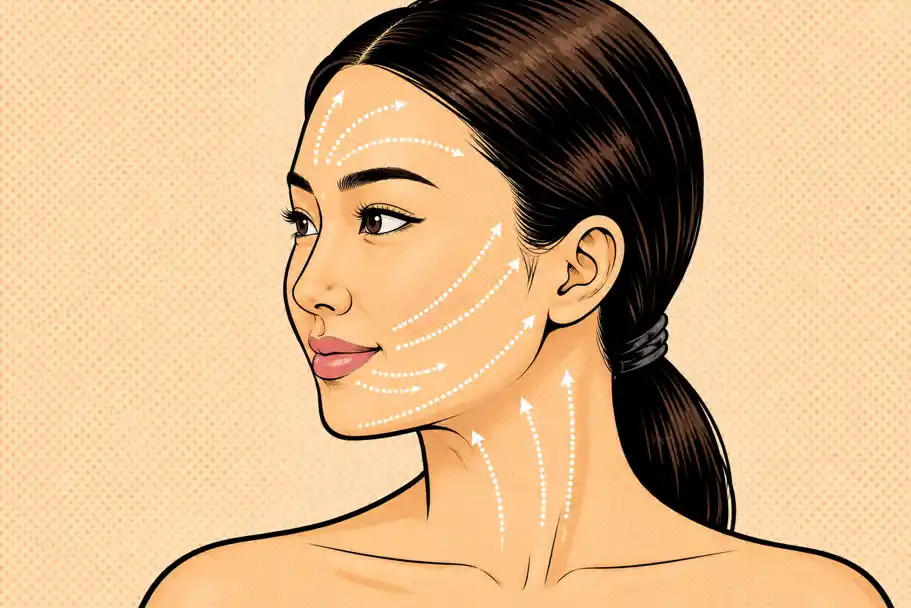
A useful way to think about the choice is:
Mild laxity → non-surgical options may be reasonable.
Moderate laxity → individualized assessment and potentially combined approaches.
Significant laxity or excess skin → surgical evaluation may be more appropriate.
This is not a strict age-based formula. Two patients of the same age can have very different anatomy and therefore very different treatment plans.
Importantly, minimally invasive procedures cannot produce exactly the same tissue repositioning as a facelift. ASPS explicitly notes that non-invasive rejuvenation treatments do not achieve the same results as facelift surgery, although they may complement surgery or delay when surgery becomes appropriate.
What Are the Risks of Facial Lifting?
The risk profile depends entirely on the procedure.
Energy-based treatments may involve temporary:
- Redness
- Swelling
- Tenderness
- Discomfort
- Pigmentary or thermal complications in some circumstances
Injectables have injection-specific risks.
Surgical facelift procedures carry more substantial potential complications, including bleeding, infection, fluid accumulation, nerve injury, sensory changes, wound-healing problems, prolonged swelling, scarring, asymmetry and unsatisfactory results.
This is why a reputable clinic should not present facial lifting as risk-free.
What About Before-and-After Photos?
Before-and-after photographs can be useful, but they should not be treated as proof that the same result will occur for another patient.
When reviewing photos, look for:
- Similar age
- Similar facial structure
- Similar degree of laxity
- Similar treatment
- Similar lighting
- Similar camera angle
- Similar facial expression
- Adequate follow-up period
A photograph taken immediately after a procedure may not represent the final result because swelling can temporarily alter facial contours.
Facial Contour Lifting for International Patients in Korea
Korea is a major destination for medical aesthetics, but international patients should apply the same safety standards they would use anywhere else.
Before traveling, confirm:
- The clinic’s identity and medical credentials.
- The exact procedure being proposed.
- The clinician responsible for treatment.
- Product and device information.
- Expected recovery period.
- Follow-up arrangements.
- What happens if a complication occurs after returning home.
- Whether an interpreter is available when necessary.
- Whether medical records can be provided in English or another appropriate language.
Do not schedule an invasive procedure immediately before a long-haul flight unless the treating medical team confirms that it is appropriate.
For surgical procedures, recovery planning is particularly important because swelling, wound care and follow-up may extend beyond the time a visitor originally planned to stay.
Questions to Ask a Korean Facial Contour Clinic
Before booking, consider asking:
- What is causing my facial sagging?
- Which anatomical layer are you treating?
- Why is this treatment appropriate for me?
- What alternatives do I have?
- What result is realistically achievable?
- How long is the expected recovery?
- What are the common complications?
- What are the rare but serious complications?
- Who performs the treatment?
- What exact device, thread or injectable product is used?
- How many treatments are normally required?
- What happens if the result is asymmetric or unsatisfactory?
- Who should I contact if I develop a complication?
- What follow-up is available after I return home?
These questions shift the consultation away from marketing claims and toward clinical decision-making.
How Much Does Facial Contour Lifting Cost in Korea?
There is no medically meaningful single “Korean facial lifting price.”
Cost can vary substantially according to:
- Treatment type
- Device or product
- Treatment area
- Number of shots or treatment units
- Number of threads
- Clinician experience
- Clinic location
- Whether multiple procedures are combined
- Anesthesia
- Surgical complexity
- Follow-up requirements
For this reason, extremely low advertised prices should not automatically be interpreted as better value.
A more useful comparison is:
Total treatment cost + clinician expertise + device/product + safety infrastructure + follow-up care + expected suitability.
FAQ Section

What should I look for in a facial contour lifting clinic in Korea?
When choosing a facial contour lifting clinic in Korea, look for qualified medical professionals, appropriate treatment technology, transparent pricing, clear explanations of risks and realistic results. A reputable Korean facial contouring clinic should assess your facial anatomy and recommend treatment based on your specific degree of skin laxity, tissue descent, facial volume and contour concerns.
What are the most popular facial lifting treatments in Korea?
Popular facial lifting Korea treatments include HIFU, radiofrequency (RF), thread lifting, dermal fillers and surgical facelifts. HIFU and RF are commonly considered for non-surgical skin tightening, while thread lifting provides mechanical support in selected cases. Patients with significant skin and soft-tissue laxity may require evaluation for surgical lifting.
Is non-surgical facial lifting in Korea effective?
Non-surgical facial lifting Korea treatments can improve selected forms of mild-to-moderate laxity and skin firmness. HIFU uses focused ultrasound energy, while RF uses radiofrequency energy to heat targeted tissue. Results vary according to the technology, treatment settings and individual anatomy, and these treatments cannot reproduce the tissue repositioning achieved by facelift surgery.
Is HIFU or RF better for facial contouring in Korea?
HIFU and RF target tissue differently, so neither is universally better. HIFU is commonly used to deliver focused ultrasound energy to deeper targeted tissues, while RF primarily uses controlled heating to promote tissue remodeling and improve skin firmness. A facial contour lifting clinic in Korea should select the technology according to your skin condition, facial anatomy and treatment goals.
How do I choose between facial lifting treatments and facelift surgery in Korea?
The choice depends mainly on the severity and cause of facial aging. Patients with mild laxity may consider non-surgical facial lifting Korea treatments, while significant jowls, excess skin or neck laxity may warrant a surgical consultation. An experienced Korean facial contouring clinic should explain the benefits, limitations, recovery time and risks of each option before treatment.
Final Takeaway
The most reliable way to choose a facial contour lifting clinic in Korea is to start with anatomy and treatment goals rather than a promotional treatment name.
If your concern is mild skin laxity, an energy-based treatment such as HIFU or RF may be considered. If the problem involves localized fat, muscle bulk or volume loss, another treatment category may be more appropriate. If you have substantial jowling, loose skin or neck laxity, a surgical consultation may provide a more realistic solution.
The strongest clinic is therefore not necessarily the one advertising the newest technology or the lowest price. It is the clinic that can clearly explain what is causing your contour concern, which anatomical layer is being treated, why the recommended procedure fits your anatomy, what results are realistic, and what happens if a complication occurs.
That combination of individualized assessment, qualified medical care, transparent risk communication and appropriate follow-up is much more meaningful than a generic promise of a “V-line,” “instant lifting,” or “permanent contour.”
For anyone considering facial contour lifting in Korea in 2026, the goal should be evidence-informed, anatomy-based treatment—not simply a more aggressive procedure.
Reference
- Korea Ministry of Food and Drug Safety — information describing HIFU medical-device mechanisms.
- PubMed — 2025 systematic review of radiofrequency facial rejuvenation.
- American Society of Plastic Surgeons — facelift recovery and expected timeline.

Korea Med Tour – Trusted Blog for Medical Tourism in Korea
Korea Med Tour is a trusted medical tourism content platform providing accurate, research-based healthcare information for international patients considering treatment in Korea.
Our editorial team specializes in global patient guidance, treatment insights, clinic selection, and medical travel planning. All content is developed using verified medical sources and structured editorial review processes to ensure clarity, safety, and reliability.
We are committed to helping international patients make informed and confident medical travel decisions when choosing Korea as their healthcare destination.