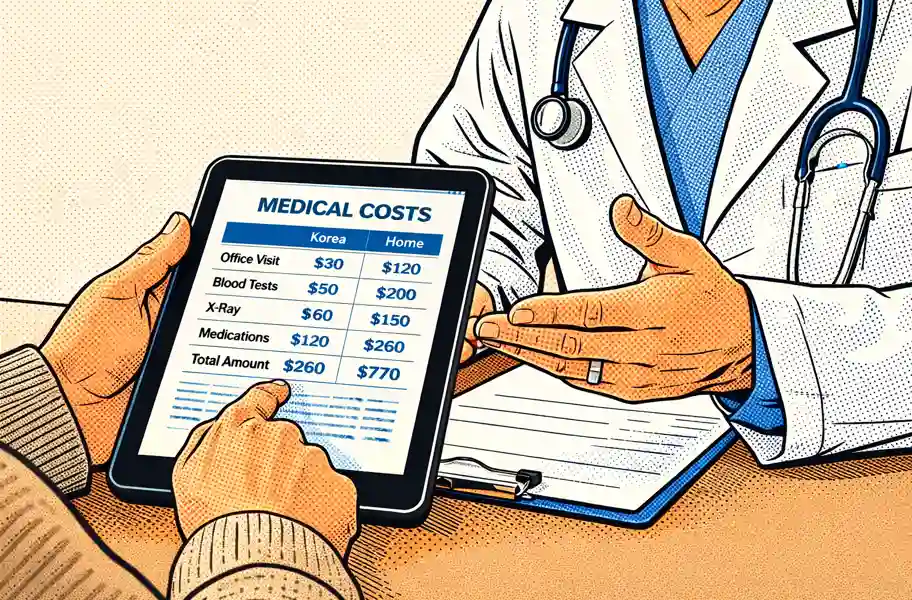


Eye disease treatment costs in Seoul, Korea, range from approximately ₩80,000 for basic examinations to several million won for advanced surgery. In 2026, cataract surgery, glaucoma treatment, retinal injections, and corneal procedures vary in price depending on disease severity, technology, and hospital fees.
KoreaMedTour.com
Quick Summary
There is no single standard price for eye disease diagnosis and treatment in Seoul, Korea, in 2026, because medical costs vary depending on the specific eye condition, disease severity, ophthalmology clinic or hospital, diagnostic technology, treatment method, ophthalmologist’s experience, prescribed medications, and whether follow-up examinations and postoperative care are included.
As a practical 2026 planning guide, international patients can use the following estimated Korean clinic pricing ranges to compare common eye examinations, cataract surgery, glaucoma treatment, retinal disease procedures, and other ophthalmology services.
Typical Eye Disease Examination Cost in Seoul: ₩80,000–₩400,000, depending on the examination and diagnostic requirements.
Typical Cataract Surgery Cost in Korea: ₩1,500,000–₩7,000,000 per eye, depending on the intraocular lens and surgical package.
Typical Glaucoma Treatment Cost in Seoul: ₩400,000–₩4,500,000, depending on whether laser treatment or surgery is required.
Typical Retinal Disease Treatment Cost in Korea: ₩250,000–₩5,000,000+, depending on the procedure, medication, and disease severity.
Typical Dry Eye Treatment Cost in Seoul: Varies depending on diagnostic examinations, prescribed medication, and specialized treatment procedures.
Common eye diseases, procedures, and related expenses may include:
- Comprehensive Eye Examination: ₩200,000–₩400,000.
- Optical Coherence Tomography (OCT): ₩30,000–₩100,000.
- Detailed Glaucoma Examination: Around ₩400,000.
- Cataract Surgery with Monofocal IOL: ₩1,500,000–₩3,000,000 per eye.
- Cataract Surgery with Premium IOL: ₩3,000,000–₩7,000,000 per eye.
- Glaucoma Laser Treatment: ₩400,000–₩500,000.
- Glaucoma Surgery: ₩4,000,000–₩4,500,000.
- Retinal Laser Treatment: Around ₩500,000 per eye.
- Intravitreal Injection Procedure: Around ₩250,000 per eye, excluding medication.
- Fluorescein Retinal Angiography: ₩700,000–₩900,000.
- Vitrectomy (Retinal Surgery): Around ₩5,000,000.
- Dry Eye Treatment: Varies depending on medication, tear film examinations, and specialized procedures.
- Corneal Disease Treatment: Varies depending on diagnosis, treatment method, and surgical requirements.
- Prescription Eye Drops and Medications: Varies depending on the prescribed treatment.
- Additional Consultations and Follow-Up Examinations: Varies by hospital and treatment plan.
- Accommodation in Korea: Varies depending on location, hotel category, and length of stay.
- Flights, Transportation, and Other Travel Expenses: Vary depending on the patient’s country of departure and travel arrangements.
The prices above are indicative planning references based on selected published Korean medical provider fee schedules, not verified nationwide average prices across all Korean eye clinics. In particular, patients should confirm whether the quotation covers one eye or both eyes, and whether it includes diagnostic examinations, surgical fees, medical materials, prescribed medication, and postoperative appointments. Actual costs may differ according to disease severity, treatment requirements, and individual medical conditions.
Before booking, confirm whether the quoted price covers the complete treatment plan, including the ophthalmologist’s fees, diagnostic examinations, surgical procedure, intraocular lenses or other medical materials, medications, and follow-up appointments. International patients should also check whether the clinic provides English-language consultations and assistance with postoperative care in Korea.
A useful approach is to confirm three numbers before arranging treatment:
1. Expected Treatment Cost — The exact diagnosis, recommended ophthalmology procedure, diagnostic examinations, surgical fees, medications, and required follow-up schedule.
2. Maximum Treatment Budget — The amount you are prepared to spend if additional examinations, consultations, alternative treatments, or medically necessary follow-up procedures are required.
3. Total Korea Medical Tourism Budget — Flights, accommodation, transportation, meals, translation or international-patient support, and other travel expenses. Allow sufficient time for the recommended examinations, treatment, and recovery before returning home.
The important point is that the cheapest eye clinic in Korea is not necessarily the best value. Before choosing a provider, compare the ophthalmologist’s qualifications, clinical specialization, diagnostic equipment, treatment options, surgical experience, potential complications, expected recovery time, and postoperative care arrangements.
It is also important to understand that different eye diseases require different treatment approaches. Cataracts are generally treated through surgery that replaces the cloudy natural lens with an artificial intraocular lens. Glaucoma management focuses on reducing intraocular pressure and preventing further optic nerve damage. Retinal conditions such as diabetic retinopathy and wet age-related macular degeneration may require laser treatment, repeated intravitreal injections, or retinal surgery.
Dry eye syndrome is commonly managed through lubricating eye drops, prescription medications, eyelid care, and selected specialized procedures. Corneal diseases may require medication, specialty contact lenses, corneal cross-linking, or transplantation, depending on the diagnosis.
Each treatment has different eligibility requirements, expected outcomes, recovery characteristics, and follow-up schedules. Some conditions can be managed with medication and regular monitoring, while others require urgent intervention. Importantly, existing vision loss caused by conditions such as advanced glaucoma may not be reversible.
For international patients, treatment planning and follow-up arrangements are just as important as the advertised price. Some procedures require repeated examinations or ongoing medication after returning home. Patients should obtain copies of their diagnostic images, medical reports, prescriptions, and treatment records to support continued care with an ophthalmologist in their home country.
For international patients, the most cost-effective approach is to obtain a written diagnosis-based treatment plan and transparent quotation from a qualified ophthalmology clinic before booking flights or accommodation. This helps ensure that the recommended treatment is medically appropriate, the total treatment cost is understood, and sufficient time is available for necessary follow-up examinations and recovery.
Table of Contents

Understanding Eye Disease Treatment Costs in Seoul
South Korea has a well-developed ophthalmology sector, with university hospitals, specialist eye hospitals, and private ophthalmology clinics offering services ranging from routine eye examinations to complex retinal and corneal surgery.
Seoul is a major destination for patients seeking specialist eye care, particularly in areas such as cataract surgery, glaucoma management, retinal disease, corneal disorders, and age-related vision problems.
However, there is no single fixed price for treating a particular eye disease. Two patients diagnosed with the same condition may receive different treatment recommendations and incur different expenses.
The main factors affecting the cost include:
- Disease severity: Early-stage conditions may require monitoring and medication, while advanced disease may require surgery or repeated procedures.
- Diagnostic requirements: OCT scans, visual field tests, corneal mapping, ultrasound, and retinal angiography may be required.
- Treatment technology: Different laser systems, surgical techniques, and medical devices can affect the total price.
- Medication and materials: Prescription eye drops, injectable medications, intraocular lenses, and surgical materials may be billed separately.
- Hospital type: University hospitals, specialized eye hospitals, and private clinics have different fee structures.
- Insurance eligibility: Korean residents covered by NHIS may pay considerably less for eligible treatments than international self-paying patients.
Estimated ophthalmology prices in Seoul (2026)
The following table provides practical reference prices based on published clinic fee schedules and international-patient price lists.
| Examination or treatment | Indicative price (KRW) |
|---|---|
| Basic ophthalmology examination | ₩80,000–₩200,000 |
| Comprehensive eye examination | ₩200,000–₩400,000 |
| Optical coherence tomography (OCT) | ₩30,000–₩100,000 |
| Detailed glaucoma examination | Around ₩400,000 |
| Fluorescein retinal angiography | ₩700,000–₩900,000 |
| Dry eye treatment (selected procedures) | ₩10,000–₩100,000+ |
| Cataract surgery, monofocal lens | ₩1,500,000–₩3,000,000 per eye |
| Cataract surgery, premium lens | ₩3,000,000–₩7,000,000 per eye |
| Glaucoma laser treatment | ₩400,000–₩500,000 |
| Glaucoma surgery | ₩4,000,000–₩4,500,000 |
| Retinal laser treatment | Around ₩500,000 per eye |
| Intravitreal injection procedure | Around ₩250,000, medication additional |
| Vitrectomy | Around ₩5,000,000 |
Pricing references: published schedules from Seoul ophthalmology providers, including Seoul Shinsegae Eye Center and other specialist clinics. Actual charges depend on the diagnosis, procedure, materials, medication, and whether the published fee includes related examinations.
Importantly, these prices should not be interpreted as a complete treatment package. For example, a retinal injection may involve a separate medication charge, while cataract surgery may require additional preoperative examinations and premium lens fees.
Cataracts: Diagnosis, Surgery, and Treatment Costs
A cataract is the clouding of the natural lens inside the eye. It most commonly develops with age as proteins in the lens gradually break down and form cloudy areas that interfere with light entering the eye.
Cataracts are among the most common causes of treatable vision impairment in older adults.
Common symptoms
- Blurred or cloudy vision.
- Increased sensitivity to sunlight and bright lights.
- Difficulty driving at night.
- Halos around headlights and streetlights.
- Faded or yellowish color perception.
- Frequent changes in eyeglass prescriptions.
Cataracts usually develop gradually. However, patients with diabetes, a history of eye injury, or prolonged steroid exposure may develop them earlier.
How are cataracts diagnosed?
An ophthalmologist generally performs:
- Visual acuity testing to measure vision.
- Slit-lamp examination to inspect the lens.
- Dilated fundus examination to assess the retina.
- Optical biometry to measure the eye and calculate the appropriate artificial lens.
- Corneal and retinal examinations when necessary.
Cataract treatment options in Seoul
The standard treatment is cataract surgery, during which the cloudy natural lens is removed and replaced with an artificial intraocular lens (IOL).
The most common technique is phacoemulsification, which uses ultrasound energy to break up and remove the cloudy lens through a small incision.
| Treatment | Estimated cost |
|---|---|
| Cataract examination | ₩80,000–₩500,000 |
| Monofocal IOL surgery | ₩1,500,000–₩3,000,000 per eye |
| Enhanced monofocal IOL | ₩2,200,000–₩4,000,000 per eye |
| Multifocal IOL surgery | ₩3,000,000–₩7,000,000 per eye |
| Toric IOL surgery | Depends on lens specifications |
Prices are indicative examples from published Seoul clinic schedules and international-patient fee lists, not a nationwide average.
Which cataract lens should patients choose?
- Monofocal lenses: Provide clear vision at one principal distance, often requiring glasses for other distances.
- Toric lenses: Designed to correct regular corneal astigmatism.
- Multifocal lenses: Designed to provide vision at multiple distances, although some patients experience halos or glare.
- Extended depth-of-focus (EDOF) lenses: Designed to provide a broader range of functional vision.
The most expensive lens is not necessarily the best option. Patients with retinal disease, glaucoma, corneal irregularities, or significant dry eye may not be suitable candidates for certain premium lenses.
Practical example: An international patient with cataracts in both eyes may initially compare a ₩1.5 million monofocal option with a ₩5 million premium lens. However, the actual decision should consider retinal health, night-driving requirements, astigmatism, and tolerance for possible visual side effects.
Glaucoma: Long-Term Treatment and Monitoring Costs
Perimetry visual field test for measure all areas of eyesight, including side, or peripheral vision. Perimetry eyes test for early sign of glaucoma of woman patient of ophthalmology clinic.
Glaucoma refers to a group of eye diseases that damage the optic nerve, which carries visual information from the eye to the brain.
Elevated intraocular pressure is an important risk factor, although glaucoma can also develop in people whose eye pressure falls within the statistically normal range.
The condition is particularly important because early glaucoma frequently causes no noticeable symptoms.
Types of glaucoma
- Primary open-angle glaucoma: The most common form in many populations. It usually progresses slowly.
- Angle-closure glaucoma: Occurs when the drainage angle becomes blocked. Acute angle closure can cause a sudden, painful increase in eye pressure and requires emergency treatment.
- Normal-tension glaucoma: Optic nerve damage occurs despite eye pressure measurements within the usual statistical range.
- Secondary glaucoma: Develops as a result of another condition, injury, inflammation, or medication.
Symptoms and diagnosis
Early glaucoma often has no symptoms. As the disease progresses, patients may gradually lose peripheral vision.
Diagnosis typically involves:
- Intraocular pressure measurement.
- Optic nerve examination.
- OCT imaging of the retinal nerve fiber layer.
- Automated visual field testing.
- Gonioscopy to examine the drainage angle.
- Corneal thickness measurement when clinically indicated.
A single normal eye pressure reading does not exclude glaucoma. Doctors evaluate multiple findings and may repeat examinations to establish whether damage is progressing.
Glaucoma treatment prices in Seoul
| Treatment | Estimated cost |
|---|---|
| Detailed glaucoma examination | Around ₩400,000 |
| OCT examination | ₩30,000–₩100,000 |
| Prescription eye drops | Depends on medication and insurance |
| Laser treatment | ₩400,000–₩500,000 |
| Glaucoma surgery | ₩4,000,000–₩4,500,000 |
These are indicative published prices. Medication, additional examinations, and postoperative monitoring may be charged separately.
Available treatment methods
1. Prescription eye drops
Eye drops are commonly the first treatment. They reduce intraocular pressure by decreasing fluid production or improving drainage.
2. Laser treatment
Procedures such as selective laser trabeculoplasty (SLT) can improve fluid drainage in suitable patients.
3. Glaucoma surgery
When medication and laser treatment do not adequately control the condition, surgery may be considered. Options include trabeculectomy, glaucoma drainage devices, and selected minimally invasive glaucoma surgery (MIGS) procedures.
The primary treatment goal is to prevent further optic nerve damage. Existing vision loss from glaucoma generally cannot be reversed.
Important consideration: Glaucoma treatment is usually a long-term commitment. Patients visiting Seoul for treatment should arrange a follow-up plan with an ophthalmologist in their home country rather than assuming that one consultation or procedure will complete their care.
Age-Related Macular Degeneration (AMD)
Age-related macular degeneration is a progressive disease affecting the macula, the central part of the retina responsible for detailed vision.
It can make reading, recognizing faces, driving, and other activities requiring sharp central vision increasingly difficult.
Two major types of AMD
Dry AMD
Dry AMD develops when the macula gradually changes and loses functional tissue. It generally progresses more slowly than wet AMD.
Wet AMD
Wet AMD develops when abnormal blood vessels grow beneath or around the retina and leak fluid or blood. It can cause relatively rapid central vision deterioration.
Symptoms
- Blurred central vision.
- Straight lines appearing wavy or distorted.
- Difficulty reading small text.
- Dark or empty areas in central vision.
- Reduced ability to recognize faces.
Early AMD may produce no obvious symptoms, which makes regular retinal examinations important.
Diagnosis and treatment
An ophthalmologist may perform a dilated retinal examination, OCT imaging, and fluorescein angiography when necessary.
Treatment depends on the disease stage:
- Early dry AMD: Regular monitoring and management of risk factors.
- Intermediate AMD: Monitoring and, for eligible patients, specific nutritional supplements based on clinical assessment.
- Wet AMD: Intravitreal anti-VEGF injections are a major treatment option.
- Selected cases: Photodynamic therapy or other specialist treatments.
Estimated AMD treatment costs in Seoul
| Treatment | Estimated cost |
|---|---|
| Detailed retinal examination | ₩200,000–₩400,000 |
| OCT imaging | ₩30,000–₩100,000 |
| Fluorescein angiography | ₩700,000–₩900,000 |
| Intravitreal injection procedure | Around ₩250,000 per eye |
| Injection medication | Approximately ₩150,000–₩1,000,000, depending on medication |
The injection procedure and medication are separate cost components in some published fee schedules. These figures are not a fixed AMD treatment package.
Why repeated injections may be necessary
Anti-VEGF medications inhibit abnormal blood vessel growth and leakage. However, wet AMD frequently requires repeated injections over an extended period.
The treatment schedule depends on the response observed through visual examinations and OCT scans.
Patients should therefore consider the long-term treatment budget, not just the initial injection price.
Diabetic Retinopathy: Eye Treatment for Patients With Diabetes
Diabetic retinopathy is a diabetes-related eye disease that damages the small blood vessels supplying the retina.
Persistently elevated blood glucose can weaken these vessels, causing leakage, bleeding, and abnormal blood vessel growth.
In advanced cases, diabetic retinopathy can cause severe visual impairment or blindness.
Stages of diabetic retinopathy
| Stage | Description |
|---|---|
| Mild non-proliferative | Small retinal blood vessel abnormalities appear |
| Moderate non-proliferative | More extensive vascular changes develop |
| Severe non-proliferative | Significant retinal blood vessel damage occurs |
| Proliferative | Abnormal new blood vessels grow and may bleed |
Diabetic macular edema (DME) can develop at different stages and involves fluid accumulation in the macula.
Symptoms
Early diabetic retinopathy may not cause noticeable symptoms. Later symptoms include:
- Blurred or fluctuating vision.
- Dark spots or floaters.
- Difficulty reading.
- Distorted central vision.
- Sudden vision deterioration when bleeding occurs.
Treatment options and estimated prices
| Treatment | Indicative price |
|---|---|
| Retinal examination | ₩200,000–₩400,000 |
| OCT imaging | ₩30,000–₩100,000 |
| Fluorescein angiography | ₩700,000–₩900,000 |
| Retinal laser treatment | Around ₩500,000 per eye |
| Intravitreal injection procedure | Around ₩250,000 per eye, medication additional |
| Vitrectomy | Around ₩5,000,000 |
Actual costs depend on disease severity, the number of treatment sessions, medication selection, and surgical requirements.
Why early diagnosis matters
Patients with diabetes should undergo regular comprehensive dilated eye examinations. The National Eye Institute recommends at least annual examinations for people with diabetes, although individual schedules may differ according to disease severity and clinical findings.
Managing blood glucose, blood pressure, and cholesterol is also important in reducing the risk of diabetic eye complications.
Dry Eye Syndrome: Diagnosis and Treatment Costs
Dry eye syndrome occurs when the eyes do not produce enough tears or when the tear film does not function properly.
The tear film protects the surface of the eye, maintains comfort, and supports clear vision. When it becomes unstable, patients may experience irritation, inflammation, and fluctuating eyesight.
Dry eye is particularly common among older adults, contact lens users, people who spend extended periods working with digital screens, and individuals with certain medical conditions.
Common symptoms
- Burning or stinging sensations.
- A gritty feeling, as though something is inside the eye.
- Redness and irritation.
- Temporary blurred vision.
- Sensitivity to light.
- Excessive watering despite an underlying dry eye condition.
Diagnostic examinations
Eye clinics in Seoul may use several methods to determine the cause and severity of dry eye:
- Tear break-up time (TBUT) to evaluate tear film stability.
- Schirmer testing to measure tear production.
- Corneal staining to identify surface damage.
- Meibomian gland examination to identify oil gland dysfunction.
- Tear lipid layer analysis when indicated.
Dry eye treatment costs in Seoul
| Treatment | Indicative price |
|---|---|
| Basic ophthalmology consultation | ₩80,000–₩200,000 |
| Tear film examination | ₩30,000–₩150,000 |
| Prescription eye drops | Depends on medication |
| Eyelid warming and gland treatment | ₩10,000–₩100,000+ |
| IPL treatment | Depends on equipment and number of sessions |
| Autologous serum eye drops | Depends on preparation and quantity |
Prices for selected dry eye procedures are based on publicly disclosed clinic fees. Medication and repeated treatment sessions may increase the total cost.
Available treatment methods
Artificial tears: Lubricating eye drops help relieve mild to moderate symptoms.
Prescription medication: Depending on the underlying inflammation, doctors may prescribe medications that improve tear production or reduce ocular surface inflammation.
Meibomian gland treatment: Patients with evaporative dry eye may benefit from eyelid hygiene, warm compresses, gland expression, or selected device-based treatments.
IPL treatment: Intense pulsed light may be considered for selected patients with meibomian gland dysfunction. It is not suitable for every type of dry eye.
Punctal plugs: Small plugs may be inserted into tear drainage openings to help retain tears.
The appropriate treatment depends on the underlying cause. A patient with reduced tear production may need a different treatment strategy from someone whose tears evaporate too quickly.
Retinal Detachment: Emergency Diagnosis and Surgical Treatment
Retinal detachment is a serious ophthalmological condition in which the retina separates from the underlying tissue that supports it.
Because the retina is responsible for receiving light and transmitting visual information to the brain, detachment can result in permanent vision loss if treatment is delayed.
Common causes and risk factors
- High myopia (severe nearsightedness).
- Aging-related changes in the vitreous.
- Previous eye surgery.
- Eye trauma.
- Retinal tears.
- Previous retinal detachment in the other eye.
- Certain retinal diseases.
Warning symptoms
Patients should seek immediate ophthalmological assessment if they experience:
- A sudden increase in floaters.
- New flashes of light.
- A dark shadow or curtain moving across the visual field.
- Sudden blurred vision.
- Loss of peripheral vision.
Medical emergency A suspected retinal detachment requires immediate medical attention. Do not delay treatment to compare hospital prices or arrange a routine appointment.
Treatment options and estimated costs
| Procedure | Indicative cost |
|---|---|
| Retinal diagnostic examination | ₩200,000–₩400,000 |
| Fluorescein angiography | ₩700,000–₩900,000 |
| Retinal laser treatment | Around ₩500,000 per eye |
| Scleral buckling surgery | Around ₩5,000,000 |
| Vitrectomy | Around ₩5,000,000 |
| Additional artificial lens | ₩2,000,000–₩7,000,000 per eye in one published fee schedule |
These figures represent selected published prices, not a universal quotation for retinal detachment surgery. The final surgical cost depends on the detachment, surgical technique, anesthesia, hospitalization, and additional materials.
What happens after surgery?
Postoperative care is an essential part of retinal treatment.
Depending on the procedure, patients may require:
- Repeated retinal examinations.
- OCT imaging.
- Eye drops to control inflammation and prevent infection.
- Temporary positioning restrictions.
- Follow-up assessments to monitor retinal attachment.
Some procedures involve a gas bubble inside the eye. Patients receiving certain intraocular gas treatments must follow specific travel restrictions, particularly regarding air travel and changes in altitude.
For international patients, the treating retinal surgeon should explicitly confirm when flying is safe.
Conjunctivitis and Eye Infections
Conjunctivitis is inflammation of the conjunctiva, the thin membrane covering the white part of the eye and the inside of the eyelids.
It is commonly known as pink eye.
Main types
- Viral conjunctivitis: Often associated with respiratory infections and highly contagious in some cases.
- Bacterial conjunctivitis: Caused by bacterial infection and may produce thick discharge.
- Allergic conjunctivitis: Triggered by allergens such as pollen, dust, and pet dander.
- Irritant-related conjunctivitis: Can result from exposure to smoke, chemicals, or other irritants.
Symptoms
Common symptoms include redness, itching, tearing, swelling, irritation, and discharge.
Eye pain, marked light sensitivity, or reduced vision should not automatically be attributed to ordinary conjunctivitis. These symptoms require prompt assessment because they may indicate a more serious eye condition.
Treatment and estimated costs
| Service | Indicative price |
|---|---|
| Initial ophthalmology consultation | ₩20,000–₩100,000 |
| Additional diagnostic examination | ₩30,000–₩150,000+ |
| Prescription eye drops | Depends on medication |
| Follow-up consultation | Depends on examination and treatment |
These are general budgeting estimates, not a verified Seoul-wide price survey.
Treatment depends on the cause. Viral conjunctivitis generally requires supportive care, bacterial cases may require prescribed antibiotics, and allergic conjunctivitis may respond to antihistamine or other anti-inflammatory eye drops.
Antibiotics should not be used unnecessarily, particularly when the infection is viral.
Corneal Diseases and Keratoconus
The cornea is the transparent front surface of the eye. It plays an important role in focusing incoming light.
Corneal diseases can affect transparency, shape, and surface integrity, potentially resulting in blurred vision, pain, or permanent visual impairment.
Common corneal conditions
Keratoconus
Keratoconus is a progressive condition in which the cornea becomes thinner and gradually develops an irregular cone-like shape.
Symptoms include increasing astigmatism, distorted vision, and frequent changes in eyeglass prescriptions.
Corneal ulcers
A corneal ulcer is an open sore on the cornea, often associated with infection. Contact lens misuse, eye injuries, and certain infections can increase the risk.
Corneal dystrophies
These are often inherited disorders that cause abnormal material to accumulate in different layers of the cornea.
Diagnostic procedures
- Corneal topography.
- Corneal tomography.
- Pachymetry (corneal thickness measurement).
- Slit-lamp examination.
- Corneal imaging and other specialized tests.
Estimated treatment costs in Seoul
| Treatment or examination | Indicative cost |
|---|---|
| Corneal thickness examination | Around ₩10,000–₩50,000 |
| Corneal topography | Around ₩30,000–₩100,000 |
| Corneal tomography | Depends on examination |
| Rigid gas-permeable contact lenses | ₩400,000–₩800,000 |
| Corneal cross-linking | Confirm clinic-specific quotation |
| Corneal transplantation | Depends on surgical technique and hospital |
The above prices are indicative planning figures rather than a standardized tariff.
For keratoconus, corneal cross-linking may be recommended to slow progression in suitable patients. It is designed primarily to strengthen the cornea, not necessarily to restore normal vision.
Advanced cases may require specialty contact lenses or corneal transplantation.
Other Common Eye Conditions Treated in Seoul
In addition to the major diseases discussed above, Seoul ophthalmology clinics diagnose and treat numerous other conditions.
| Eye condition | Common treatment |
|---|---|
| Blepharitis | Eyelid hygiene, warm compresses, medication |
| Floaters | Observation or specialist treatment when indicated |
| Uveitis | Anti-inflammatory medication and specialist monitoring |
| Strabismus | Glasses, exercises in selected cases, or surgery |
| Amblyopia | Corrective lenses and age-appropriate treatment |
| Presbyopia | Glasses, selected contact lenses, or surgical options |
| Optic neuritis | Investigation of the underlying cause and specialist treatment |
| Corneal abrasion | Lubrication, medication, and monitoring |
| Eyelid disorders | Medication or corrective surgery depending on the condition |
Not every eye condition requires surgery. Many are managed through medication, lifestyle adjustments, observation, or periodic diagnostic examinations.
The appropriate treatment depends on the underlying diagnosis rather than the symptom alone.
Korean National Health Insurance vs. International Patient Costs
One of the most important considerations when estimating eye treatment costs in Seoul is whether the patient is eligible for Korean National Health Insurance.
For Korean NHIS beneficiaries
Eligible medically necessary ophthalmology services may be covered under the national insurance system.
The NHIS outpatient cost-sharing rates published in its English guidance include:
| Medical institution | General outpatient copayment |
|---|---|
| Clinic | 30% |
| Hospital | 40% |
| General hospital | 45–50% |
| Tertiary general hospital | 60% |
These are general reference rates for covered care, not guaranteed patient charges for every ophthalmology service. Different benefit rules, exemptions, and special circumstances may apply.
For example, medically indicated cataract surgery may qualify for insurance benefits when applicable requirements are met. However, premium lens upgrades and other non-covered services can increase the patient’s expenses.
For international patients
International patients who are not eligible for NHIS generally pay the full self-pay price for their treatment.
This distinction is particularly important for:
- Cataract surgery.
- Glaucoma surgery.
- Retinal injections.
- Advanced diagnostic examinations.
- Corneal procedures.
- Non-covered laser treatments.
International patients should request a written quotation that identifies all included and excluded services.
How to verify hospital prices
Under Article 45 of South Korea’s Medical Service Act, medical institutions must disclose applicable non-covered medical expenses.
This gives patients a way to compare published fees before choosing a hospital. However, published prices are not necessarily complete treatment-package prices.
A useful starting point is the Health Insurance Review & Assessment Service (HIRA) website, which provides information about Korean healthcare services and medical fee disclosures.
What Should International Patients Know Before Receiving Eye Treatment in Seoul?
Seoul offers a wide range of ophthalmology services, but international patients should plan more carefully when treatment involves surgery, injections, or chronic eye disease management.
The most important consideration is continuity of care. Some eye conditions require repeated examinations over several months or years.
Step 1. Obtain an accurate diagnosis
Before choosing a treatment, patients should undergo a comprehensive ophthalmological examination.
If they have previous medical records, they should bring:
- Previous ophthalmology examination results.
- OCT images and retinal photographs.
- Visual field test results.
- Previous surgical records.
- Current prescription medications.
- Information about diabetes, hypertension, and other relevant medical conditions.
Having previous OCT scans can be particularly helpful when monitoring glaucoma and retinal diseases.
Step 2. Request a detailed treatment quotation
Ask the hospital to separate the following costs:
- Initial consultation.
- Diagnostic examinations.
- Medication.
- Surgical procedure.
- Intraocular lens or other medical materials.
- Anesthesia and hospitalization, if required.
- Postoperative examinations.
- Additional treatment sessions.
A quotation that includes only the surgical fee may not reflect the total amount payable.
Step 3. Confirm the treatment schedule
The recommended length of stay depends on the procedure.
| Treatment | General planning consideration |
|---|---|
| Routine eye examination | Usually one visit |
| Dry eye treatment | May require repeated visits |
| Glaucoma evaluation | May require repeat testing |
| Cataract surgery | Surgery and postoperative assessment |
| Retinal injections | May require recurring visits |
| Retinal detachment surgery | Requires postoperative monitoring |
| Corneal surgery | Follow-up depends on healing and procedure |
These are planning considerations, not guaranteed recovery timelines. Patients should obtain individual instructions from their surgeon.
Step 4. Arrange postoperative follow-up
Patients returning overseas should receive:
- A written diagnosis.
- Details of the procedure performed.
- Medication instructions.
- Postoperative examination results.
- Copies of relevant OCT and retinal imaging.
- A recommended follow-up schedule.
- Contact information for the treating ophthalmologist.
This documentation helps the patient’s local eye doctor continue treatment.
How Much Should You Budget for Eye Treatment in Seoul?
The following examples illustrate possible budgeting scenarios for international patients. They are not fixed hospital packages.
| Treatment scenario | Indicative budget |
|---|---|
| Initial comprehensive eye examination | ₩200,000–₩400,000 |
| Detailed glaucoma assessment and laser | ₩800,000–₩900,000 |
| Monofocal cataract surgery, one eye | ₩1,500,000–₩3,000,000 |
| Premium cataract surgery, one eye | ₩3,000,000–₩7,000,000 |
| Retinal examination and laser treatment | ₩700,000–₩1,000,000+ |
| Retinal examination and injection | ₩400,000–₩1,400,000+ |
| Complex retinal surgery | ₩5,000,000+ |
For a more realistic estimate, consider three different patient situations.
Case 1: A patient with early cataracts
A patient experiencing blurred vision undergoes an eye examination and is diagnosed with early cataracts. If daily activities are not significantly affected, the ophthalmologist may recommend monitoring rather than immediate surgery.
The initial examination cost may be the only immediate expense.
Case 2: A patient with advanced glaucoma
A patient with progressive peripheral vision loss may need OCT imaging, visual field examinations, medication, laser treatment, or surgery.
The initial examination and intervention are only part of the total cost. Long-term monitoring and medication should also be included in the budget.
Case 3: A patient with wet macular degeneration
A patient diagnosed with wet AMD may require anti-VEGF injections and repeated OCT examinations.
Because treatment can continue over an extended period, patients should calculate the expected cost of multiple treatment sessions rather than focusing on the first injection.
Why Choose Seoul, South Korea for Ophthalmology Treatment?
South Korea has an established healthcare infrastructure with specialist ophthalmologists, university hospitals, and dedicated eye treatment centers.
Several factors make Seoul an attractive destination for international patients.
Specialized ophthalmology services
Patients can access different ophthalmology subspecialties, including:
- Cataract and lens surgery.
- Glaucoma diagnosis and treatment.
- Retinal and macular disease management.
- Corneal disease treatment.
- Pediatric ophthalmology.
- Neuro-ophthalmology.
- Oculoplastic surgery.
Advanced diagnostic equipment
Many specialist eye centers offer advanced diagnostic technologies, including OCT, corneal tomography, automated visual field analysis, and digital retinal imaging.
These examinations help doctors evaluate eye structures and identify changes that may not be apparent during a basic vision test.
Access to different hospital types
Patients can choose between university hospitals, general hospitals, specialist eye hospitals, and private ophthalmology clinics.
The appropriate institution depends on the complexity of the disease.
For example, a routine cataract assessment may be managed by a specialist eye clinic, while a complicated retinal condition or systemic inflammatory eye disease may require a multidisciplinary university hospital.
International patient support
Some Korean hospitals provide:
- English-speaking coordinators.
- Multilingual consultation services.
- Overseas patient registration.
- Medical document translation.
- International appointment coordination.
- Assistance with treatment planning.
Patients should confirm whether these services are available before traveling.
FAQ Section

How much does eye disease treatment cost in Seoul, Korea?
Eye disease treatment costs in Seoul, Korea, range from approximately ₩80,000 for basic eye examinations to several million won for advanced procedures. Cataract surgery, glaucoma treatment, retinal injections, and other ophthalmology services have different prices depending on the diagnosis, hospital, and treatment requirements.
How much does cataract surgery cost in Korea in 2026?
Cataract surgery in Korea generally costs approximately ₩1.5 million–₩3 million per eye for selected monofocal lens procedures. Premium multifocal or advanced intraocular lens surgery may cost approximately ₩3 million–₩7 million per eye, depending on the lens and hospital.
How much does glaucoma treatment cost in Seoul?
Glaucoma treatment costs in Seoul vary according to disease severity and treatment method. Detailed glaucoma examinations may cost around ₩400,000, laser treatment approximately ₩400,000–₩500,000, and selected glaucoma surgeries approximately ₩4 million–₩4.5 million.
How much does retinal disease treatment cost in Korea?
Retinal disease treatment in Korea can cost approximately ₩500,000 for selected retinal laser procedures, around ₩250,000 for an intravitreal injection procedure excluding medication, and approximately ₩5 million for vitrectomy. Additional examinations, medications, and follow-up visits may increase the total expense.
Can international patients receive affordable eye treatment in Seoul, South Korea?
Yes. International patients can access ophthalmology examinations, cataract surgery, glaucoma management, and retinal treatments at Korean hospitals and specialist eye clinics. Treatment prices vary by institution, and overseas patients who are not eligible for Korean National Health Insurance generally pay the full self-pay fees. Request a detailed quotation before treatment.
Final Considerations: Planning Eye Disease Treatment in Seoul
Eye disease treatment costs in Seoul vary substantially depending on the condition and the level of medical intervention required.
Routine examinations and medication-based treatments are generally less expensive than cataract surgery, advanced glaucoma procedures, and retinal surgery.
For international patients, the most effective approach is to obtain an accurate diagnosis, compare transparent treatment quotations, understand the full cost of follow-up care, and select a medical institution with the appropriate ophthalmology specialization.
Most importantly, the treatment decision should be based on medical necessity, expected outcomes, and the patient’s individual eye condition—not simply the lowest advertised price.
Early diagnosis is particularly important for glaucoma, diabetic retinopathy, and age-related macular degeneration because significant vision damage can develop before obvious symptoms appear.
Patients considering treatment in South Korea should prioritize qualified ophthalmologists, appropriate diagnostic examinations, and a clear postoperative care plan.
References
- National Eye Institute – Cataracts
- Korean Medical Service Act – Article 45
- BSM Eye Care Clinic – Eye diseases and conditions

Korea Med Tour – Trusted Blog for Medical Tourism in Korea
Korea Med Tour is a trusted medical tourism content platform providing accurate, research-based healthcare information for international patients considering treatment in Korea.
Our editorial team specializes in global patient guidance, treatment insights, clinic selection, and medical travel planning. All content is developed using verified medical sources and structured editorial review processes to ensure clarity, safety, and reliability.
We are committed to helping international patients make informed and confident medical travel decisions when choosing Korea as their healthcare destination.