


How much does Quattro liposuction cost in Korea?
KoreaMedTour.com
Quattro liposuction cost in Korea depends on the treatment areas, surgical technique, anesthesia, and clinic. General liposuction procedures in Seoul may range from approximately ₩1.5 million to ₩7 million per area, while extensive multi-area procedures can cost ₩7 million to ₩15 million or more.
Note: These are general liposuction budgeting estimates, not verified Quattro-specific prices.
Quick Summary
There is no single standard price for Quattro Liposuction in Seoul, Korea, in 2026, because treatment costs vary depending on the specific surgical technique, number of treatment areas, amount and distribution of subcutaneous fat, surgeon’s experience, anesthesia requirements, and whether compression garments, medications, and postoperative care are included.
As a practical 2026 planning guide, international patients can use the following indicative price ranges when budgeting for liposuction in Seoul.
Typical Liposuction Cost in Seoul = ₩1,500,000 to ₩7,000,000 per treatment area, depending on the surgical method, body area, clinic, and treatment package.
Common liposuction procedures and related expenses may fall within these approximate ranges:
- Double Chin Liposuction: ₩1,000,000–₩3,500,000
- Upper Arm Liposuction (Both Arms): ₩1,500,000–₩4,000,000
- Abdominal Liposuction: ₩2,000,000–₩5,000,000
- Waist and Flank Liposuction: ₩2,000,000–₩4,000,000
- Thigh Liposuction: ₩3,000,000–₩6,000,000
- Back Liposuction: ₩2,000,000–₩4,000,000
- Multiple-Area Liposuction: ₩5,000,000–₩11,000,000
- Extensive Full-Body Liposuction: ₩7,000,000–₩15,000,000+
- Preoperative Medical Examinations: Varies by clinic and examination requirements
- Anesthesia and Operating Room Fees: Included in some packages; additional fees may apply
- Compression Garments and Prescription Medications: Varies by clinic
- Postoperative Consultations and Follow-Up Care: Included in some packages; additional fees may apply
- Accommodation in Seoul: Varies depending on location, hotel category, and length of stay
- Flights, Transportation, and Other Travel Expenses: Vary depending on the patient’s country of departure and travel arrangements
These figures are indicative budgeting estimates for general liposuction, not verified Quattro-specific prices or average prices across all Seoul plastic surgery clinics. Quattro is not a universally standardized surgical technique, and the exact procedure marketed under this name may differ between providers. Actual quotations may vary according to the clinic’s surgical protocol and package inclusions.
A useful approach is to confirm three numbers before booking:
- Expected treatment cost — the exact Quattro procedure, surgical techniques, treatment areas, anesthesia, preoperative examinations, medications, compression garments, and postoperative follow-up schedule.
- Maximum treatment budget — the amount you are prepared to spend if additional examinations, consultations, or medically necessary follow-up treatments are required.
- Total Korea medical tourism budget — flights, accommodation, transportation, meals, translation or international-patient support, and other travel expenses. Allow sufficient time for postoperative examinations and recovery before returning home.
The important point is that the cheapest liposuction clinic in Seoul is not necessarily the best value. Before choosing a provider, compare the operating surgeon’s qualifications, the actual surgical technique, anesthesia arrangements, medical facility standards, potential complications, expected recovery time, and postoperative care arrangements.
It is also essential to distinguish between conventional liposuction and energy-assisted techniques such as VASER or laser-assisted liposuction. Conventional liposuction removes localized subcutaneous fat through suction, while energy-assisted techniques use additional technologies to facilitate fat removal. A more expensive technology does not automatically guarantee better results. The appropriate procedure depends on the patient’s anatomy, skin elasticity, medical history, and treatment goals.
For international patients, recovery and follow-up planning are just as important as the advertised price. Swelling, bruising, discomfort, temporary numbness, and contour irregularities may occur after surgery. Initial recovery often takes one to two weeks, while more noticeable contour changes may develop over two to three months. Final tissue recovery can take three to six months or longer. Liposuction is a body-contouring procedure, not a treatment for obesity or visceral abdominal fat.
For international patients, the most cost-effective approach is to obtain a written treatment plan and transparent quotation from a qualified Korean plastic surgeon before booking flights or accommodation. This helps ensure that the proposed procedure is medically appropriate, the total cost is understood, and sufficient time is available for postoperative monitoring and recovery.
Table of Contents

What Is Quattro Liposuction?
Quattro liposuction is a term used in some cosmetic surgery marketing to describe a specialized approach to body fat removal and contouring. The exact meaning depends on the medical provider offering the treatment.
Unlike a universally defined surgical technique such as conventional suction-assisted liposuction, the name Quattro does not establish a single standardized combination of instruments, anesthesia methods, or surgical steps.
Patients should therefore ask whether the procedure involves:
- Conventional suction-assisted liposuction.
- Power-assisted liposuction (PAL).
- Ultrasound-assisted liposuction, such as VASER.
- Additional body-contouring or skin-tightening treatments.
- A combination of techniques designed for multiple body areas.
The surgeon should explain which components are actually used rather than relying exclusively on a commercial procedure name.
How Does Liposuction Work?
Liposuction is a surgical procedure that removes localized subcutaneous fat through small incisions using a thin cannula connected to a suction system.
In many procedures, a tumescent solution containing saline, a local anesthetic, and a medication that reduces bleeding is introduced into the treatment area before fat removal.
The surgeon then uses controlled movements to remove selected fat deposits and reshape the underlying body contour.
The objective is to improve body proportions, not simply to remove the largest possible amount of fat.
Quattro Liposuction Cost in Korea: 2026 Price Breakdown
South Korea is an established destination for cosmetic procedures, particularly in Seoul’s Gangnam and Apgujeong medical districts.
Liposuction prices vary considerably because clinics calculate surgical fees according to the patient’s anatomy, treatment areas, estimated operating time, and required medical resources.
The following table provides indicative budgeting ranges based on publicly listed Korean clinic prices and 2026 market guides. These are general liposuction reference prices, not verified Quattro-specific quotations.
| Treatment Area | Estimated Cost (KRW) |
|---|---|
| Double chin and jawline | ₩1,000,000–₩3,500,000 |
| Upper arms (both sides) | ₩1,500,000–₩4,000,000 |
| Upper or lower abdomen | ₩1,000,000–₩2,500,000 |
| Full abdomen | ₩2,000,000–₩5,000,000 |
| Abdomen and flanks | ₩3,000,000–₩7,000,000 |
| Full thighs | ₩3,000,000–₩6,000,000 |
| Back and bra-line area | ₩2,000,000–₩4,000,000 |
| Multiple body areas | ₩5,000,000–₩11,000,000 |
| Extensive full-body contouring | ₩7,000,000–₩15,000,000+ |
Prices are indicative planning estimates, not guaranteed clinic quotations. Treatment definitions differ between providers. VAT, anesthesia, compression garments, medication, and follow-up services may be charged separately.
Example Treatment Budgets
Consider three hypothetical patients:
Patient A: Upper Arm Contouring
A patient wants to reduce localized fat around both upper arms. The surgeon determines that conventional liposuction is appropriate.
Estimated planning budget: ₩1,500,000–₩4,000,000.
Patient B: Abdominal and Flank Contouring
A patient wants to address the abdomen and love handles to improve waist definition.
Estimated planning budget: ₩3,000,000–₩7,000,000.
Patient C: Multiple-Area Body Contouring
A patient wants to address the abdomen, flanks, thighs, and upper arms.
Estimated planning budget: ₩7,000,000–₩15,000,000 or more.
These examples illustrate how treatment scope affects cost. They are not clinical recommendations or individual treatment quotes.
What Factors Affect Quattro Liposuction Prices in Korea?
Several factors determine the final surgical fee.
Number of Treatment Areas
The number of body areas is one of the most important pricing factors.
Treating a small localized area generally requires less operating time and fewer resources than treating the abdomen, flanks, back, and thighs together.
However, clinics do not always define treatment areas in the same way. For example, some providers quote the upper and lower abdomen separately, while others offer a combined abdominal package.
Always request a written explanation of the areas included.
Amount and Distribution of Subcutaneous Fat
The amount of fat present and its distribution affect surgical complexity.
A patient with localized fat deposits may require a relatively straightforward procedure. Someone with thicker or more widely distributed subcutaneous fat may require a more extensive surgical plan.
The surgeon must also consider skin elasticity, existing asymmetry, previous surgery, and the desired contour.
Importantly, abdominal appearance is not determined by subcutaneous fat alone. Visceral fat, which surrounds internal organs, cannot be removed through conventional liposuction.
Surgical Technology
Different liposuction technologies can influence the total cost.
- Traditional suction-assisted liposuction (SAL): Uses a cannula and suction system to remove fat.
- Power-assisted liposuction (PAL): Uses a powered cannula to assist the surgeon with fat removal.
- Ultrasound-assisted liposuction (VASER): Uses ultrasound energy to help disrupt fat tissue before suction.
- Laser-assisted liposuction: Uses laser energy as part of a fat-removal procedure.
These technologies have different indications and limitations. A more expensive device does not automatically produce a better result.
The surgeon’s experience, patient selection, and surgical execution remain essential.
Anesthesia and Operating Room Costs
Depending on the treatment area, volume, and patient characteristics, liposuction may require local anesthesia with sedation or general anesthesia.
The quotation should clarify:
- Anesthesia type.
- Whether a qualified anesthesia professional is involved.
- Preoperative assessments.
- Operating room and recovery room fees.
- Postoperative monitoring.
Surgeon’s Experience and Clinic Standards
The surgeon’s qualifications and experience in body contouring can affect the price.
Patients should investigate the physician who will actually perform the operation, rather than relying only on the clinic’s reputation or marketing materials.
A lower quotation is not necessarily better value if it excludes essential medical services or postoperative support.
Which Areas Can Be Treated With Liposuction?
Liposuction is commonly used to improve localized fat deposits in several body regions.
Abdominal Liposuction
Abdominal liposuction targets subcutaneous fat around the upper abdomen, lower abdomen, and waistline.
It may help improve abdominal contour in appropriately selected patients.
However, it cannot remove visceral fat or reliably correct significant loose abdominal skin. Patients with substantial skin laxity may need a different surgical approach, such as abdominoplasty.
Waist and Flank Liposuction
The flanks, commonly called love handles, are located along the sides of the waist.
Treating these areas together with the abdomen may help create a more defined waistline.
Arm Liposuction
Upper-arm liposuction targets localized fat deposits around the upper arms.
Skin elasticity is particularly important because removing fat does not automatically tighten loose skin.
Thigh Liposuction
Thigh liposuction can address inner, outer, and other localized thigh fat deposits.
The treatment plan should consider leg proportions, skin quality, and the risk of irregular contour.
Back and Bra-Line Liposuction
Liposuction may improve localized fat deposits around the upper back, lower back, and bra-line area.
These regions sometimes require careful treatment because fat thickness and tissue characteristics differ across the back.
Who Is a Suitable Candidate for Quattro Liposuction?
Suitability should be determined through an individual medical assessment.
In general, good candidates for liposuction tend to have:
- Localized subcutaneous fat deposits.
- Relatively stable body weight.
- Reasonably good skin elasticity.
- Realistic expectations about body contouring.
- General health that permits elective surgery.
- An understanding that liposuction is not a weight-loss treatment.
Who May Not Be an Appropriate Candidate?
Liposuction may be unsuitable or require additional assessment for people with:
- Significant uncontrolled medical conditions.
- Certain cardiovascular or respiratory disorders.
- Bleeding or clotting disorders.
- Active infections.
- Poor wound-healing capacity.
- Significant obesity requiring a different weight-management strategy.
- Substantial visceral fat rather than localized subcutaneous fat.
A surgeon may recommend postponing surgery or obtaining additional medical evaluation when the potential risks outweigh the expected benefits.
Quattro Liposuction vs. Traditional Liposuction
Patients often compare branded liposuction procedures with conventional fat-removal techniques.
The most important consideration is the actual technology and surgical protocol rather than the commercial name.
| Comparison | Conventional Liposuction | Branded Quattro Procedure |
|---|---|---|
| Definition | Established surgical method | Clinic-specific terminology |
| Fat removal | Cannula and suction | Depends on the provider’s protocol |
| Technology | SAL or other established methods | Must be confirmed |
| Treatment areas | Multiple body regions | Depends on the package |
| Pricing | Usually based on area and complexity | Requires an itemized quotation |
| Expected results | Individualized contour improvement | Depends on the actual procedure |
| Recovery | Depends on surgical extent | Depends on the actual procedure |
A branded procedure should not be assumed to be more effective or safer simply because it has a specialized name.
Ask the surgeon to identify the actual devices, techniques, and medical steps involved.
What Results Can Patients Expect?
Liposuction changes the distribution of subcutaneous fat in selected areas.
Patients may notice changes in body shape as postoperative swelling gradually decreases.
However, results differ according to:
- Initial fat distribution.
- Skin elasticity.
- Surgical technique.
- Amount of fat removed.
- Postoperative swelling.
- Weight stability.
- Individual healing characteristics.
When Do Results Become Visible?
The initial contour may be visible soon after surgery, but swelling can obscure the final appearance.
A general recovery timeline is:
| Period | What Patients May Experience |
|---|---|
| First 1–3 days | Swelling, bruising, soreness, and limited movement |
| First 1–2 weeks | Gradual improvement in discomfort and mobility |
| Weeks 3–6 | Continued reduction in swelling and tissue firmness |
| Months 2–3 | More noticeable contour changes |
| Months 3–6 | Continued tissue recovery and contour refinement |
This is a general guide, not a guaranteed recovery schedule. More extensive procedures may require longer recovery.
Compression garments are commonly recommended after liposuction. The surgeon should specify the appropriate garment, wearing schedule, and duration.
Risks and Possible Complications
Liposuction is surgery and carries medical risks.
Potential complications include:
- Bruising and swelling.
- Infection.
- Bleeding and fluid accumulation.
- Changes in skin sensation.
- Skin irregularities or asymmetry.
- Contour deformities.
- Seroma formation.
- Blood clots.
- Anesthesia-related complications.
- Rare but serious fat embolism or other embolic events.
The risk profile depends on the patient’s health, the amount and number of areas treated, the anesthesia plan, and the surgical environment.
How Can Patients Reduce Surgical Risks?
Before selecting a clinic, patients should:
- Verify the surgeon’s medical qualifications.
- Confirm who will perform the operation.
- Disclose medical conditions, medications, supplements, and previous surgeries.
- Review the proposed anesthesia plan.
- Understand the maximum planned treatment scope.
- Confirm postoperative monitoring and emergency arrangements.
- Obtain clear instructions for follow-up care.
Patients should not choose a procedure based solely on the maximum advertised amount of fat removal.
Quattro Liposuction for International Patients Visiting Korea
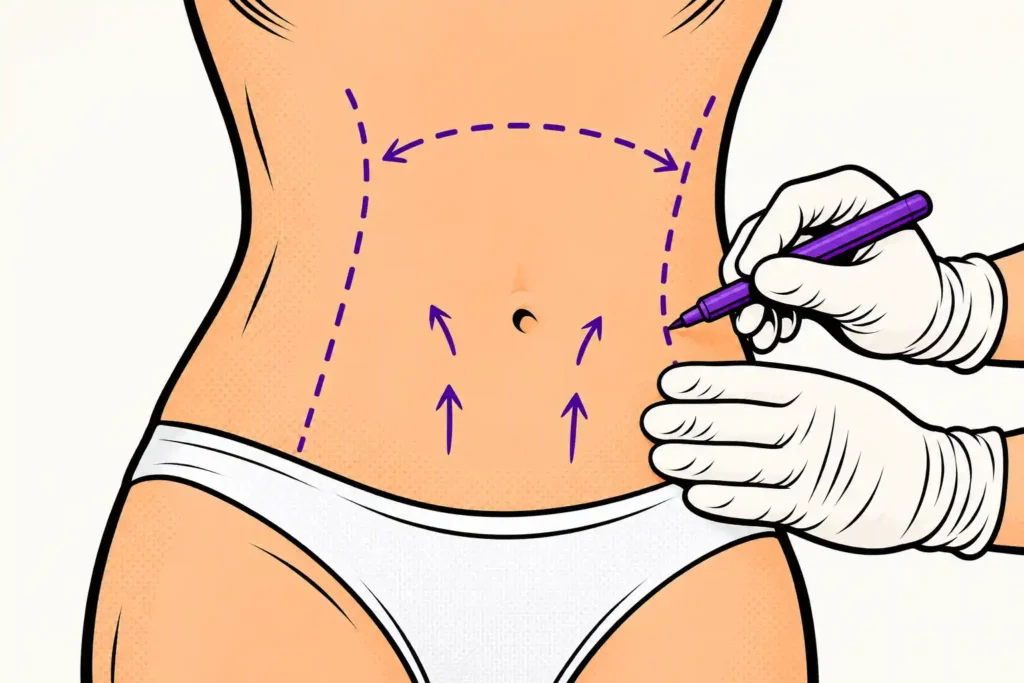
South Korea attracts international patients seeking cosmetic procedures because of its established medical infrastructure and range of specialist clinics.
For overseas visitors, however, choosing a clinic involves more than comparing surgical fees.
Step 1: Research Clinics and Surgeons
Review the clinic’s official website, physician qualifications, surgical experience, and treatment information.
Ask whether the consultation and operation will be handled by the same physician.
Step 2: Request a Preliminary Cost Estimate
Provide clear photographs and relevant medical information through the clinic’s approved consultation channel.
A preliminary estimate can help patients understand the likely treatment scope, but it does not replace an in-person examination.
Step 3: Arrange an In-Person Consultation
The surgeon should examine the treatment areas, assess skin quality, review medical history, and determine whether the proposed procedure is appropriate.
Step 4: Confirm the Complete Treatment Cost
Request a written quotation that identifies:
- Surgical fees.
- Anesthesia.
- Preoperative examinations.
- Medical supplies.
- Compression garments.
- Medication.
- Postoperative visits.
- VAT, where applicable.
- Additional charges if complications or extra treatment arise.
Step 5: Plan Recovery and Travel
International patients should not schedule their return flight immediately after surgery.
The appropriate stay depends on the procedure’s extent, the patient’s recovery, and the surgeon’s postoperative assessment.
Before travelling, obtain written guidance about flying, activity restrictions, wound care, and emergency contact arrangements.
What Should Be Included in a Quattro Liposuction Quote?
A transparent quotation makes it easier to compare clinics accurately.
The following checklist can help international patients avoid unexpected expenses.
| Cost Item | What to Confirm |
|---|---|
| Consultation | Is the surgeon’s consultation included? |
| Surgery | Which body areas are included? |
| Anesthesia | Is anesthesia included in the total fee? |
| Medical tests | Are blood tests and other assessments included? |
| Compression garment | Is one garment provided? |
| Medication | Are postoperative prescriptions included? |
| Aftercare | How many follow-up visits are included? |
| VAT | Is the quoted amount inclusive of applicable VAT? |
| Translation | Is interpretation available? |
| Emergency care | What arrangements exist if complications occur? |
For international patients, the most useful quotation is an itemized, written estimate rather than a single promotional price.
Is Quattro Liposuction in Korea Worth the Cost?
The value of liposuction should be assessed through surgical suitability, physician experience, safety standards, treatment planning, and postoperative care.
Korea offers a wide range of liposuction providers, from clinics specializing in localized fat removal to hospitals offering more extensive body-contouring procedures.
A lower price may be attractive, but patients should evaluate what is included and whether the proposed operation is medically appropriate.
For example, a patient seeking abdominal contour improvement may receive different recommendations depending on whether the primary issue is subcutaneous fat, visceral fat, or excess skin.
Choosing the correct treatment is more important than selecting the cheapest package.
FAQ Section

How much does Quattro liposuction cost in Korea in 2026?
Quattro liposuction cost in Korea varies depending on the clinic’s specific treatment protocol, surgical areas, anesthesia, and medical services. General liposuction procedures in Seoul may cost approximately ₩1.5 million–₩7 million per area, while extensive multi-area procedures can reach ₩7 million–₩15 million or more. Patients should request a clinic-specific quotation because there is no standardized national Quattro procedure price.
What is Quattro liposuction, and how does it work?
Quattro liposuction is a clinic-specific or branded term used for certain body contouring treatments. The actual procedure may involve conventional suction-assisted liposuction or additional fat-removal technologies. Patients considering Quattro liposuction in Seoul should confirm the exact surgical method, equipment, and treatment protocol with their surgeon.
Which body areas can be treated with Quattro liposuction in Seoul?
Depending on the clinic’s treatment protocol and the patient’s suitability, liposuction may target the abdomen, waist, flanks, thighs, upper arms, back, and other localized fat deposits. Quattro liposuction treatment areas in Korea should be confirmed during an individual surgical consultation.
How long does recovery take after Quattro liposuction in Korea?
Recovery after Quattro liposuction depends on the number of treatment areas and the extent of surgery. Initial swelling and bruising may improve over one to two weeks, while more noticeable contour changes typically develop over two to three months. Full tissue recovery can take three to six months or longer.
Is Quattro liposuction in Korea safe and effective for international patients?
Quattro liposuction safety and effectiveness depend on the actual surgical technique, surgeon qualifications, patient health, and postoperative care. International patients should verify the clinic’s credentials, anesthesia arrangements, potential complications, and follow-up services before undergoing body contouring surgery in Korea.
Final Thoughts: Choosing Quattro Liposuction in Korea
Quattro liposuction may be marketed as a specialized body-contouring option, but patients should understand the actual surgical technique before making a decision.
In 2026, general Korean liposuction prices provide a useful starting point for budgeting, but they should not be presented as confirmed prices for a particular branded procedure.
The best approach is to compare itemized treatment quotations, verify the operating surgeon’s qualifications, understand the risks, and confirm the complete postoperative care plan.
For international patients, a safe and well-planned medical journey should always take priority over promotional pricing.
References

Korea Med Tour – Trusted Blog for Medical Tourism in Korea
Korea Med Tour is a trusted medical tourism content platform providing accurate, research-based healthcare information for international patients considering treatment in Korea.
Our editorial team specializes in global patient guidance, treatment insights, clinic selection, and medical travel planning. All content is developed using verified medical sources and structured editorial review processes to ensure clarity, safety, and reliability.
We are committed to helping international patients make informed and confident medical travel decisions when choosing Korea as their healthcare destination.