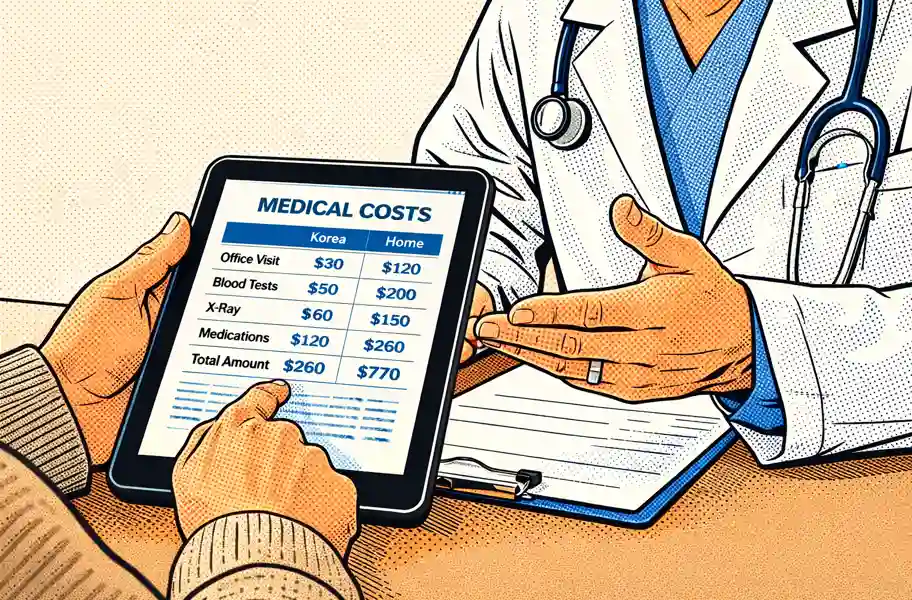

Regenerative stem cell care costs in Seoul, Korea, vary by treatment type, cell source, diagnostic testing, and follow-up requirements. International patients should request itemized quotations, verify South Korean regulatory approval for the specific treatment, and consult a qualified specialist before making travel or payment arrangements.
KoreaMedTour.com
Quick Summary
There is no single standard price for regenerative stem cell care costs in Seoul, Korea, in 2026, because treatment expenses vary depending on the medical condition, type and source of cells, treatment method, regulatory status, clinic, physician’s expertise, number of sessions, and whether diagnostic testing, laboratory processing and follow-up care are included.
As a practical 2026 planning guide, international patients can use the following indicative ranges when budgeting for regenerative medicine in Seoul:
Typical Regenerative Stem Cell Care Cost in Seoul = Several hundred thousand to several million Korean won per procedure, with complex or specialized programs potentially costing tens of millions of won.
Common stem cell-related and regenerative treatment services may fall within these approximate ranges:
- Medical Consultation and Initial Assessment: ₩10,000–₩300,000+
- Selected Blood-Derived Regenerative Procedures: ₩500,000–₩4,000,000+ per session
- Stem Cell-Related Skin Rejuvenation Treatments: ₩1,200,000–₩5,000,000+ per treatment program
- Hair and Scalp Regenerative Procedures: ₩500,000–₩5,000,000+, depending on the product and protocol
- Adipose-Derived Cell Procedures: Several million to over ₩10,000,000
- Specialized Medical Cell Therapy or Investigational Programs: Potentially tens of millions of won, depending on the treatment and clinical requirements
- Multi-Session Regenerative Treatment Programs: Highly variable, depending on the number of sessions, biological product, monitoring and aftercare
These figures are indicative budgeting estimates, not verified average prices across Seoul clinics or standardized prices for approved stem cell therapies. Some categories overlap, and the prices should not be interpreted as evidence of clinical effectiveness or regulatory approval. Actual quotations may differ, and consultation, laboratory testing, cell processing, hospital fees, VAT where applicable, and follow-up care may be charged separately.
A useful approach is to confirm three numbers before booking:
- Expected treatment cost — the specific medical indication, proposed biological product, treatment method, diagnostic testing, number of sessions, and follow-up schedule.
- Maximum treatment budget — the amount you are prepared to spend if additional consultations, monitoring, or medically justified follow-up procedures are required.
- Total Korea medical tourism budget — flights, accommodation, transportation, meals, VAT where applicable, translation or international-patient support, and other travel expenses. Read the Korea Medical Tourism Guide for additional planning information.
The important point is that the cheapest regenerative medicine clinic in Seoul is not necessarily the best value. Before choosing a provider, compare the physician’s qualifications, the exact biological product used, the treatment’s regulatory status, the clinical evidence supporting the proposed use, potential side effects, expected recovery time, and long-term monitoring costs.
It is also essential to distinguish between genuine stem cell therapies, platelet-rich plasma (PRP), other blood-derived preparations, and experimental regenerative procedures. These treatments are not interchangeable, and evidence supporting one procedure cannot automatically be applied to another. Claims that stem cell treatments can universally reverse aging, regenerate cartilage, cure chronic diseases, or restore damaged organs should be evaluated carefully.
For international patients, the most cost-effective approach is to identify the medical condition first and obtain a written treatment plan with transparent pricing. This helps ensure that the selected procedure is medically appropriate rather than simply the most heavily promoted or discounted option.
Table of Contents
What Is Regenerative Stem Cell Care?
Regenerative medicine is a field of healthcare that investigates or uses biological approaches to repair, replace, or restore damaged cells, tissues, or biological functions. Depending on the treatment, it may involve stem cells, other cell types, tissue-derived products, growth factors, or tissue-engineering techniques.
Stem cells are notable because they can self-renew and, under appropriate biological conditions, develop into certain specialized cell types. Researchers are investigating their potential applications in areas such as tissue repair, blood disorders, immune-related diseases, and selected orthopedic conditions.
However, the presence of stem cells does not automatically mean that a procedure will regenerate damaged tissue or reverse aging. In some studied applications, proposed benefits may involve signaling and immune-modulating effects rather than direct replacement of damaged cells. Clinical outcomes depend on the cell product, manufacturing process, delivery method, disease, and quality of the supporting evidence.
Common terms encountered by patients include:
- Stem cell therapy: Treatment involving cells with stem-cell properties for a defined medical purpose.
- Mesenchymal stromal cell (MSC) therapy: An approach using cells studied for their effects on immune responses and tissue repair. MSCs are not proven universal treatments for degenerative diseases.
- Platelet-rich plasma (PRP): A blood-derived preparation concentrated in platelets. PRP is not stem cell therapy.
- Autologous treatment: A procedure using material obtained from the same patient.
- Allogeneic treatment: A procedure using cells or biological material from a donor.
- Regenerative medicine: A broader category that may include cell therapy, tissue engineering, and selected biologic or surgical approaches.
Understanding these distinctions is essential when comparing prices across Seoul clinics because similarly worded marketing packages may involve very different products and medical procedures.
How Much Does Regenerative Stem Cell Care Cost in Seoul, Korea?
The cost depends on the treatment category and the specific procedure offered. Publicly listed clinic prices provide a useful starting point, but they should not be interpreted as average prices across Seoul or evidence that a treatment is clinically effective.
The following figures are indicative examples from publicly available clinic price lists and broad planning ranges. They are not a comprehensive survey of Korean hospitals.
| Treatment category | Indicative price in Seoul | Important consideration |
|---|---|---|
| Initial consultation and assessment | ₩10,000–₩300,000 or more | Specialist consultations and advanced testing may cost more |
| Selected blood-derived regenerative or cosmetic procedures | Approximately ₩500,000–₩4,000,000 | Confirm exactly what the product contains; blood-derived concentrates are not necessarily stem cells |
| Clinic-marketed stem cell-related skin or scalp procedures | Approximately ₩1,200,000–₩5,000,000+ | Products, preparation methods, and treatment areas differ |
| Adipose-derived cell procedures advertised for regenerative purposes | Several million to over ₩10,000,000 | Requires careful review of the procedure, regulatory pathway, and evidence |
| Complex medical cell therapy or investigational treatment programs | Highly variable; potentially tens of millions of won | Eligibility, hospitalization, manufacturing, and research arrangements can change total costs |
These are budgeting estimates rather than standardized medical tariffs. The upper ranges are not verified national averages, and complex investigational programs may be priced differently from commercial clinic services.
For a concrete example, Yaan Clinic in Seoul publicly lists certain procedures described as stem cell treatments at ₩1,200,000 for one treatment area, ₩2,200,000 for two areas, and ₩4,000,000 for an intravenous-only option. Egg Clinic has also published prices for blood-derived and adipose-derived procedures at different price points. These are provider-specific listings, not proof of effectiveness or regulatory approval for every advertised use.
The key budgeting rule: compare the actual biological product and clinical protocol, not just the price or the number of milliliters advertised.
Why do stem cell treatment prices differ so much?
Several factors explain the wide price differences between regenerative medicine providers in Seoul.
1. Source of the cells
Some procedures use material collected from the patient’s own blood or adipose tissue, while others use cells obtained from a donor. These approaches involve different collection, processing, testing, and clinical requirements.
Autologous treatment is not automatically safer or more effective. The source alone does not establish the quality of the final product.
2. Processing and manufacturing
A procedure using minimally processed material is not equivalent to one requiring cell isolation, expansion, specialized manufacturing, or extensive quality testing. Cell processing requirements can significantly affect costs.
Patients should ask whether the advertised treatment uses actual stem cells, a blood-derived concentrate, stromal vascular fraction, another biological product, or a combination of procedures.
3. Method of administration
Treatment may involve local injection, application to a specific area, or intravenous administration. Different routes have different clinical considerations, and an intravenous procedure should not be assumed to deliver cells effectively to a particular damaged tissue.
The delivery method must be justified for the intended medical indication.
4. Diagnostic tests and specialist involvement
The total cost may include blood tests, imaging, specialist assessments, anesthesia, tissue collection, laboratory processing, hospital facilities, and post-treatment monitoring. Some clinics include these services in a package; others charge separately.
5. Number of sessions
A quotation for one session cannot be compared directly with a multi-session treatment plan. Patients should request the total expected cost, including any proposed repeat procedures and follow-up visits.
6. Medical indication and regulatory pathway
A treatment used for a recognized medical indication under an appropriate regulatory framework differs from a commercial procedure marketed for broad wellness or anti-aging purposes. Clinical research may also involve separate eligibility requirements, study procedures, and payment arrangements.
South Korea’s Act on the Safety and Support for Advanced Regenerative Medicine and Advanced Biological Products establishes a legal framework for relevant research, treatment, and biological products. Patients should verify the specific procedure and its applicable authorization rather than assuming that every service marketed as regenerative medicine is approved.
Cost by Treatment Goal: Skin, Hair, Joints, and General Health
People searching for stem cell care in Seoul often have different treatment goals. Understanding the differences helps patients avoid comparing unrelated services.
1. Skin rejuvenation and anti-aging
Some dermatology and aesthetic clinics advertise stem cell-related procedures for skin quality, fine lines, texture, or general rejuvenation. These services may use blood-derived concentrates, adipose-derived material, or other biological products.
Costs depend on the product, treatment area, preparation method, and additional procedures included in the package.
Before booking, ask:
- What is the exact product being administered?
- Does it contain characterized stem cells, or is it a different blood- or tissue-derived preparation?
- Is there reliable clinical evidence for the specific cosmetic indication?
- What outcomes can reasonably be expected, and how long might they last?
- What are the risks of infection, inflammation, scarring, or other complications?
Patients should be especially cautious when a clinic promises dramatic age reversal, permanent rejuvenation, or guaranteed results.
2. Hair loss and scalp treatments
Stem cell-related scalp treatments are marketed for hair density and follicular health, but the evidence depends on the specific intervention. A product described as a stem cell treatment may not contain viable stem cells at all.
A proper hair-loss assessment should consider androgenetic alopecia, hormonal influences, nutritional deficiencies, inflammatory scalp conditions, and other possible causes.
Established treatments may be more appropriate than an experimental regenerative procedure. A dermatologist can help distinguish treatments supported by clinical evidence from those still being studied.
When requesting a quotation, confirm whether the price includes diagnostic examination, scalp imaging, medication, follow-up photography, and repeat sessions.
3. Knee pain, osteoarthritis, and musculoskeletal conditions
Patients with osteoarthritis or tendon problems may seek regenerative medicine in the hope of reducing pain or restoring damaged cartilage. However, evidence varies substantially across cell products and clinical indications.
The term stem cell injection is not a guarantee of cartilage regrowth or a cure for arthritis. Treatment decisions should account for disease severity, imaging results, physical function, previous treatment, and conventional alternatives.
Ask the treating specialist to explain the evidence for the exact product and injection method, the expected magnitude of symptom improvement, and the possibility that the treatment will not work.
4. Intravenous stem cell procedures and whole-body wellness
Some providers advertise intravenous regenerative treatments for systemic wellness, energy, longevity, or anti-aging. These claims require particular scrutiny.
There is no established basis for assuming that an intravenous stem cell procedure will reverse biological aging, improve every organ system, or prevent chronic disease in otherwise healthy people.
The US Food and Drug Administration warns that many unapproved regenerative products have been promoted for conditions without adequate evidence and that serious adverse events have been reported. Its regulatory decisions apply to the United States, not automatically to South Korea, but its safety guidance illustrates why product-specific evidence and oversight matter.
For patients considering these procedures in Seoul, the relevant questions are whether the treatment is legally offered for the intended use, whether its benefits have been demonstrated, and whether the risks justify the expense.
What Is Included in a Stem Cell Treatment Package?
A low advertised price does not necessarily represent the total amount a patient will pay. International patients should request an itemized estimate before making travel arrangements.
| Cost component | What to confirm |
|---|---|
| Medical consultation | Is the initial specialist assessment included? |
| Diagnostic testing | Are laboratory tests, imaging, or other investigations charged separately? |
| Cell or biological product | What is its source, composition, and preparation method? |
| Collection and processing | Are blood collection, tissue harvesting, and laboratory fees included? |
| Administration | Does the price cover the procedure, anesthesia, and facility fees? |
| Follow-up care | Are post-treatment examinations and complication management included? |
| Travel and accommodation | Are translation, transportation, and lodging separate expenses? |
| Additional sessions | Is the quoted price for one session or a complete treatment course? |
Example: Estimating the total cost of a medical tourism visit
Consider a hypothetical patient traveling to Seoul for a procedure quoted at ₩3,000,000. The following example illustrates how additional expenses affect the total budget; it is not a quotation from a hospital.
| Expense | Illustrative budget |
|---|---|
| Procedure | ₩3,000,000 |
| Consultation and additional testing | ₩200,000 |
| Accommodation for four nights | ₩600,000 |
| Local transportation and meals | ₩250,000 |
| Flights | ₩800,000 |
| Estimated total | ₩4,850,000 |
The actual cost will depend on the patient’s location, medical requirements, accommodation choices, and treatment provider. Complex procedures may require additional recovery time or follow-up visits, so patients should not assume that a short visit will always be sufficient.
How to Choose a Regenerative Medicine Clinic in Seoul
Price transparency matters, but medical appropriateness and safety should take priority.
1. Verify the clinic and responsible physician
Confirm the medical institution’s identity, the treating physician’s qualifications, and the relevant specialist experience. Ask which institution is responsible for collection, processing, administration, and follow-up.
2. Check the product and regulatory status
Request the product name, cell source, manufacturing or preparation method, and applicable authorization for the intended use in South Korea. If the treatment is investigational, ask about the relevant study and oversight arrangements.
3. Review the evidence for your specific condition
Evidence supporting one cell-based treatment cannot automatically be applied to another disease, product, or administration route. Ask for published clinical studies relevant to the proposed treatment.
4. Obtain a written treatment plan
The plan should explain the intended outcome, alternatives, risks, number of sessions, follow-up schedule, and total expected cost.
5. Confirm safety monitoring and aftercare
Ask how complications are managed, whom to contact after leaving Korea, and whether follow-up can be coordinated with your local physician.
Risks and Limitations: What Patients Need to Know
Stem cell and other regenerative procedures can involve risks associated with the biological product, collection method, administration route, and patient’s underlying condition.
Potential complications include:
- Infection or contamination during collection, processing, or administration.
- Bleeding, pain, swelling, or inflammatory reactions.
- Immune reactions, depending on the product and source.
- Complications associated with tissue harvesting or injections.
- Unintended tissue growth or other serious adverse effects with certain inadequately characterized products.
- Delayed access to effective conventional treatment when an unproven intervention is used instead.
The FDA has documented serious complications associated with certain unapproved regenerative products, including infections and other adverse outcomes. These reports do not establish that every regenerative procedure has the same risk, but they reinforce the importance of appropriate oversight and evidence-based patient selection.
Patients should be cautious if a provider guarantees results, claims to treat a wide range of unrelated diseases with one procedure, refuses to identify the product, or pressures them to pay before a proper medical assessment.
A higher price does not prove that a treatment is safer, more advanced, or more effective.
What Does the Treatment Process Usually Involve?
The exact process varies according to the treatment, but patients can generally expect several stages.
- Initial consultation: The physician reviews the medical history, symptoms, prior treatments, medications, and the patient’s goals.
- Diagnostic assessment: Relevant examinations and tests determine whether the proposed procedure is appropriate and whether other conditions need attention.
- Treatment planning: The clinic explains the product, procedure, expected benefits, uncertainties, risks, alternatives, and full cost.
- Collection and administration, if indicated: Biological material is collected and processed according to the specific protocol, then administered under the applicable clinical and regulatory requirements.
- Monitoring and follow-up: The care team evaluates recovery, adverse effects, and clinically relevant outcomes over an appropriate period.
Patients traveling internationally should arrange follow-up before treatment rather than assuming that all necessary care can be completed during one visit. Some conditions require longer-term monitoring, and outcomes may take time to assess.
FAQ Section

How much do regenerative stem cell care costs in Seoul, Korea, vary by treatment type?
Regenerative stem cell care costs in Seoul, Korea, vary according to the treatment indication, cell source, laboratory processing, diagnostic tests, procedure fees, and follow-up care. International patients should request an itemized quotation from a qualified Korean medical institution because there is no single standard price for all stem cell treatments.
What factors affect stem cell therapy cost in Korea for international patients?
Stem cell therapy cost in Korea depends on the type of cell-based intervention, medical evaluation, laboratory quality testing, number of sessions, hospital services, and follow-up requirements. International patients should also budget for interpretation, accommodation, transportation, and any additional medical examinations.
Is regenerative medicine in Seoul approved and safe for foreign patients?
Regenerative medicine in Seoul is subject to South Korean regulatory requirements, but authorization varies by product and medical indication. Foreign patients should verify the treatment’s regulatory status, review clinical evidence, confirm the physician’s qualifications, and understand potential risks before proceeding.
How can international patients compare stem cell treatment prices in South Korea?
International patients can compare stem cell treatment prices in South Korea by reviewing written quotations, treatment protocols, diagnostic fees, cell processing standards, follow-up services, and complication management arrangements. Price alone does not establish treatment quality or effectiveness.
Is stem cell treatment in Seoul, Korea, effective for anti-aging and regenerative medicine?
Stem cell treatment in Seoul, Korea, is being investigated for various regenerative and anti-aging applications, but effectiveness depends on the specific intervention and clinical evidence. Patients should be cautious of guaranteed rejuvenation claims and consult a qualified specialist before purchasing treatments marketed for general wellness or age reversal.
Final Thoughts: How to Budget for Regenerative Stem Cell Care in Seoul
Regenerative stem cell care costs in Seoul range widely because the term covers different procedures, biological products, and medical purposes. Public clinic price lists can help patients establish an initial budget, but the quoted amount alone cannot determine clinical value.
For international patients, the best approach is to compare the exact treatment, evidence for the intended use, regulatory status, physician qualifications, complete package cost, and follow-up arrangements. These factors provide a more meaningful basis for decision-making than promotional claims or low headline prices.
Before proceeding, request a written medical assessment and itemized quotation, verify the applicable regulatory requirements, and discuss alternatives with an appropriately qualified physician. Regenerative medicine can be a valuable area of medical research and care, but responsible treatment decisions depend on demonstrated benefits, transparent costs, and patient safety.
References
- Ministry of Food and Drug Safety (MFDS)
- Korean Law Information Center — Advanced Regenerative Medicine
- D&A Dermatology Clinic – Regenerative Stem Cell Care

Korea Med Tour – Trusted Blog for Medical Tourism in Korea
Korea Med Tour is a trusted medical tourism content platform providing accurate, research-based healthcare information for international patients considering treatment in Korea.
Our editorial team specializes in global patient guidance, treatment insights, clinic selection, and medical travel planning. All content is developed using verified medical sources and structured editorial review processes to ensure clarity, safety, and reliability.
We are committed to helping international patients make informed and confident medical travel decisions when choosing Korea as their healthcare destination.