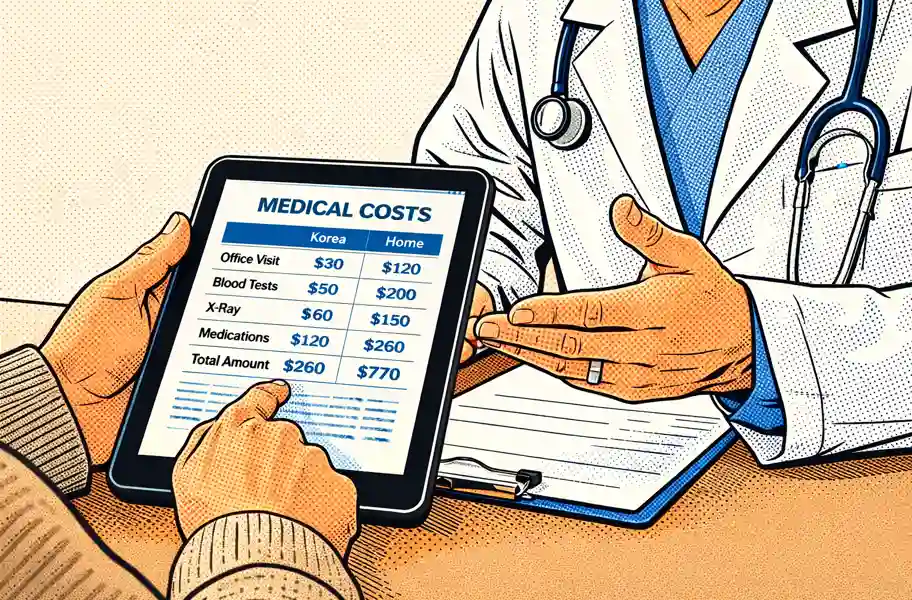


Skin pigmentation treatment cost in Seoul, Korea, typically ranges from ₩50,000 to ₩500,000 or more per laser session. Prices depend on the pigmentation type, laser technology, treatment area and clinic. Melasma and persistent dark spots may require multiple sessions and ongoing skincare.
KoreaMedTour.com
Quick Summary
There is no single standard price for skin pigmentation treatment costs in Seoul, Korea, in 2026, because treatment expenses vary depending on the type and severity of pigmentation, the treatment method, the affected skin area, the clinic, the physician’s expertise, the number of sessions, and whether consultation, prescription medication and follow-up care are included.
As a practical 2026 planning guide, international patients can use the following indicative ranges when budgeting for pigmentation treatment in Seoul:
Typical Skin Pigmentation Treatment Cost in Seoul = ₩50,000–₩500,000+ per procedure session
Common skin pigmentation treatment options may fall within these approximate ranges:
- Dermatology Consultation & Skin Assessment: ₩10,000–₩50,000+
- Targeted Pigmentation Spot Laser: ₩30,000–₩200,000+ per session
- Laser Toning for Uneven Skin Tone: ₩50,000–₩150,000+ per session
- Picosecond Laser Treatment: ₩80,000–₩250,000+ per session
- IPL for Selected Sunspots and Freckles: ₩100,000–₩300,000+ per session
- Melasma-Focused Treatment: ₩80,000–₩300,000+ per session
- Combination Pigmentation Treatments: ₩200,000–₩500,000+ per session
- Multi-Session Pigmentation Treatment Programs: ₩300,000–₩2,000,000+, depending on the treatment plan and number of sessions
These figures are indicative budgeting estimates, not verified prices from individual Seoul clinics. Actual quotations may differ, and consultation, prescription medication, diagnostic assessments, numbing cream, VAT and aftercare may be charged separately.
A useful approach is to confirm three numbers before booking:
- Expected treatment cost — the diagnosis, recommended procedures, medication, number of sessions, treatment areas and follow-up schedule.
- Maximum treatment budget — the amount you are prepared to spend if additional consultations, maintenance sessions or complementary treatments are recommended.
- Total Korea medical tourism budget — flights, accommodation, transportation, meals, VAT where applicable, translation or international-patient support, and other travel expenses. Read the Korea Medical Tourism Guide for additional planning information.
The important point is that the cheapest pigmentation clinic in Seoul is not necessarily the best value. Before choosing a clinic, compare the physician’s qualifications, the accuracy of the diagnosis, the clinical evidence supporting the treatment, the devices used, potential side effects, expected recovery time and long-term maintenance costs.
It is also essential to distinguish between melasma, freckles, sunspots and post-inflammatory hyperpigmentation. These conditions may require different treatments, and a laser that is suitable for one type of pigmentation may be ineffective or unsuitable for another. Melasma, in particular, can recur, and overly aggressive procedures may worsen pigmentation in susceptible skin.
For international patients, the most cost-effective approach is to identify the type of pigmentation first and obtain a written treatment plan with transparent pricing. This helps ensure that the selected treatment is medically appropriate rather than simply the most heavily promoted or discounted option.
Table of Contents

How Much Does Skin Pigmentation Treatment Cost in Seoul?
The cost depends primarily on the type of pigmentation and the procedure selected by the dermatologist. Publicly listed clinic prices vary considerably, so the following ranges are best used as an initial budgeting guide.
| Treatment type | Indicative cost per session | Common purpose |
|---|---|---|
| Laser toning | ₩50,000–₩150,000 | Uneven skin tone and selected pigmentation conditions |
| Picosecond laser toning | ₩80,000–₩250,000 | Selected pigment concerns using picosecond technology |
| IPL (intense pulsed light) | ₩100,000–₩300,000 | Selected superficial sunspots and freckles |
| Targeted spot pigmentation laser | ₩30,000–₩200,000 | Individual lesions or small pigmented areas |
| Premium or combination treatment | ₩200,000–₩500,000+ | Selected cases requiring a more complex treatment plan |
Source basis: publicly available Seoul clinic price guides reviewed in October 2026. Ranges overlap because devices, treatment areas, package terms and clinical indications differ.
These prices are not directly interchangeable. For example, a low-priced laser-toning offer may cover a limited treatment or promotional package, whereas a higher-priced service may include multiple technologies or additional procedures.
A dermatologist should first establish whether the pigmentation is melasma, freckles, solar lentigines, post-inflammatory hyperpigmentation or another condition. The diagnosis influences both the recommended treatment and the expected total cost.
What Is Skin Pigmentation, and Why Does the Diagnosis Matter?
Skin pigmentation refers to the colour of the skin, which is influenced by melanin, a pigment produced by cells called melanocytes. Hyperpigmentation occurs when excess melanin or its distribution causes areas of skin to appear darker than the surrounding skin.
Not all dark spots have the same cause. According to the American Academy of Dermatology (AAD), accurate diagnosis is essential because melasma and other pigmentary disorders can look similar but may require different treatment approaches.
The most common conditions considered during a pigmentation consultation include the following.
1. Melasma
Melasma typically appears as irregular brown or grey-brown patches on the cheeks, forehead, upper lip or other facial areas. Sunlight, hormonal influences and genetic predisposition can contribute to its development.
Melasma often requires ongoing management rather than a single corrective procedure. Treatment may combine sun protection, prescription topical medication and carefully selected procedures. Laser treatment is not suitable for every patient, and aggressive treatment can worsen pigmentation.
2. Freckles and sunspots
Freckles and solar lentigines are different types of pigmented lesions. Freckles are often influenced by genetics and ultraviolet exposure, while solar lentigines are associated with cumulative sun exposure.
A dermatologist may consider targeted pigment lasers or IPL for appropriate lesions. However, not every brown spot is harmless pigmentation. A lesion that changes in size, shape or colour, bleeds or looks different from surrounding spots should be medically assessed before cosmetic treatment.
3. Post-inflammatory hyperpigmentation
Post-inflammatory hyperpigmentation (PIH) develops after skin inflammation or injury, including acne, eczema, irritation and certain cosmetic procedures.
The condition is particularly relevant for people whose skin tends to develop dark marks after inflammation. Although lasers and chemical peels can help selected cases, they can also cause additional irritation and pigmentation if the treatment is too aggressive.
This is why a clinic should assess the underlying cause of dark spots before recommending an expensive laser package.
Which Pigmentation Treatments Are Available in Seoul?
Seoul dermatology clinics offer several technologies for treating selected pigmentary conditions. Each works differently, and the best option depends on the diagnosis, pigment depth, skin type and risk of post-treatment darkening.
Laser toning
Laser toning uses carefully selected laser settings to target pigment. Certain protocols use low-fluence Q-switched lasers and may be considered for melasma or uneven pigmentation.
- Typical cost: ₩50,000–₩150,000 per session as an indicative price range.
- Treatment time: Often around 15–30 minutes, excluding consultation and preparation.
- Sessions: Multiple treatments are commonly considered rather than relying on one session.
- Downtime: Often limited with conservative protocols, although temporary redness or irritation can occur.
Laser toning should not be treated as a universal solution for all brown spots. Melasma can recur, and repeated procedures may cause mottled or uneven pigmentation in some patients.
Picosecond laser treatment
Picosecond lasers deliver energy in very short pulses and may be used for selected pigmented lesions and other dermatological indications.
- Typical cost: Approximately ₩80,000–₩250,000 per session for selected toning treatments.
- Treatment time: Often around 15–30 minutes, depending on the protocol.
- Sessions: Depends on the condition, device and clinical response.
- Downtime: Mild redness or swelling is possible; targeted treatment may produce temporary darkening or crusting.
A picosecond laser is not automatically more effective for every pigmentation problem. Device selection and treatment parameters must be appropriate for the specific condition.
IPL (intense pulsed light)
IPL uses broad-spectrum pulses of light rather than a single laser wavelength. It may be used for selected superficial pigmented lesions and sun-related changes.
- Typical cost: Approximately ₩100,000–₩300,000 per session.
- Treatment time: Often around 20–40 minutes, depending on the area treated.
- Sessions: Several treatments may be required.
- Downtime: Temporary redness and darkening of treated spots can occur.
IPL is not suitable for every skin tone or pigmentary disorder. A history of melasma, recent tanning and a tendency to develop post-inflammatory hyperpigmentation may influence whether it is appropriate.
Targeted pigment laser
A targeted pigment laser focuses treatment on selected individual lesions rather than treating the entire face uniformly.
- Typical cost: Approximately ₩30,000–₩200,000 for a session or selected treatment area.
- Treatment time: Often brief for a small number of lesions.
- Sessions: Some suitable lesions may respond to one session, while others need additional treatment or a different approach.
- Downtime: Temporary redness, crusting or changes in pigmentation may occur.
The price often depends on the number, size and location of lesions. Ask whether the quoted amount covers one spot, multiple lesions or a defined treatment area.
Prescription topical treatment
Not all pigmentation requires a laser. Depending on the diagnosis, a dermatologist may recommend topical treatments such as azelaic acid, hydroquinone where appropriate, tretinoin or other prescribed formulations.
These treatments can be useful for selected conditions and may be combined with sun protection or procedures. They also have potential side effects and should be used according to professional guidance.
How Much Should You Budget for a Complete Treatment Plan?
The cost of a single session is only one part of the financial decision. Many pigmentary conditions require a course of treatment, maintenance or prescription skincare.
For example, if a clinic charges ₩100,000 per session, a course of five sessions would cost ₩500,000 before any consultation fees, medication, taxes or additional procedures. Ten sessions at the same price would total ₩1 million.
These are mathematical examples, not recommendations for a specific number of treatments.
Estimate your treatment budget
| Item | Estimate |
|---|---|
| Price per session | ₩100,000 |
| Number of sessions | 5 |
| Treatment subtotal | ₩500,000 |
| Estimated additional costs | ₩100,000 |
| Estimated total budget | ₩600,000 |
Illustrative planning estimate only. The total excludes any additional fees not included in the estimate. Use your clinic’s actual quoted price and additional charges for a more accurate budget.
What can increase the total cost?
- A larger treatment area or a greater number of pigmented lesions.
- More advanced or combination procedures.
- Additional dermatologist consultations or diagnostic assessments.
- Prescription medication, post-treatment skincare or protective products.
- Follow-up appointments and maintenance sessions.
- Interpreter services, transport and accommodation for international visitors.
Before paying for a package, request an itemised quotation that identifies the exact procedure, number of sessions, exclusions and cancellation or refund conditions.
What Factors Affect Skin Pigmentation Treatment Prices in Seoul?
Two clinics can advertise similar procedures at different prices. The difference may reflect the device used, physician involvement, treatment area, package terms or additional services.
1. Type and depth of pigmentation
Superficial freckles and individual sunspots may be suitable for targeted treatment. Melasma and deeper pigmentary conditions can require more cautious, longer-term management.
A more expensive procedure is not necessarily the better option. The treatment must match the diagnosis.
2. Laser technology and treatment settings
Different devices have different capabilities, and the same technology can be used with different protocols. The appropriate wavelength, energy settings and treatment frequency depend on the individual patient.
Ask the clinic for the actual device name and whether the proposed procedure is designed for your particular pigmentation condition.
3. Dermatologist assessment
A professional assessment helps distinguish melasma from other conditions that may look similar. In some cases, dermoscopy or additional diagnostic investigation may be appropriate.
The American Academy of Dermatology recommends individualized care because treatment choice depends on factors such as skin tone, pigment depth and triggers.
4. Clinic location and service model
Clinics in central Seoul and popular medical tourism districts may offer different pricing structures, promotional packages and patient services.
Compare what each quotation includes instead of assuming that a higher price guarantees superior care or that the lowest price represents the best value.
Is Skin Pigmentation Treatment in Seoul Worth Considering for International Patients?

Seoul is an established destination for dermatology and cosmetic procedures, with a wide range of treatment technologies and clinics serving both local and international patients.
For overseas visitors, the decision should be based on clinical suitability, transparent pricing, communication and the ability to manage follow-up care—not price alone.
Key advantages to evaluate
- Treatment choice: Access to different laser technologies and dermatologist-led treatment options.
- Transparent budgeting: The ability to request an itemised quotation before travelling.
- International patient support: Some clinics offer multilingual coordinators, online consultations and assistance arranging appointments.
- Convenient scheduling: Selected procedures may fit into a short visit, although diagnosis and recovery requirements vary.
- Follow-up planning: Clinics should explain how progress will be assessed and what to do if pigmentation returns or adverse effects develop.
How to arrange treatment from overseas
- Send photographs and medical history. Explain when the pigmentation appeared, any previous treatments, relevant medication and your skin’s response to irritation.
- Request a preliminary assessment. Ask which diagnoses are being considered and whether an in-person examination is required before selecting a procedure.
- Obtain an itemised quote. Confirm the price per session, number of sessions proposed, consultation charges, medication, taxes and aftercare.
- Confirm the clinical provider. Verify the treating physician’s qualifications, the clinic’s credentials and who will perform the procedure.
- Plan recovery and follow-up. Allow sufficient time for any redness, swelling or crusting, and arrange a way to contact the clinic after returning home.
An online consultation can help with preliminary planning, but photographs alone may not establish a definitive diagnosis. Avoid booking a non-refundable treatment package before the clinic has confirmed that the proposed procedure is suitable.
Risks, Recovery and Aftercare: What Patients Should Know
Pigmentation procedures can produce temporary redness, swelling, irritation, darkening of treated spots or crusting. More significant complications can include burns, scarring, lightened patches or worsening pigmentation.
Post-inflammatory hyperpigmentation is an especially important consideration for people who develop dark marks after inflammation or injury. Some laser and light treatments may aggravate pigmentation rather than improve it.
How to reduce avoidable risks
- Follow the dermatologist’s instructions about sun exposure and skin preparation.
- Use broad-spectrum sunscreen with at least SPF 30; SPF 50+ may be recommended depending on the clinical plan.
- Ask whether a tinted sunscreen containing iron oxides would be appropriate, particularly for melasma.
- Avoid introducing irritating skincare products immediately after a procedure unless the clinician advises otherwise.
- Follow instructions for cleansing, moisturising and managing any crusting.
- Contact the clinic if you develop severe pain, blistering, signs of infection or unexpected skin changes.
The AAD notes that sunlight and visible light can worsen melasma, making consistent photoprotection an important part of treatment and maintenance.
Important: Pigmentation improvement is not guaranteed. Melasma in particular can recur, and the long-term result depends on the diagnosis, treatment choice, triggers and maintenance.
FAQ Section

How much does skin pigmentation treatment cost in Seoul, Korea?
Skin pigmentation treatment cost in Seoul generally ranges from ₩50,000 to ₩500,000 or more per laser session. The final price depends on the pigmentation condition, treatment area, device used and number of sessions required.
What is the pigmentation laser cost in Korea for melasma?
The pigmentation laser cost in Korea varies by treatment type and clinic. Laser toning may cost approximately ₩50,000–₩150,000 per session, while advanced or combination procedures may cost more. Melasma treatment often requires a personalised plan and ongoing sun protection.
How much is laser toning in Seoul for dark spots?
The laser toning price in Korea is often around ₩50,000–₩150,000 per session. The actual cost depends on the clinic, treatment area and protocol. A dermatologist should determine whether laser toning is appropriate for your particular pigmentation condition.
Is picosecond laser treatment better than regular laser toning in Korea?
Picosecond laser treatment in Korea may be suitable for selected pigmented lesions, but it is not automatically more effective than conventional laser toning. The best option depends on the diagnosis, skin tone, pigment depth and risk of post-inflammatory hyperpigmentation.
How many sessions are needed for skin pigmentation treatment in Seoul?
The number of sessions for skin pigmentation treatment in Seoul depends on whether you have melasma, freckles, sunspots or post-inflammatory hyperpigmentation. Some lesions may improve after one treatment, while persistent conditions often require multiple sessions, maintenance and consistent sun protection.
Conclusion: Planning Your Skin Pigmentation Treatment Budget
Skin pigmentation treatment in Seoul offers several options, from conventional laser toning to targeted pigment lasers, IPL and picosecond procedures. Indicative prices range from tens of thousands of won for selected basic treatments to several hundred thousand won or more per session for advanced or combination procedures.
The most reliable way to control costs is to start with an accurate diagnosis, compare itemised treatment plans and understand the likely number of sessions. For international patients, the quotation should also explain additional charges, recovery needs and follow-up arrangements.
Choosing a treatment that is appropriate for your pigmentation condition is more important than choosing the cheapest advertised price. A dermatologist-led plan, consistent sun protection and realistic expectations provide a more responsible foundation for achieving and maintaining clearer, more even-looking skin.
References
- American Academy of Dermatology — Melasma: Diagnosis and Treatment
- DermNet — Post-inflammatory Hyperpigmentation
- D&A Dermatology Clinic – Premium Skin Pigmentation

Korea Med Tour – Trusted Blog for Medical Tourism in Korea
Korea Med Tour is a trusted medical tourism content platform providing accurate, research-based healthcare information for international patients considering treatment in Korea.
Our editorial team specializes in global patient guidance, treatment insights, clinic selection, and medical travel planning. All content is developed using verified medical sources and structured editorial review processes to ensure clarity, safety, and reliability.
We are committed to helping international patients make informed and confident medical travel decisions when choosing Korea as their healthcare destination.