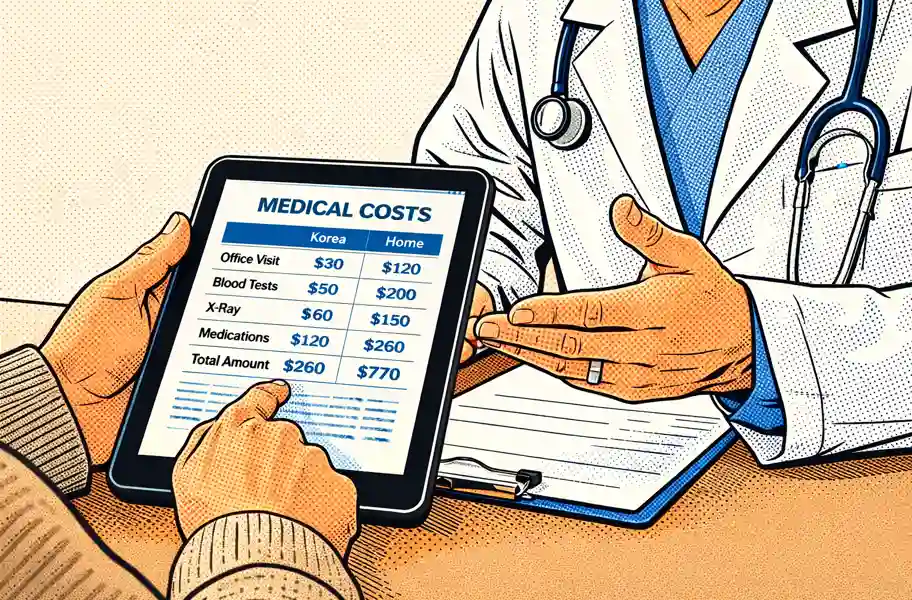

SMILE LASIK costs in Seoul, Korea, vary depending on the laser technology, clinic, surgeon, and treatment package. International patients should compare the total price for both eyes, including preoperative examinations, medications, and follow-up care, before choosing a qualified ophthalmology clinic for vision correction.
KoreaMedTour.com
Quick Summary
There is no single standard price for SMILE LASIK costs in Seoul, Korea, in 2026, because treatment expenses vary depending on the laser technology, procedure type, surgeon’s experience, preoperative examination results, and whether medications and postoperative care are included.
As a practical 2026 planning guide, international patients can use the following indicative price ranges when budgeting for SMILE LASIK in Seoul.
Typical SMILE LASIK Cost in Seoul = ₩2,000,000 to ₩4,500,000 for both eyes, depending on the procedure, laser platform, clinic, and treatment package.
Common vision correction procedures and related expenses may fall within these approximate ranges:
- Standard SMILE LASIK: ₩2,000,000–₩3,500,000 for both eyes
- SMILE Pro Laser Eye Surgery: ₩2,800,000–₩4,500,000 for both eyes
- Comprehensive Preoperative Eye Examination: ₩0–₩200,000
- Prescription Eye Drops and Medications: ₩30,000–₩100,000
- Additional Consultations and Follow-Up Care: Varies by clinic
- Postoperative Examination for International Patients: Included in some packages; additional fees may apply
- Accommodation in Seoul: Varies depending on location, hotel category, and length of stay
- Flights, Transportation, and Other Travel Expenses: Vary depending on the patient’s country of departure and travel arrangements
These figures are indicative budgeting estimates, not verified average prices across all Seoul eye clinics. Actual quotations may vary, and some clinics offer promotional prices or international-patient packages with different inclusions. Confirm whether the quoted price covers both eyes, preoperative testing, medications, postoperative appointments, and any applicable taxes or additional fees.
A useful approach is to confirm three numbers before booking:
- Expected treatment cost — the exact procedure, laser platform, surgical fee for both eyes, required examinations, medications, and postoperative follow-up schedule.
- Maximum treatment budget — the amount you are prepared to spend if additional consultations, examinations, or medically appropriate follow-up treatments are needed.
- Total Korea medical tourism budget — flights, accommodation, transportation, meals, translation or international-patient support, and other travel expenses. Allow sufficient time for the clinic’s recommended postoperative examinations before returning home.
The important point is that the cheapest eye clinic in Seoul is not necessarily the best value. Before choosing a provider, compare the operating ophthalmologist’s qualifications, the exact laser platform used, your eligibility for surgery, potential side effects, expected recovery time, and postoperative care arrangements.
It is also essential to distinguish between standard SMILE and SMILE Pro. Both use small-incision lenticule extraction to correct eligible refractive errors, but SMILE Pro uses a newer laser platform that can shorten the laser treatment phase. A higher price does not automatically mean a better visual outcome, and the most suitable procedure depends on the patient’s individual eye examination.
For international patients, recovery and follow-up planning are just as important as the advertised price. Some patients experience rapid visual improvement, but dry eyes, fluctuating vision, glare, and other symptoms may occur. No procedure can guarantee perfect vision or permanently eliminate the need for glasses.
For additional information about treatment planning and selecting a Korean medical provider, read the Korea Medical Tourism Guide.
For international patients, the most cost-effective approach is to obtain a written treatment plan and transparent quotation from a qualified ophthalmology clinic before booking flights or accommodation. This helps ensure that the chosen procedure is clinically appropriate, that the total cost is understood, and that sufficient time is available for postoperative care.
Table of Contents
How Much Does SMILE LASIK Cost in Seoul, Korea?
SMILE LASIK pricing varies by clinic and procedure. As an initial budgeting guide, international patients may encounter the following illustrative price ranges, but these figures are not a verified survey of Seoul clinics’ 2026 prices. Request current written quotations before making travel or treatment arrangements.
| Procedure or service | Indicative budget in South Korea |
|---|---|
| Standard SMILE surgery, both eyes | ₩2,000,000–₩3,500,000 |
| Newer-generation SMILE procedures, both eyes | ₩2,800,000–₩4,500,000 |
| Comprehensive preoperative eye examination | ₩0–₩200,000 |
| Prescription eye drops and medications | ₩30,000–₩100,000 |
| Additional consultations or follow-up care | Varies by clinic |
Price note: These are broad planning estimates, not confirmed market averages or guaranteed offers. Package inclusions, promotional conditions, technology, and eligibility can change the actual price. Confirm whether quoted prices cover both eyes and whether taxes or other fees apply.
What determines the final price?
Several factors can explain why two clinics quote different prices for apparently similar procedures.
- Laser platform and procedure type: Standard SMILE and newer-generation procedures may have different equipment, software, and pricing.
- Preoperative diagnostics: Corneal tomography, corneal thickness measurements, tear-film assessment, and retinal examinations may be included or charged separately.
- Surgeon’s experience: Relevant surgical experience, clinical judgment, and the ability to manage complications are important considerations beyond price.
- Prescription complexity: High refractive errors, astigmatism, or borderline screening results may require additional assessment or make a different procedure more appropriate.
- Postoperative services: Follow-up appointments, medications, and additional examinations can affect the total cost.
- International patient support: Translation, appointment coordination, and medical tourism services may be offered separately from the clinical fee.
Practical example: Two Seoul clinics may advertise similar SMILE prices, but one may include comprehensive diagnostic testing, postoperative examinations, and medications, while the other charges separately for some of these services. The lower advertised price may therefore not represent the lower total treatment cost.
For a more concrete reference, publicly listed 2026 prices show substantial variation between clinics. BGSS Eye Clinic lists SMILE/SMILE Pro at ₩2.5 million–₩4.0 million for both eyes, while GS Eye Center lists SMILE Pro at ₩4.5 million at its published international-patient partner rate. These are individual providers’ prices, not a national average.
What Is SMILE LASIK, and How Does It Work?
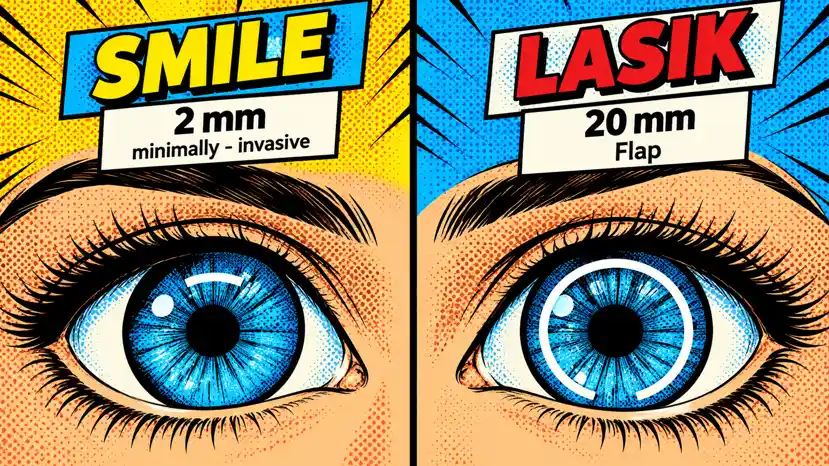
SMILE stands for Small Incision Lenticule Extraction. It is a minimally invasive form of laser vision correction that uses a femtosecond laser to create a small, lens-shaped piece of tissue, called a lenticule, inside the cornea. The surgeon removes this tissue through a small incision, changing the cornea’s shape so that light focuses more accurately on the retina.
Although the term “SMILE LASIK” is widely used in Korean medical tourism marketing, SMILE is technically different from conventional flap-based LASIK.
How the procedure works
- Preoperative assessment: The ophthalmologist checks your prescription, corneal shape and thickness, tear film, pupil characteristics, and overall eye health.
- Laser treatment: Numbing eye drops are administered, and a femtosecond laser creates the lenticule inside the cornea.
- Lenticule removal: The surgeon extracts the tissue through a small incision, altering the corneal curvature.
- Postoperative examination: The clinical team evaluates the cornea, checks early visual recovery, and provides instructions for eye drops and follow-up care.
SMILE does not require the large corneal flap created in conventional LASIK. This can be an advantage for selected patients, but it does not eliminate the risks associated with corneal surgery or guarantee freedom from dry eye and other visual symptoms.
SMILE versus SMILE Pro: Is the higher price worthwhile?
SMILE Pro is a newer generation of the procedure that uses the ZEISS VisuMax 800 laser platform. It can offer a shorter laser treatment phase and a streamlined surgical workflow. The overall patient experience and final visual outcome, however, depend on more than laser speed.
| Feature | Standard SMILE | SMILE Pro |
|---|---|---|
| Technology | Earlier-generation femtosecond laser platform | Newer VisuMax 800 platform |
| Treatment approach | Small-incision lenticule extraction | Small-incision lenticule extraction |
| Laser phase | Typically longer | Typically shorter |
| Price | Often lower | Often higher |
| Clinical suitability | Determined by examination | Determined by examination |
The higher price of SMILE Pro may reflect equipment costs, clinic pricing, and package features. Patients should ask the surgeon whether the newer platform offers a meaningful advantage for their particular eyes rather than assuming that the more expensive option is always better.
SMILE LASIK vs. Conventional LASIK vs. LASEK: Cost Comparison
Patients researching vision correction in Seoul often compare several procedures before choosing one. These treatments differ in how they reshape the cornea, their recovery profiles, and the types of patients for whom they may be appropriate.
| Procedure | How it works | Main consideration |
|---|---|---|
| SMILE | Removes a lenticule through a small incision | No conventional LASIK flap |
| Conventional LASIK | Creates a corneal flap and reshapes underlying tissue with an excimer laser | Often rapid visual recovery; flap-related considerations remain |
| LASEK/PRK | Reshapes the corneal surface after removing or displacing the epithelium | More discomfort and a longer initial recovery |
| ICL | Places an implantable lens inside the eye | Does not reshape the cornea by removing tissue |
The appropriate treatment depends on corneal measurements, refractive error, age, eye health, lifestyle, and the patient’s visual goals. ICL, for example, may be considered for certain patients with high myopia or unsuitable corneal characteristics, but it is an intraocular operation with its own risks and costs.
The most cost-effective procedure is not necessarily the cheapest one. A suitable operation with a well-planned follow-up schedule is more important than a low advertised price for a procedure that does not match the patient’s clinical needs.
What Is Included in a SMILE LASIK Package in Seoul?
Before paying a deposit, request a written breakdown of the complete treatment fee. Clinic websites may use similar package names while including different services.
Preoperative eye examination
A comprehensive assessment may include:
- Refraction testing to measure myopia and astigmatism.
- Corneal topography or tomography to evaluate corneal shape.
- Pachymetry to measure corneal thickness.
- Tear-film and ocular-surface assessment.
- Examination of the retina and other eye structures when indicated.
- Pupil measurements and other tests relevant to treatment planning.
These examinations help identify conditions that may increase surgical risk, including irregular corneal shape, unstable prescriptions, and clinically significant ocular-surface disease.
Surgery and postoperative care
Confirm whether the package covers:
- Surgery for both eyes.
- The exact laser platform and procedure.
- Prescribed postoperative eye drops and medications.
- The first postoperative examination.
- Additional follow-up visits during your stay.
- Management of unexpected symptoms or complications.
- Any enhancement policy if residual refractive error remains.
An enhancement is not automatically necessary or appropriate, and additional treatment may carry separate fees. Ask about the clinic’s policy in advance.
Additional expenses for international patients
Travel costs can materially change the total budget. International patients may also need to account for:
- Return flights and accommodation.
- Transportation between the hotel and clinic.
- Interpreter services, if not included.
- Additional nights in Seoul if recovery or examination findings require them.
- Follow-up examinations with an ophthalmologist after returning home.
A clinic offering an all-inclusive package may simplify planning, but patients should verify the inclusions and exclusions rather than relying on the package label.
Who Is a Good Candidate for SMILE LASIK?
SMILE is primarily used to correct myopia and eligible cases of astigmatism. Suitability depends on the patient’s prescription, corneal anatomy, age, ocular health, and the specific laser system and approved treatment range.
You may be considered for SMILE if you:
- Are an adult with a sufficiently stable prescription.
- Have corneal thickness and shape suitable for the planned treatment.
- Have myopia or astigmatism within the procedure’s treatment range.
- Do not have an eye condition that makes corneal refractive surgery unsafe.
- Understand the potential benefits, limitations, and need for glasses in some circumstances.
However, SMILE is not appropriate for everyone. Conditions such as keratoconus, abnormal corneal topography, insufficient corneal tissue, uncontrolled dry eye, and unstable refraction may make surgery unsuitable or require further evaluation.
Why a detailed examination matters
A patient with moderate myopia and a healthy cornea may be a reasonable candidate for SMILE. Another patient with a similar prescription but an irregular corneal shape may face a different risk profile.
This is why an online questionnaire or an advertised treatment package cannot establish surgical eligibility. A qualified ophthalmologist must assess the examination results before recommending a procedure.
SMILE LASIK Recovery Time: What International Patients Should Expect
SMILE generally allows relatively rapid visual recovery, but recovery varies between individuals. Some patients notice clearer vision shortly after surgery, while others experience fluctuating clarity, mild discomfort, or dryness during healing.
Day 1: Surgery and initial recovery
Vision may be blurry or hazy, and mild irritation or a foreign-body sensation can occur. Follow the prescribed eye-drop schedule and avoid rubbing your eyes.
Days 1–3: Early visual improvement
Many patients experience substantial improvement and can resume selected routine activities. Your surgeon should confirm whether driving, exercise, screen work, and other activities are appropriate.
First week: Follow-up and travel planning
Attend the recommended postoperative examinations. Patients traveling internationally should confirm that their healing is satisfactory and obtain medical clearance before departure.
Following weeks and months: Continued stabilization
Visual clarity and dry-eye symptoms may continue to change. Keep scheduled follow-up appointments and seek advice if recovery is slower than expected.
It notes that some patients can return to normal daily activities as soon as the following day, depending on their surgeon’s recommendations. This should not be interpreted as a guarantee of complete healing or perfect vision within 24 hours.
How long should medical tourists stay in Seoul?
For international patients, arranging approximately 5–7 days in Seoul may provide a practical starting point for scheduling the initial examination, surgery, and early follow-up. The actual required stay depends on the clinic’s protocol, examination findings, and recovery.
Before booking flights, confirm:
- Whether the preoperative examination and surgery can occur on separate days.
- Which postoperative examinations are mandatory.
- Whether the clinic requires an in-person check before departure.
- How urgent postoperative concerns will be handled after returning home.
- Whether a local ophthalmologist can provide follow-up care in your home country.
Avoid making non-refundable travel arrangements before confirming eligibility and the treatment schedule.
Potential Risks and Side Effects of SMILE LASIK
SMILE is an established refractive surgery, but it is not risk-free. Patients should understand both common temporary symptoms and less common complications before consenting to treatment.
Potential side effects include:
- Dry eyes or irritation.
- Blurred or fluctuating vision during recovery.
- Glare, halos, starbursts, or difficulty with night driving.
- Residual myopia or astigmatism that may require glasses or further treatment.
- Inflammation or infection.
- Rare corneal complications, including corneal ectasia.
The absence of a conventional LASIK flap can be beneficial for selected patients, but it does not eliminate all risks. Research reviewed by the American Academy of Ophthalmology supports differences in corneal nerve effects between procedures, while patient-reported dry-eye outcomes can vary.
Does SMILE permanently eliminate glasses?
No. SMILE can reduce dependence on glasses and contact lenses, but it cannot guarantee perfect vision for life.
Some patients retain a small refractive error, and others may need glasses for particular tasks. In addition, presbyopia, the age-related loss of near-focusing ability, can develop even after successful distance vision correction.
Discuss the likelihood of needing reading glasses, the potential for residual refractive error, and options for managing future changes in vision before undergoing surgery.
How to Choose a Reliable SMILE LASIK Clinic in Seoul
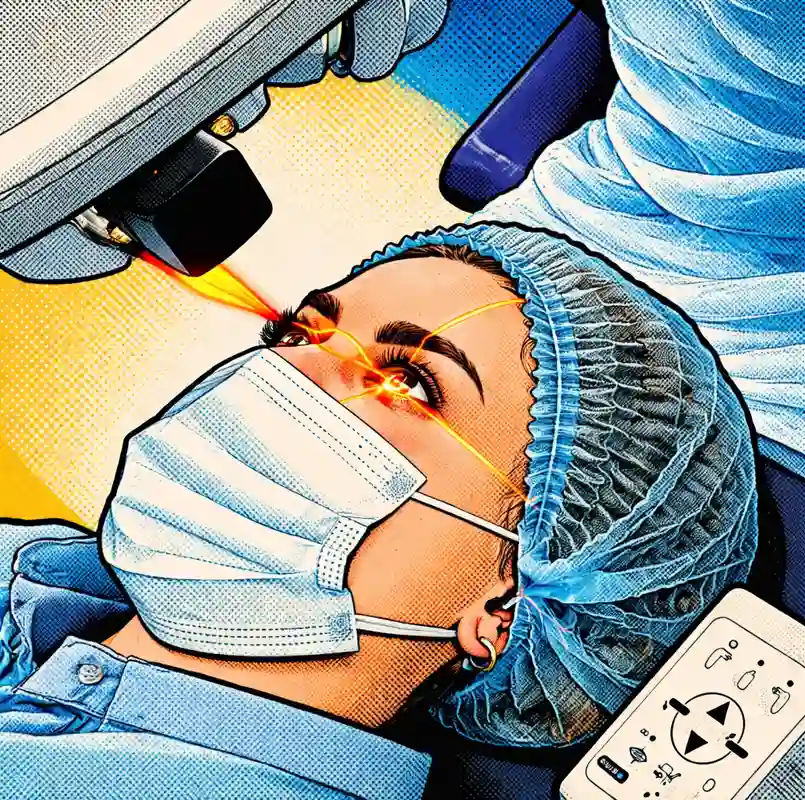
Seoul has numerous ophthalmology clinics offering SMILE and SMILE Pro, particularly in the Gangnam area. A structured comparison can help international patients distinguish a transparent medical service from a promotion that emphasizes price alone.
SMILE LASIK clinic evaluation checklist
Confirm the operating ophthalmologist’s qualifications and relevant surgical experience.Verify the exact procedure and laser platform being offered.Check whether comprehensive preoperative testing is included.Obtain a written quotation covering both eyes and all package fees.Ask about postoperative appointments and complication management.Confirm language support and access to medical records.Arrange follow-up care after returning home.
Questions to ask before booking
- Is the quoted price for SMILE or SMILE Pro, and which laser system will be used?
- Does the package include both eyes, diagnostic tests, medications, and follow-up visits?
- Who will perform the operation, and who will review the results?
- What happens if I am found unsuitable for SMILE after the examination?
- What additional costs may arise if my recovery requires extra visits?
- How can I obtain my medical records and arrange follow-up care after leaving Korea?
A trustworthy clinic should explain why a procedure is suitable, discuss alternatives, disclose relevant risks, and provide enough information for an informed decision. High patient volumes, sophisticated equipment, or attractive promotions should not replace individualized clinical assessment.
How to Budget for SMILE LASIK in Korea
A realistic budget should separate the surgical fee from the cost of traveling to Seoul.
| Expense | What to confirm |
|---|---|
| Surgery | Both eyes, exact procedure, laser platform |
| Eye examination | Included or charged separately |
| Medication | Standard drops and any additional prescriptions |
| Follow-up care | Number of included visits and extra-visit fees |
| Flights and accommodation | Flexible dates in case the schedule changes |
| Translation and transport | Included services versus separate charges |
| Post-return care | Local examinations and potential additional treatment |
The best way to compare clinics is to request the same information from each provider and calculate the total expected cost. Do not compare a promotional price for surgery alone with a comprehensive package that includes diagnostic testing and postoperative care.
For example, if one clinic offers a lower surgical fee but charges separately for testing, medication, and follow-up visits, its total price may be comparable to a higher-priced package. The written breakdown is more useful than the headline figure.
FAQ Section

How much does SMILE LASIK cost in Seoul, Korea, in 2026?
SMILE LASIK costs in Seoul, Korea, vary by clinic, laser technology, and treatment package. Illustrative prices may range from ₩2,000,000 to ₩3,500,000 for standard SMILE and ₩2,800,000 to ₩4,500,000 for newer-generation procedures, for both eyes. Confirm current prices and package inclusions directly with the clinic.
What is the difference between SMILE LASIK and SMILE Pro in Korea?
SMILE LASIK and SMILE Pro in Korea use small-incision lenticule extraction to correct eligible refractive errors. SMILE Pro uses a newer laser platform that can shorten the laser treatment phase. The best option depends on your eye examination, clinical suitability, and the ophthalmologist’s recommendation.
Is SMILE LASIK in Seoul suitable for international patients?
SMILE LASIK in Seoul may be suitable for international patients with stable prescriptions and healthy corneas who meet the procedure’s eligibility criteria. A comprehensive eye examination is required to assess suitability. International patients should also plan for postoperative appointments and follow-up care after returning home.
How long should international patients stay in Seoul after SMILE LASIK?
International patients undergoing SMILE LASIK in Seoul may plan approximately 5–7 days for surgery and initial postoperative examinations, subject to the clinic’s protocol and recovery. Confirm the required follow-up schedule and obtain the surgeon’s advice before booking flights.
What is included in the SMILE LASIK price in Korea?
The SMILE LASIK price in Korea may include surgery for both eyes, preoperative eye examinations, prescribed eye drops, and postoperative consultations. However, package inclusions vary by clinic. International patients should request an itemized quotation covering diagnostic tests, medications, follow-up visits, and any additional fees before booking.
Conclusion: Is SMILE LASIK in Seoul Worth Considering?
SMILE LASIK can be an option for eligible patients who want to reduce their dependence on glasses or contact lenses. Seoul offers clinics with different laser platforms, surgical approaches, and package prices, giving international patients several options to investigate.
The most important decision is not simply whether to choose the lowest price or the newest technology. It is whether the procedure is appropriate for your eyes, whether the surgeon explains the risks clearly, and whether the quoted package provides suitable diagnostic testing and postoperative care.
Before booking, obtain an itemized quotation, confirm the exact procedure, review the surgeon’s credentials, and arrange a realistic recovery and follow-up schedule. These steps will help you compare SMILE LASIK costs in Seoul, Korea, while prioritizing safety and informed decision-making.
References
- American Academy of Ophthalmology — Refractive Surgery Preferred Practice Pattern
- U.S. Food and Drug Administration — Patient Information Booklet for the VisuMax Femtosecond Laser SMILE Procedure
- BSM eye care clinic Smile LASIK procedure

Korea Med Tour – Trusted Blog for Medical Tourism in Korea
Korea Med Tour is a trusted medical tourism content platform providing accurate, research-based healthcare information for international patients considering treatment in Korea.
Our editorial team specializes in global patient guidance, treatment insights, clinic selection, and medical travel planning. All content is developed using verified medical sources and structured editorial review processes to ensure clarity, safety, and reliability.
We are committed to helping international patients make informed and confident medical travel decisions when choosing Korea as their healthcare destination.