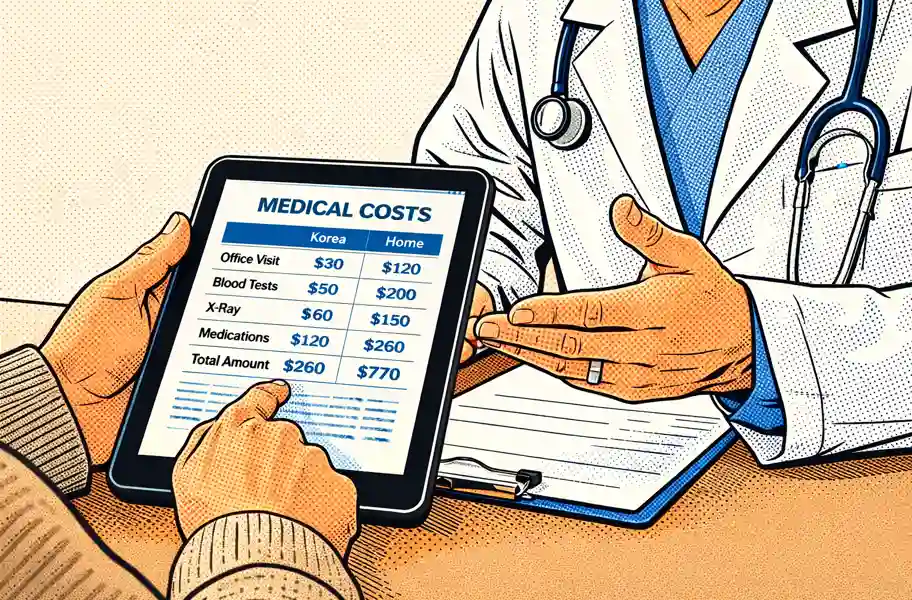


Advanced medical skincare costs in Seoul, Korea, typically range from ₩50,000 to ₩500,000 per session for many basic treatments and laser procedures. Premium skin boosters and non-surgical lifting treatments can cost ₩200,000 to over ₩3,000,000, depending on the technology, treatment area, and clinic.
KoreaMedTour.com
Quick Summary
There is no single standard price for advanced medical skincare costs in Seoul, Korea, in 2026, because treatment expenses vary depending on the skin condition, treatment technology, device model, treatment area, physician’s expertise, number of sessions, and whether consultation, VAT, medication, and aftercare are included.
As a practical 2026 planning guide, international patients can use the following indicative price ranges when budgeting for advanced dermatology treatments in Seoul.
Typical Advanced Medical Skincare Cost in Seoul = ₩50,000 to ₩500,000 per session for many basic medical skincare and laser procedures, with premium skin boosters and non-surgical lifting treatments potentially costing several million won.
Common advanced medical skincare treatments may fall within these approximate ranges:
- Medical Skincare and Hydration Treatments: ₩50,000–₩300,000 per session
- Laser Toning and Pigmentation Treatments: ₩70,000–₩330,000 per session
- Pico Laser Treatments: ₩100,000–₩500,000 per session
- Fractional Laser for Acne Scars and Skin Texture: ₩200,000–₩700,000+ per session
- RF Microneedling: ₩250,000–₩800,000+ per session
- Rejuran Skin Booster: ₩200,000–₩500,000+ per session
- Juvelook and Other Collagen-Stimulating Injectables: ₩300,000–₩1,000,000+ per treatment
- Ultherapy and Other HIFU Lifting Treatments: ₩800,000–₩3,000,000+ per treatment
- Thermage FLX Skin Tightening: ₩1,500,000–₩3,500,000+ per treatment
These figures are indicative budgeting estimates, not verified average prices across all Seoul dermatology clinics or standardized medical fees. Actual quotations may vary, and some clinics advertise promotional prices or exclude 10% VAT. Consultation, anesthesia, additional treatment areas, prescription medication, and follow-up care may also be charged separately.
A useful approach is to confirm three numbers before booking:
- Expected treatment cost — the exact procedure, device or injectable product, treatment area, number of sessions, and recommended follow-up schedule.
- Maximum treatment budget — the amount you are prepared to spend if additional consultations or medically appropriate follow-up treatments are needed.
- Total Korea medical tourism budget — flights, accommodation, transportation, meals, VAT where applicable, translation or international-patient support, and other travel expenses. Read the Korea Medical Tourism Guide for additional planning information.
The important point is that the cheapest dermatology clinic in Seoul is not necessarily the best value. Before choosing a provider, compare the treating physician’s qualifications, the exact device or product used, treatment suitability, clinical evidence, potential side effects, expected recovery time, and aftercare arrangements.
It is also essential to distinguish between laser treatments, radiofrequency microneedling, injectable skin boosters, dermal fillers, and non-surgical lifting procedures. These treatments work differently and are not interchangeable. Results depend on the patient’s skin condition, the selected procedure, and individual response. Claims of guaranteed results or permanent skin rejuvenation should be evaluated carefully.
For international patients, the most cost-effective approach is to identify the primary skin concern first and obtain a written treatment plan with transparent pricing. This helps ensure that the selected procedure is medically appropriate rather than simply the most heavily promoted or discounted option.
Table of Contents
Advanced Medical Skincare Price List in Seoul
The following table provides practical budgeting estimates for international patients considering dermatology treatments in Seoul in 2026. Actual prices vary by clinic, device, treatment area, product volume, and promotional conditions.
| Treatment | Estimated cost in Seoul | Typical purpose |
|---|---|---|
| Medical facial and hydration care | ₩50,000–₩300,000 | Cleansing, hydration, skin maintenance |
| Laser toning | ₩70,000–₩330,000 per session | Uneven skin tone and selected pigmentation concerns |
| Pico laser | ₩100,000–₩500,000 per session | Selected pigmentation and tattoo or pigment-related concerns, depending on device |
| Fractional laser | ₩200,000–₩700,000+ per session | Acne scars and skin texture |
| RF microneedling | ₩250,000–₩800,000+ per session | Selected acne scars, pores, and texture concerns |
| Rejuran Healer | ₩200,000–₩500,000+ per session | Skin texture and quality improvement |
| Juvelook and other collagen-stimulating injectables | ₩300,000–₩1,000,000+ per treatment | Selected texture and volume concerns, depending on product |
| Botox | ₩30,000–₩350,000+ | Dynamic wrinkles or selected muscle-related concerns |
| Dermal fillers | ₩150,000–₩600,000+ per cc | Restoring or enhancing facial volume |
| HIFU lifting | ₩250,000–₩1,500,000+ | Selected skin laxity and facial contour concerns |
| Ultherapy | ₩800,000–₩3,000,000+ | Non-surgical lifting and skin tightening |
| Thermage FLX | ₩1,500,000–₩3,500,000+ | Radiofrequency-based skin tightening |
Price guide: approximate market reference ranges, not fixed national averages. Individual clinics may advertise prices below or above these ranges. Some prices exclude 10% VAT, and premium configurations can cost substantially more.
Before booking, request an itemized quotation specifying the exact device, treatment area, dosage or shot count, number of sessions, VAT, and post-treatment care.
What Determines Medical Skincare Costs in Seoul?
Two clinics can advertise the same treatment name but offer different procedures. Understanding the price components helps patients compare services accurately.
Treatment technology and device model
Different laser and energy-based devices deliver energy to different skin structures. A treatment for superficial pigmentation is not equivalent to one designed for deeper scars or skin laxity.
The device model, approved indications, consumables, treatment settings, and clinical expertise can all affect the price.
For example, a basic laser toning session and a customized pico-laser program may both target uneven pigmentation, but their technologies, protocols, and treatment plans can differ.
Treatment area and dosage
A small area around the eyes generally requires a different treatment plan from the full face and neck. Injectable procedures are priced according to factors such as product volume, while lifting devices may be priced by shots, lines, pulses, or energy delivered.
When comparing quotes, confirm that both clinics are offering the same treatment area and comparable quantities.
Doctor’s assessment and treatment customization
Medical skincare should be selected according to the patient’s skin condition, medical history, and treatment objectives. A consultation may identify contraindications or show that a different procedure is more appropriate.
Customized treatment planning is particularly important for melasma, post-inflammatory hyperpigmentation, acne scarring, rosacea, and sensitive skin.
VAT and additional charges
Some Seoul clinics publish prices excluding 10% VAT for cosmetic treatments. Others display promotional rates or prices that depend on a minimum number of shots, sessions, or units. For example, some published clinic price lists explicitly state that VAT is excluded.
Ask whether the final price includes:
- Consultation and skin assessment
- Topical or local anesthesia, if needed
- Cleansing and preparation
- The complete treatment area
- Recovery masks or post-procedure care
- Prescription medicines, if clinically indicated
- VAT and any additional fees
A low advertised price should not be treated as the final treatment cost until these details are confirmed.
Laser Treatments for Pigmentation, Acne Scars, and Skin Texture
Laser treatments are popular among international patients visiting Seoul because different technologies can address specific skin concerns. However, not every laser is suitable for every condition or skin tone.
Laser toning and pico laser
Laser toning and pico-laser treatments may be considered for selected pigmentation concerns, including some forms of uneven skin tone. Pico lasers deliver very short pulses, but the suitability of a device depends on the pigment being treated and the patient’s skin characteristics.
Estimated cost: Approximately ₩70,000–₩500,000 per session, depending on the device, treatment area, and protocol.
Some patients need multiple sessions. Melasma can be particularly challenging because it may recur or worsen after irritation, heat, or sun exposure. A clinician should distinguish melasma from other pigmentation disorders before selecting a treatment.
Fractional laser treatment
Fractional lasers create controlled areas of thermal or other tissue injury to encourage skin remodeling. Depending on the device and settings, they may be used for selected acne scars, uneven texture, and other concerns.
Estimated cost: Approximately ₩200,000–₩700,000 or more per session.
More intensive treatments may involve redness, swelling, peeling, or downtime. The expected recovery period depends on the technology, settings, and skin condition.
Laser treatment for redness
Vascular lasers may be used for selected visible blood vessels, persistent redness, and some vascular lesions. They are not interchangeable with pigment-targeting lasers.
Estimated cost: Approximately ₩100,000–₩500,000 per session, depending on the treatment area and device.
Patients with persistent facial redness should receive an appropriate assessment because rosacea, irritation, and vascular conditions may require different management approaches.
Skin Boosters and Injectable Skin Treatments
Skin boosters and collagen-stimulating injectables are often discussed by patients seeking improvements in skin texture, hydration, or the appearance of fine lines. They differ from traditional dermal fillers, although some products can also affect volume.
Rejuran Healer
Rejuran is a polynucleotide-based injectable treatment used by some Korean clinics to address skin quality concerns.
Estimated cost: Approximately ₩200,000–₩500,000 or more per session, depending on the product, volume, and clinic.
Treatment may cause temporary swelling, bruising, redness, or visible injection marks. Results are not immediate, and evidence for individual products and indications should be assessed separately rather than assuming all injectable skin boosters have the same benefits.
Juvelook and collagen-stimulating injectables
Certain injectable products are designed to stimulate collagen production or improve selected texture and volume concerns. The formulation and intended use differ between products.
Estimated cost: Approximately ₩300,000–₩1,000,000 or more per treatment.
Patients should ask for the product’s exact name, intended indication, injection plan, expected recovery, and potential complications. Product authenticity, appropriate use, and the injector’s experience matter more than the treatment’s marketing label.
Hydration-focused skin boosters
Some injectable treatments primarily aim to improve skin hydration or the appearance of fine lines. Their effects, duration, and suitability vary according to the product.
Estimated cost: Approximately ₩300,000–₩800,000 or more for some premium treatments.
Injectable procedures carry risks, including infection, bruising, inflammatory reactions, and, in rare cases, serious vascular complications. A qualified medical professional should explain the risks and emergency response procedures before treatment.
Non-Surgical Skin Lifting: Ultherapy, Thermage, and HIFU
Patients researching anti-aging treatments often compare Ultherapy, Thermage, and other energy-based lifting devices. These treatments are not identical, and the most expensive option is not automatically the best choice.
Ultherapy
Ultherapy uses focused ultrasound energy to target tissue at selected depths. It is commonly considered for patients concerned about skin laxity and lifting.
Estimated cost: Approximately ₩800,000–₩3,000,000 or more, depending on the device generation, treatment area, and number of shots.
A consultation should determine whether the patient’s degree of laxity is likely to respond meaningfully to a non-surgical treatment.
Thermage FLX
Thermage FLX uses radiofrequency energy to heat tissue and is used for selected skin-tightening concerns.
Estimated cost: Approximately ₩1,500,000–₩3,500,000 or more for many premium treatment configurations.
Pricing depends on the treatment area, tip or shot configuration, and clinic. Patients should confirm the device and consumables being used.
Other HIFU and radiofrequency treatments
Other ultrasound and radiofrequency systems may offer different price points and treatment protocols.
Estimated cost: Approximately ₩250,000–₩1,500,000 or more, depending on the device and treatment plan.
Ask the clinician to explain the differences between the proposed technologies, expected results, number of sessions, and possible adverse effects. Treatment should be selected for the clinical indication rather than simply choosing the device with the lowest price.
6. How Much Should You Budget for a Seoul Skincare Visit?
The total budget depends on whether the patient wants one treatment or a coordinated course of care.
| Example treatment plan | Illustrative budget |
|---|---|
| One basic medical skincare session | ₩50,000–₩150,000 |
| One pigmentation-focused laser session | ₩100,000–₩300,000 |
| Three laser sessions | ₩300,000–₩900,000 |
| One skin booster session | ₩200,000–₩600,000 |
| One RF microneedling session | ₩250,000–₩800,000 |
| One premium lifting treatment | ₩1,000,000–₩3,000,000+ |
These examples are for budgeting only and are not treatment recommendations. They exclude travel, accommodation, and any additional costs not specified by the clinic.
For international visitors, it is also important to consider recovery time. A procedure that causes substantial redness or swelling may be unsuitable immediately before a long flight, business meeting, or major event.
Choosing the Right Treatment for Your Skin Concern
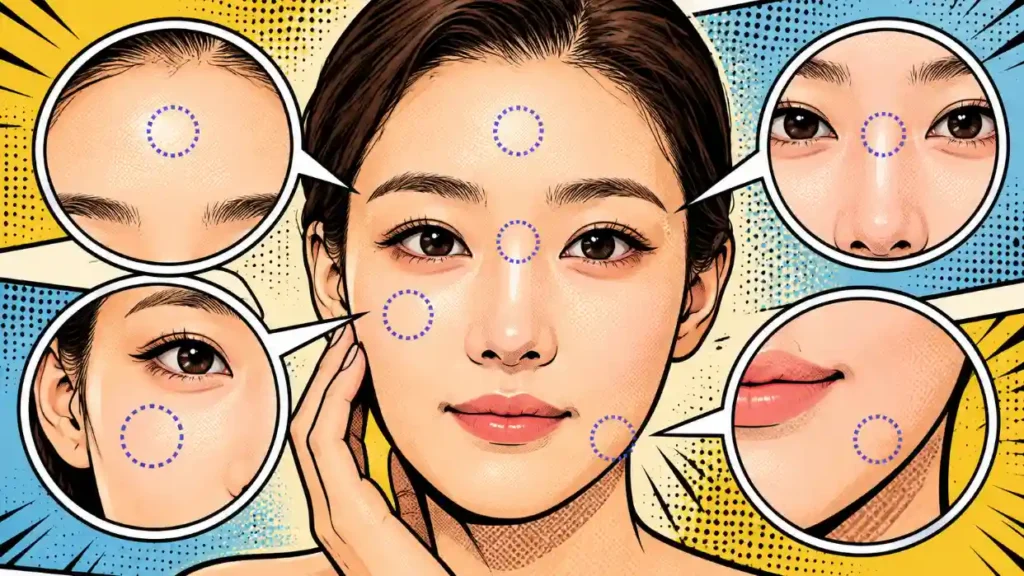
The safest and most cost-effective approach starts with identifying the actual skin condition.
For uneven pigmentation: Ask whether the problem is melasma, sun damage, post-inflammatory hyperpigmentation, or another condition. The correct diagnosis affects both treatment choice and risk.
For acne scars: Determine whether the scars are shallow, deep, rolling, or boxcar-shaped. Different scar types may require different approaches, and several sessions or combination treatments may be necessary.
For enlarged pores and uneven texture: Discuss whether the concern relates to oil production, scarring, skin laxity, or other factors. RF microneedling and fractional lasers may be options for selected patients, but suitability must be assessed individually.
For facial redness: Ask whether the redness is vascular, inflammatory, or related to irritation. Treating the wrong condition can delay improvement.
For skin laxity: Discuss the expected degree of improvement, limitations of non-surgical lifting, and whether the proposed technology matches the patient’s anatomy and goals.
A good treatment plan explains not only what may help, but also what is unlikely to work and what risks the patient should understand.
Safety Considerations for International Patients
Medical skincare is not risk-free, even when a procedure is described as non-invasive or minimally invasive.
The American Academy of Dermatology notes that laser procedures can cause burns and dark marks, with increased pigmentation-related risks for darker skin tones. It recommends working with a qualified dermatologist experienced in treating the patient’s skin type. Sun protection and a review of medications and skincare products are also important before treatment.
Before booking a procedure in Seoul, patients should:
- Provide a complete medical history. Mention allergies, current medicines, previous procedures, cold sores, skin sensitivity, and any history of abnormal scarring.
- Ask who will perform the treatment. Confirm the treating professional’s qualifications and experience with the proposed procedure.
- Confirm the exact technology and product. Ask for the device model or injectable product name rather than relying on a broad marketing term.
- Understand the risks and recovery period. Ask about pain, swelling, bruising, pigmentation changes, infection, and potential complications.
- Receive written aftercare instructions. Confirm when to resume active skincare ingredients, exercise, sun exposure, and other activities.
- Arrange follow-up care. Ask whom to contact if a complication develops after returning home.
Patients with darker skin tones or a history of pigmentation after inflammation should be particularly careful about procedures that can cause thermal injury or inflammation. Appropriate device selection, settings, and clinician experience are essential.
How to Compare Seoul Dermatology Clinics
When comparing providers, evaluate more than the headline price.
- Clinical assessment: Does the clinic evaluate your skin before recommending a procedure?
- Treatment transparency: Are the device, product, dosage, and treatment area clearly specified?
- Pricing transparency: Is the full cost disclosed, including VAT and aftercare?
- Medical credentials: Can you verify the treating professional’s qualifications?
- Communication: Can the clinic explain consent, risks, and aftercare in a language you understand?
- Follow-up arrangements: Is there a clear process for managing complications or unexpected reactions?
A clinic that provides a clear treatment plan and explains its limitations may offer better value than one that promotes a low introductory price without explaining what is included.
International patients should also verify any applicable medical-provider registration requirements and confirm arrangements for communication and follow-up before paying a deposit.
FAQs
How much do advanced medical skincare treatments cost in Seoul, Korea?
Advanced medical skincare costs in Seoul, Korea, typically range from ₩50,000 to ₩500,000 per session for many basic treatments and laser procedures. Premium treatments, including Rejuran skin boosters, Ultherapy, and Thermage, can cost ₩200,000 to over ₩3,000,000, depending on the treatment type, clinic, and treatment area.
How much does laser skin treatment cost in Korea?
Laser skin treatment costs in Korea generally range from approximately ₩70,000 to ₩500,000 per session. Laser toning, pico laser treatments, and fractional laser procedures have different prices depending on the device, treatment area, skin condition, and number of sessions required.
How much does Rejuran cost in Seoul?
Rejuran treatment in Seoul may cost approximately ₩200,000 to ₩500,000 or more per session, depending on the product, injection volume, and dermatology clinic. Patients should confirm the exact Rejuran product, dosage, VAT, and aftercare costs before booking.
Are Seoul dermatology treatment prices cheaper than in the United States?
Seoul dermatology treatment prices may be lower than comparable treatments in the United States, but costs vary by clinic, device, and treatment plan. International patients should compare equivalent procedures, treatment quantities, VAT, consultation fees, and follow-up care before making a decision.
How can international patients find affordable advanced medical skincare in Seoul?
International patients can compare advanced medical skincare costs in Seoul by requesting itemized quotations from reputable dermatology clinics. Check the doctor’s qualifications, device or product specifications, treatment area, VAT, potential side effects, and aftercare arrangements. Choose a treatment based on medical suitability and transparent pricing rather than promotional discounts alone.
Conclusion: Plan Your Medical Skincare Budget Before Visiting Seoul
Advanced medical skincare in Seoul offers a broad range of options, from basic medical facials and pigmentation-focused lasers to injectable skin boosters and premium non-surgical lifting procedures. In 2026, patients can use published clinic prices to establish a preliminary budget, but the final cost depends on the treatment specifications and medical assessment.
The best approach is to identify your primary skin concern, compare clinics using equivalent treatment details, confirm VAT and additional charges, and prioritize clinical expertise and safety over promotional pricing.
For international patients, a transparent consultation and a realistic treatment plan are essential to making an informed decision about medical skincare in South Korea.
References
- American Academy of Dermatology — Skin conditions that lasers can treat
- D&A Dermatology Clinic – Advanced Medical Skincare

Korea Med Tour – Trusted Blog for Medical Tourism in Korea
Korea Med Tour is a trusted medical tourism content platform providing accurate, research-based healthcare information for international patients considering treatment in Korea.
Our editorial team specializes in global patient guidance, treatment insights, clinic selection, and medical travel planning. All content is developed using verified medical sources and structured editorial review processes to ensure clarity, safety, and reliability.
We are committed to helping international patients make informed and confident medical travel decisions when choosing Korea as their healthcare destination.