


Korean herbal medicine for fertility is a personalized treatment approach within Traditional Korean Medicine that may support reproductive health by promoting menstrual regularity, hormonal balance, stress management, and overall wellness. It is commonly used alongside evidence-based fertility care rather than as a replacement for conventional medical treatment.
KoreaMedTour.com
Quick Summary
Korean Herbal Medicine for Fertility (2026) is a personalized approach within Traditional Korean Medicine (TKM) that supports reproductive health through customized herbal formulas, lifestyle guidance, and holistic care. Rather than replacing modern fertility treatments, it is commonly used as a complementary therapy to promote hormonal balance, menstrual regularity, ovulation, stress management, and overall reproductive wellness. South Korea’s integrative fertility clinics combine centuries of traditional practice with modern reproductive medicine, making Korean herbal medicine an increasingly popular option for both local and international patients.
Key Insights:
- Korean herbal medicine consultation: ~$50–$150 per visit
- Customized herbal medicine: ~$200–$800 per month depending on prescription
- Typical treatment duration: 3–6 months before reassessment
- Commonly combined with: Acupuncture, moxibustion, and lifestyle counseling
- Primary goals: Hormonal balance, menstrual regulation, ovulation support, uterine health, and stress reduction
- Frequently treated conditions: PCOS, unexplained infertility, irregular menstrual cycles, luteal phase defects, and stress-related fertility challenges
- Male fertility support: Individualized herbal therapy may also be prescribed to support sperm health
- IVF integration: Often used before or alongside IVF under medical supervision
- International patient services: Multilingual consultations available at many Korean medicine clinics
- Personalized prescriptions: Tailored to each patient’s symptoms, constitution, and fertility goals
Why It’s Effective & Trusted:
- Individualized treatment rather than one-size-fits-all herbal formulas
- Licensed Korean Medicine Doctors with formal medical training
- Integrated fertility care available alongside conventional reproductive medicine
- Focus on improving overall reproductive health rather than treating a single symptom
- Regulated herbal dispensaries with quality-controlled medicinal ingredients
- Growing body of clinical research supporting complementary fertility care
- Holistic management of physical health, stress, sleep, and lifestyle factors
Clinical Advantages:
- Supports menstrual cycle regularity and ovulatory function
- May improve overall reproductive wellness before conception
- Helps manage stress that may indirectly affect fertility
- Personalized treatment plans adjusted throughout the menstrual cycle
- Can complement IVF and assisted reproductive technologies under specialist guidance
- Non-surgical and minimally invasive approach
- Emphasizes long-term reproductive and general health
Best Candidates for Korean Herbal Medicine for Fertility:
- Women with PCOS or irregular ovulation
- Patients with unexplained infertility
- Individuals with irregular or painful menstrual cycles
- Couples preparing for IVF or assisted reproductive treatment
- Women seeking a holistic fertility support program
- Patients experiencing stress-related reproductive concerns
- Men seeking complementary support for reproductive health
- International patients interested in integrative fertility care in Korea
Expected Outcomes:
- Improved menstrual cycle consistency
- Better hormonal and reproductive balance
- Enhanced overall health before conception
- Reduced stress and improved emotional well-being
- Supportive preparation for assisted reproductive treatments
- Personalized fertility management based on individual health status
- Improved understanding of reproductive health through comprehensive evaluation
Bottom Line:
Korean Herbal Medicine for Fertility provides a personalized, evidence-informed, and holistic approach to supporting reproductive health. While it should not replace conventional fertility evaluation or medically indicated treatments, it may enhance overall fertility care by improving menstrual health, hormonal balance, stress management, and general wellness. With licensed practitioners, individualized herbal prescriptions, and integration into South Korea’s advanced healthcare system, Korean herbal medicine remains a trusted complementary option for couples pursuing natural fertility support in 2026.
Table of Contents

Korean Herbal Medicine for Fertility: A Natural Alternative
Many couples searching for fertility support wonder whether Korean herbal medicine can improve their chances of conception naturally. The answer is nuanced: Korean herbal medicine is not a replacement for evidence-based fertility treatments, but it may serve as a complementary approach for selected individuals. When prescribed by qualified Traditional Korean Medicine (TKM) doctors after a thorough evaluation, herbal formulas may help address menstrual irregularities, ovulatory dysfunction, stress-related reproductive issues, and overall reproductive health while working alongside conventional medical care.
Modern fertility care increasingly recognizes that successful conception depends on multiple factors—including hormonal balance, ovulation, sperm quality, uterine health, lifestyle, age, and underlying medical conditions. Korean herbal medicine aims to improve the body’s internal balance rather than targeting a single symptom, making it an attractive option for people seeking a holistic approach.
What Is Korean Herbal Medicine?
Korean herbal medicine is one component of Traditional Korean Medicine (TKM), a healthcare system that has evolved over centuries and is now integrated into South Korea’s modern medical infrastructure.
Unlike over-the-counter herbal supplements, Korean herbal prescriptions are:
- Individually customized
- Prescribed by licensed Korean Medicine Doctors
- Based on comprehensive patient assessment
- Frequently combined with acupuncture and lifestyle guidance
Rather than using one universal fertility formula, practitioners develop personalized prescriptions according to each patient’s reproductive health, menstrual cycle, constitution, and overall wellness.
How Korean Herbal Medicine May Support Fertility
Although scientific research is still developing, several biological mechanisms have been proposed to explain how certain herbal formulations may support reproductive health.
These include:
- Supporting healthy ovulation
- Improving menstrual cycle regularity
- Promoting uterine blood circulation
- Reducing chronic inflammation
- Managing stress responses
- Supporting endocrine balance
- Improving overall metabolic health
The goal is not simply pregnancy itself, but creating an environment that supports healthy reproductive function.
Understanding Fertility from a Korean Medicine Perspective
Traditional Korean Medicine views fertility as closely connected to the balance of several physiological systems rather than focusing solely on reproductive organs.
Common patterns evaluated include:
Blood deficiency
Patients may experience:
- Light menstrual flow
- Fatigue
- Pale complexion
- Dizziness
Treatment focuses on nourishing blood production.
Qi deficiency
Possible symptoms include:
- Low energy
- Poor digestion
- Frequent illness
- Reduced vitality
Therapy aims to improve overall body function and energy.
Kidney deficiency
In TKM theory, the kidneys are believed to govern reproductive function.
Patients may report:
- Delayed conception
- Irregular menstrual cycles
- Lower back weakness
- Reduced libido
Herbal formulas may be selected to strengthen this functional system according to traditional diagnostic principles.
Blood stasis
Poor circulation may contribute to:
- Painful periods
- Endometriosis-related symptoms
- Dark menstrual blood
- Pelvic discomfort
Certain herbal combinations are traditionally used to improve circulation.
Conditions That May Benefit from Korean Herbal Medicine
While herbal medicine cannot cure every fertility problem, it may be considered as part of a broader fertility plan for patients with:
Polycystic Ovary Syndrome (PCOS)
Women with PCOS often experience:
- Irregular ovulation
- Hormonal imbalance
- Insulin resistance
- Irregular menstrual cycles
Lifestyle modification, weight management, and conventional treatments remain the foundation of care, but individualized herbal therapy may be used alongside them under professional supervision.
Unexplained Infertility
When fertility evaluations show no obvious cause, supportive therapies such as Korean herbal medicine may help optimize overall reproductive health while couples continue medical evaluation.
Irregular Menstrual Cycles
Regular ovulation depends on a consistent menstrual cycle.
Some patients seek herbal medicine to improve:
- Cycle regularity
- Premenstrual symptoms
- Menstrual discomfort
Stress-Related Fertility Challenges
High psychological stress may indirectly affect fertility through hormonal pathways.
Many Korean fertility clinics combine:
- Stress management
- Acupuncture
- Herbal medicine
- Lifestyle counseling
to support overall reproductive wellness.
Can Korean Herbal Medicine Improve IVF Outcomes?
This is one of the most frequently asked questions.
Some fertility specialists in Korea offer integrative fertility programs that combine conventional assisted reproductive technologies (ART), such as IVF, with Traditional Korean Medicine.
Potential goals include:
- Supporting ovarian response
- Improving endometrial receptivity
- Managing treatment-related stress
- Enhancing overall well-being during IVF
However, current research remains mixed. While some studies suggest improvements in pregnancy rates or embryo implantation when herbal medicine is combined with IVF, others show limited or inconsistent benefits. More large-scale, high-quality clinical trials are needed before definitive conclusions can be made.
Importantly, patients undergoing IVF should never start herbal medicine without informing their reproductive endocrinologist, as certain herbs may interact with medications or require adjustment during different stages of treatment.
Common Herbs Used in Korean Fertility Medicine
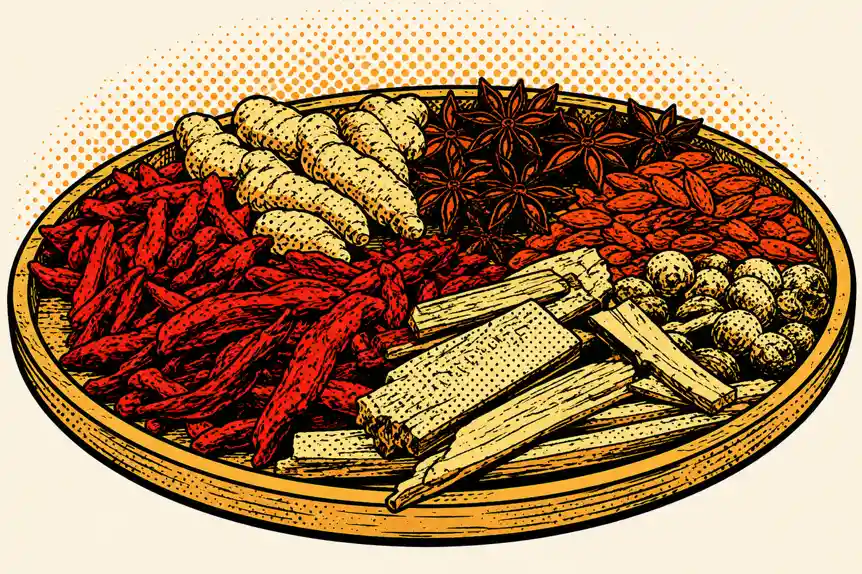
Herbal prescriptions vary considerably depending on the individual’s diagnosis. Frequently used ingredients may include:
| Traditional Herb | Traditional Purpose |
|---|---|
| Angelica gigas | Blood nourishment |
| Rehmannia root | Yin support |
| Paeonia lactiflora | Hormonal balance support |
| Astragalus | Energy support |
| Cnidium officinale | Blood circulation |
| Lycium fruit | Kidney nourishment |
| Cuscuta seed | Reproductive support |
These herbs are almost always used in combination rather than individually, with formulations tailored to each patient’s needs.
What Happens During Treatment?
A fertility consultation typically includes:
Step 1: Medical History
The doctor reviews:
- Age
- Fertility history
- Previous pregnancies
- Menstrual cycles
- Existing diagnoses
- Current medications
Step 2: Traditional Assessment
This may include:
- Pulse diagnosis
- Tongue examination
- Symptom evaluation
- Lifestyle assessment
Step 3: Personalized Herbal Prescription
Each prescription is customized based on:
- Symptoms
- Constitution
- Menstrual phase
- Fertility goals
Treatment plans are adjusted regularly as the patient’s condition changes.
Step 4: Follow-Up Monitoring
Patients are monitored every few weeks to assess:
- Menstrual changes
- Ovulation
- Side effects
- Overall progress
Conventional fertility testing may continue simultaneously.
Is Korean Herbal Medicine Safe?
When prescribed by licensed Korean Medicine doctors using regulated herbal products, treatment is generally considered safe for many patients.
However, important precautions include:
- Avoid self-prescribing herbs purchased online.
- Inform all healthcare providers about herbal medicines you are taking.
- Some herbs are not recommended during pregnancy.
- Individuals with liver disease or kidney disease require careful monitoring.
- Herbal medicines can interact with prescription medications.
South Korea maintains quality-control systems for licensed herbal dispensaries, but sourcing and regulation may differ in other countries.
What Does Scientific Research Say?
Research into Korean herbal medicine for fertility has expanded over the past decade.
Current evidence suggests:
Areas with promising findings
- Improved menstrual regularity
- Better symptom management for PCOS
- Reduced stress during fertility treatment
- Potential improvements in some IVF outcomes
Areas requiring further research
- Live birth rates
- Long-term safety
- Standardization of herbal formulations
- Large randomized controlled trials
- International multicenter studies
Major medical organizations generally conclude that herbal medicine may have a complementary role but should not replace evidence-based fertility evaluation and treatment.
Lifestyle Factors That Work Together with Herbal Medicine
Fertility outcomes often improve when herbal medicine is combined with healthy lifestyle habits.
Patients are commonly advised to:
- Maintain a healthy body weight
- Exercise moderately
- Eat a balanced diet rich in whole foods
- Prioritize adequate sleep
- Reduce smoking and alcohol consumption
- Manage stress through relaxation techniques
- Take prenatal folic acid when trying to conceive
These foundational measures have stronger evidence for improving fertility than herbal therapy alone.
Who May Consider Korean Herbal Medicine?
You may wish to discuss Korean herbal medicine with your healthcare team if you:
- Have irregular menstrual cycles
- Experience unexplained infertility
- Have PCOS alongside conventional treatment
- Wish to pursue an integrative fertility approach
- Are preparing for IVF under specialist supervision
- Prefer personalized, holistic care
Individuals with blocked fallopian tubes, severe male-factor infertility, advanced maternal age, or significant structural reproductive disorders generally require prompt evaluation by a fertility specialist, as herbal medicine alone is unlikely to address these conditions.
FAQ Section

Does Korean herbal medicine for fertility really work?
Korean herbal medicine for fertility may help support reproductive health by improving menstrual regularity, reducing stress, and promoting hormonal balance. While research on traditional Korean medicine fertility is promising, it is generally recommended as a complementary therapy alongside evidence-based fertility evaluation and treatment.
Can Korean herbal medicine improve IVF success rates?
Some studies suggest Korean herbal medicine for fertility may support IVF preparation by improving overall reproductive health and endometrial conditions. However, evidence remains mixed, and fertility herbs Korea should only be used under the supervision of both a licensed Korean Medicine doctor and a fertility specialist.
Who should consider Korean herbal medicine for fertility?
Korean herbal medicine for fertility may benefit individuals experiencing irregular menstrual cycles, PCOS, unexplained infertility, or those seeking a natural fertility treatment Korea alongside conventional reproductive care. A personalized medical evaluation is essential before beginning treatment.
Are fertility herbs in Korea safe to use?
Fertility herbs Korea are generally considered safe when prescribed by licensed Traditional Korean Medicine practitioners using regulated herbal medicines. Self-prescribing herbal products is not recommended because certain herbs may interact with medications or may not be appropriate during pregnancy.
How long should I take Korean herbal medicine for fertility?
Treatment with Korean herbal medicine for fertility typically lasts between three and six months, depending on individual health, fertility goals, and the diagnosis provided by a Traditional Korean Medicine fertility specialist. Regular follow-up appointments help ensure treatment remains safe and effective.
Key Takeaways
Korean herbal medicine offers a personalized, holistic approach that may support reproductive health for some individuals and couples, particularly when integrated with evidence-based fertility care. By focusing on menstrual regulation, overall health, stress management, and individualized treatment plans, Traditional Korean Medicine can play a supportive role in comprehensive fertility management.
Nevertheless, fertility is influenced by many complex factors, including age, underlying medical conditions, and reproductive anatomy. The strongest approach combines timely evaluation by fertility specialists, healthy lifestyle habits, and—when appropriate—carefully supervised complementary therapies. Patients considering Korean herbal medicine should consult licensed healthcare professionals and ensure that all members of their medical team are aware of any herbal treatments being used.
References
- World Health Organization (WHO). WHO Global Report on Traditional and Complementary Medicine.
- American Society for Reproductive Medicine (ASRM). Practice Committee guidelines on infertility evaluation and treatment.
- European Society of Human Reproduction and Embryology (ESHRE). Clinical Practice Guidelines.
- National Center for Complementary and Integrative Health (NCCIH). Herbal Medicine Overview.
- Korean Medicine Clinical Practice Guidelines and peer-reviewed systematic reviews on infertility and Traditional Korean Medicine (current through 2026).

Korea Med Tour – Trusted Blog for Medical Tourism in Korea
Korea Med Tour is a trusted medical tourism content platform providing accurate, research-based healthcare information for international patients considering treatment in Korea.
Our editorial team specializes in global patient guidance, treatment insights, clinic selection, and medical travel planning. All content is developed using verified medical sources and structured editorial review processes to ensure clarity, safety, and reliability.
We are committed to helping international patients make informed and confident medical travel decisions when choosing Korea as their healthcare destination.