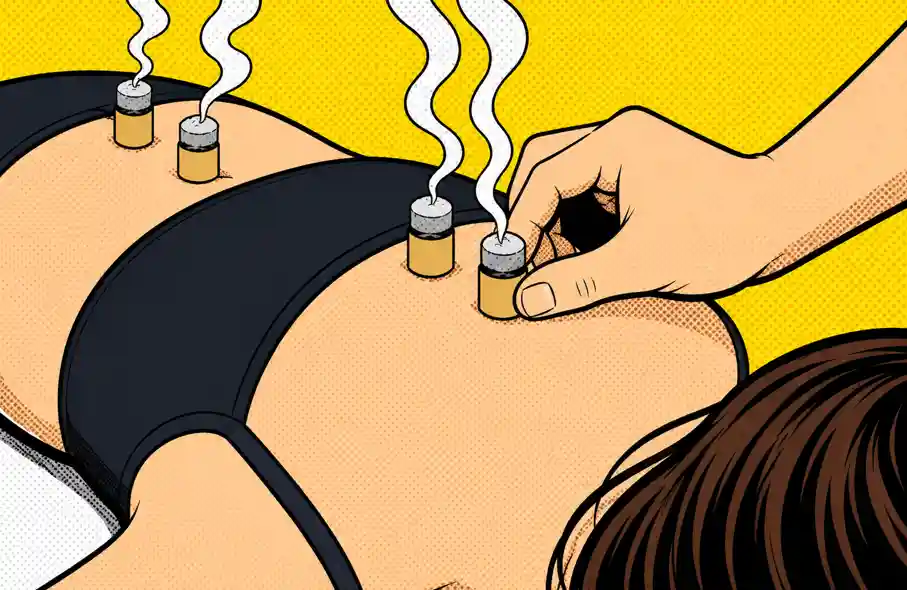

Moxibustion Therapy in Korea is a traditional Korean medicine treatment that uses the heat of burning dried mugwort to stimulate acupuncture points. It is commonly used to help relieve chronic pain, improve circulation, reduce muscle stiffness, and support rehabilitation under the care of licensed Korean medicine doctors.
KoreaMedTour.com
Quick Summary
Moxibustion Therapy in Korea (2026) combines the centuries-old principles of Traditional Korean Medicine (TKM) with modern clinical assessment to provide a safe, complementary treatment focused on pain management, circulation, and functional recovery. Rather than serving as a standalone cure, moxibustion is typically integrated with acupuncture, herbal medicine, cupping, Chuna manual therapy, and rehabilitation to create individualized treatment plans. Using the therapeutic heat of burning refined mugwort (moxa) applied near specific acupuncture points, licensed Korean Medicine Doctors aim to relieve chronic musculoskeletal pain, reduce muscle stiffness, improve blood circulation, and support the body’s natural healing response. For patients seeking non-invasive, evidence-informed complementary care, Korea remains one of the world’s leading destinations for traditional medicine integrated with modern healthcare.
Key Insights:
- Initial Korean Medicine consultation: $20–$80
- Moxibustion session: $15–$60
- Warm needle (acupuncture + moxibustion): $30–$100
- Acupuncture (commonly combined): $20–$80
- Herbal medicine per month (if prescribed): $150–$700
- Typical treatment duration: 2–8 weeks depending on the condition
- Commonly combined with: Acupuncture, herbal medicine, cupping therapy, Chuna manual therapy, physical rehabilitation, and lifestyle counseling
- Primary goals: Pain relief, improved circulation, reduced muscle stiffness, enhanced mobility, relaxation, and functional recovery
- Frequently treated conditions: Chronic low back pain, neck pain, shoulder pain, knee osteoarthritis, muscle tightness, sports injuries, digestive discomfort, and rehabilitation support
- Modern diagnosis: Medical consultation, physical examination, and imaging (X-ray or MRI) when clinically indicated
- International patient services: Many Korean Medicine hospitals provide multilingual coordinators, interpreters, and personalized treatment programs
- Clinical role: Used as a complementary therapy alongside evidence-based conventional medical care rather than a replacement
Why It’s Effective & Trusted:
- Personalized treatment plans tailored to each patient’s symptoms and medical history
- Performed exclusively by licensed Korean Medicine Doctors in South Korea
- Integrates traditional thermal therapy with modern diagnostic evaluation
- Frequently combined with acupuncture and rehabilitation for comprehensive care
- Focuses on improving function and quality of life rather than only symptom suppression
- Growing clinical research supports its role in managing selected chronic pain conditions
- Delivered in regulated healthcare facilities with standardized safety protocols
- Widely accepted within Korea’s dual healthcare system alongside conventional medicine
Clinical Advantages:
- May help reduce chronic musculoskeletal pain through therapeutic heat stimulation
- Promotes local blood circulation and muscle relaxation
- Helps decrease joint stiffness and improve flexibility
- Complements acupuncture, physical therapy, and rehabilitation programs
- Non-surgical and minimally invasive with little to no recovery time
- Individualized treatment plans address both symptoms and functional limitations
- May improve patient comfort during long-term rehabilitation
- Supports overall wellness as part of an integrative healthcare approach
Best Candidates for Moxibustion Therapy in Korea:
- Patients with chronic low back or neck pain
- Individuals with knee osteoarthritis or joint stiffness
- Adults experiencing muscle tightness or myofascial pain
- Patients undergoing rehabilitation after musculoskeletal injuries
- Individuals seeking complementary Traditional Korean Medicine treatments
- Patients interested in reducing pain without invasive procedures
- International patients exploring integrative healthcare in Korea
- Individuals medically cleared for heat-based therapy by a licensed practitioner
Expected Outcomes:
- Reduced chronic pain and muscle tension
- Improved local circulation and tissue warmth
- Greater joint flexibility and range of motion
- Enhanced comfort during rehabilitation
- Better physical function and mobility
- Relaxation and reduced muscle stiffness
- Improved quality of life when combined with comprehensive care
- Personalized long-term symptom management based on clinical progress
Bottom Line:
Moxibustion Therapy in Korea offers a safe, evidence-informed complementary treatment that blends Traditional Korean Medicine with modern clinical practice. Using controlled therapeutic heat from refined mugwort, licensed Korean Medicine Doctors help patients manage chronic pain, improve circulation, reduce muscle stiffness, and support rehabilitation through individualized care plans. Although it is not a replacement for conventional medical treatment, moxibustion has become a trusted option for patients seeking non-invasive, integrative healthcare. Supported by Korea’s internationally recognized medical standards and multidisciplinary treatment approach, it continues to be a popular choice for both local and international patients pursuing holistic pain management and functional recovery in 2026.
Table of Contents
What Is Moxibustion Therapy?
Moxibustion is a thermal therapy rooted in East Asian medicine that applies heat generated by burning processed mugwort (called moxa) to specific points on the body.
Unlike acupuncture, which stimulates tissues using fine needles, moxibustion relies primarily on therapeutic warmth. The heat is believed in traditional Korean Medicine to restore the smooth flow of Qi (vital energy) and blood while reducing internal “cold” and stagnation.
From a modern medical perspective, researchers believe that localized heat may:
- Increase superficial blood circulation
- Relax muscles and connective tissue
- Stimulate peripheral nerves
- Reduce pain sensitivity
- Promote local tissue metabolism
- Encourage relaxation responses
Although these physiological effects are plausible, the exact biological mechanisms continue to be studied.
Why Is Moxibustion Popular in Korea?
South Korea has a unique dual healthcare system where conventional Western medicine and Korean Medicine are both legally recognized.
Licensed Korean Medicine doctors complete years of professional education before treating patients with therapies including:
- Acupuncture
- Moxibustion
- Herbal medicine
- Cupping therapy
- Chuna manual therapy
- Electroacupuncture
Many Korean Medicine hospitals integrate traditional therapies with diagnostic imaging, rehabilitation medicine, and collaborative care, making Korea one of the leading destinations for patients interested in evidence-informed traditional medicine.
How Does Moxibustion Work?
Traditional Explanation
Traditional Korean Medicine describes disease as an imbalance of Qi, Blood, Yin, Yang, and organ systems.
Moxibustion is thought to:
- Warm meridians
- Improve Qi circulation
- Remove cold stagnation
- Strengthen the body’s defensive energy
- Restore functional balance
Although these concepts originate from traditional medical philosophy rather than modern biomedical science, they continue to guide treatment planning in Korean Medicine.
Modern Scientific Perspective
Current research suggests that therapeutic heat may influence several physiological systems:
Improved Blood Flow
Heat causes blood vessels to dilate, potentially increasing oxygen delivery to local tissues.
Pain Modulation
Thermal stimulation may activate nerve fibers that reduce pain perception through spinal and central nervous system mechanisms.
Muscle Relaxation
Warmth helps decrease muscle stiffness and may improve joint mobility.
Immune Regulation
Some experimental studies suggest moxibustion may influence inflammatory signaling pathways, although larger clinical trials are still needed.
Types of Moxibustion Used in Korea
1. Indirect Moxibustion
This is the most commonly used technique.
The burning moxa does not directly contact the skin.
Examples include:
- Moxa stick held above the skin
- Moxa placed on insulating materials
- Specialized moxibustion devices
This method minimizes burn risk while providing therapeutic heat.
2. Direct Moxibustion
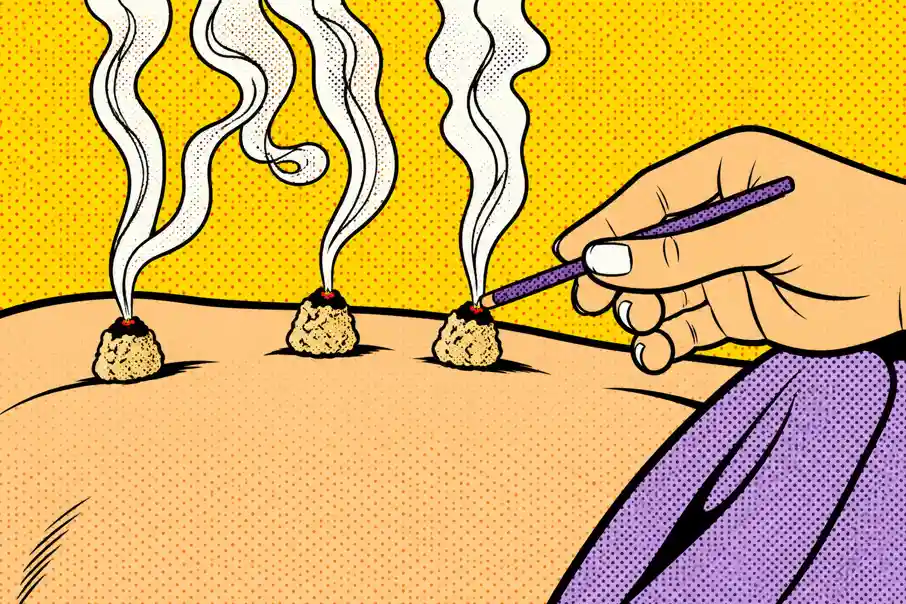
Small cones of moxa are placed directly on the skin.
Modern Korean clinics typically use extremely small amounts and carefully monitor skin temperature.
Because direct methods carry a greater risk of burns, they are less common than indirect techniques.
3. Warm Needle Therapy
Warm needle therapy combines acupuncture with moxibustion.
After acupuncture needles are inserted, a small amount of moxa is attached to the needle handle.
The generated warmth travels along the needle, providing both mechanical and thermal stimulation.
This technique is frequently used for chronic musculoskeletal conditions.
Conditions Commonly Treated
Korean Medicine practitioners may recommend moxibustion for patients experiencing:
Chronic Low Back Pain
Heat therapy may reduce muscle tension and improve mobility.
Knee Osteoarthritis
Some studies suggest modest improvements in pain and physical function when combined with exercise and rehabilitation.
Neck and Shoulder Pain
Patients with muscle tightness often receive combined acupuncture and moxibustion treatments.
Digestive Complaints
Traditional Korean Medicine sometimes uses abdominal moxibustion for:
- Functional dyspepsia
- Poor appetite
- Chronic cold sensation
- Mild digestive discomfort
Scientific evidence remains limited.
Menstrual Pain
Some women report symptom relief from moxibustion used alongside conventional treatment, although evidence quality varies.
Rehabilitation
Clinicians may include moxibustion during rehabilitation after:
- Sports injuries
- Chronic muscle strain
- Joint stiffness
- Postural disorders
What Happens During a Treatment Session?
A typical appointment includes:
Step 1: Medical Consultation
The Korean Medicine doctor evaluates:
- Symptoms
- Medical history
- Current medications
- Lifestyle
- Physical examination findings
Step 2: Treatment Planning
The practitioner identifies appropriate acupuncture points based on the patient’s diagnosis.
Step 3: Moxibustion Application
The burning moxa generates gentle warmth.
Patients usually feel:
- Comfortable heat
- Mild warmth spreading
- Muscle relaxation
Pain should not occur.
Step 4: Observation
The practitioner monitors skin temperature and patient comfort throughout treatment.
Sessions generally last between 20 and 40 minutes.
Is Moxibustion Painful?
Most patients describe the sensation as:
- Warm
- Relaxing
- Comfortable
- Mildly soothing
If excessive heat develops, the practitioner adjusts or removes the moxa immediately.
Modern Korean clinics emphasize patient safety to minimize discomfort.
Possible Benefits
Potential benefits reported in clinical practice include:
- Temporary pain reduction
- Improved joint mobility
- Reduced muscle stiffness
- Enhanced local circulation
- Relaxation
- Complementary support during rehabilitation
Results vary depending on:
- Individual condition
- Disease severity
- Overall health
- Number of treatment sessions
No therapy guarantees improvement for every patient.
Risks and Safety Considerations
Although generally considered safe when performed by trained professionals, moxibustion has potential risks.
Possible side effects include:
- Mild redness
- Temporary skin irritation
- Minor burns
- Smoke sensitivity
- Allergic reactions (rare)
Patients should immediately report excessive heat or discomfort during treatment.
Who Should Avoid Moxibustion?
Medical evaluation is particularly important for patients with:
- Reduced skin sensation
- Severe peripheral neuropathy
- Active skin infections
- Open wounds
- High fever
- Certain vascular disorders
Pregnant patients should receive treatment only after evaluation by qualified healthcare professionals, as some acupuncture points traditionally associated with labor stimulation may be avoided.
Scientific Evidence in 2026
Research on moxibustion has expanded substantially over the past decade.
Systematic reviews suggest that moxibustion may provide modest benefits for certain chronic pain conditions, osteoarthritis, and supportive symptom management. However, many published studies have limitations, including small sample sizes, inconsistent treatment protocols, and varying study quality.
Current evidence generally supports several conclusions:
| Question | Current Evidence |
|---|---|
| Does it generate therapeutic heat? | Yes |
| Can it reduce pain in some patients? | Moderate evidence for selected conditions |
| Does it replace surgery or medication? | No |
| Is it useful alongside rehabilitation? | Often recommended as complementary care |
| Are more high-quality trials needed? | Yes |
Major medical organizations continue to encourage well-designed randomized controlled trials to better determine effectiveness across different conditions.
Why International Patients Choose Korea

South Korea has become a destination for patients seeking traditional Korean Medicine because of:
- Licensed Korean Medicine doctors
- Modern medical facilities
- Integrated care models
- Advanced diagnostic capabilities
- Coordinated treatment plans
- Multilingual support at many international clinics
Patients often combine moxibustion with:
- Acupuncture
- Herbal medicine
- Physical therapy
- Exercise rehabilitation
- Lifestyle counseling
This multidisciplinary approach aims to improve overall patient outcomes.
Practical Tips Before Your First Appointment
Before receiving treatment:
- Bring your medical records if available.
- Inform your doctor about medications and supplements.
- Wear comfortable clothing.
- Eat a light meal beforehand.
- Discuss any previous burns or skin sensitivities.
- Ask questions about your personalized treatment plan.
FAQ Section

What is Moxibustion Therapy in Korea?
Moxibustion Therapy in Korea is a traditional Korean medicine treatment that uses the heat produced by burning dried mugwort near specific acupuncture points. Korean moxibustion treatment is commonly used to relieve chronic pain, improve blood circulation, reduce muscle stiffness, and support the body’s natural healing process under licensed Korean medicine doctors.
Is Moxibustion Therapy in Korea scientifically supported?
Yes. Research suggests that Moxibustion Therapy in Korea may help reduce chronic musculoskeletal pain, improve joint function, and promote circulation for certain conditions. While Korean healing therapy shows promising results as a complementary treatment, it is generally recommended alongside conventional medical care rather than as a replacement.
What conditions can Moxibustion Therapy in Korea help treat?
Moxibustion Therapy in Korea is frequently used for chronic back pain, neck pain, knee osteoarthritis, muscle stiffness, sports injuries, digestive discomfort, and rehabilitation. Licensed practitioners of traditional Korean medicine create individualized treatment plans based on each patient’s condition and overall health.
Is Korean moxibustion treatment safe for international patients?
When performed by licensed Korean medicine doctors, Korean moxibustion treatment is generally considered safe. Most patients experience only gentle warmth during treatment. Minor skin redness may occur, while burns are uncommon when modern indirect moxibustion techniques are properly used.
What should I expect during my first Moxibustion Therapy in Korea session?
Your first Moxibustion Therapy in Korea appointment usually begins with a detailed medical consultation followed by a personalized treatment plan. During the session, a Korean medicine doctor applies controlled heat using dried mugwort over selected acupuncture points to encourage relaxation, improve circulation, and complement your overall Korean healing therapy program.
Key Takeaways
Moxibustion therapy remains an important part of traditional Korean Medicine and continues to be widely practiced throughout South Korea. By applying controlled heat from burning mugwort to specific acupuncture points, practitioners aim to relieve pain, improve circulation, reduce muscle tension, and support the body’s natural recovery processes.
Modern research suggests that moxibustion may provide meaningful benefits for selected conditions—particularly chronic musculoskeletal pain—when integrated into a comprehensive treatment plan. However, it should be viewed as a complementary therapy rather than a cure-all. Receiving care from a licensed Korean Medicine doctor ensures that treatment is tailored to individual needs and delivered with appropriate safety measures.
For international patients exploring traditional healing in Korea, moxibustion offers a unique combination of centuries-old practice and modern clinical oversight, making it an option worth discussing with qualified healthcare professionals as part of an evidence-informed approach to wellness.
References
- World Health Organization (WHO). WHO International Standard Terminologies on Traditional Medicine in the Western Pacific Region.
- National Center for Complementary and Integrative Health (NCCIH). Acupuncture and Traditional East Asian Medicine.
- Cochrane Library. Systematic Reviews on Acupuncture and Related Traditional Therapies for Chronic Pain.
- Korean Medicine Clinical Practice Guidelines (2024–2026 updates).
- Journal of Integrative Medicine.
- BMC Complementary Medicine and Therapies.
- Frontiers in Medicine – Traditional, Complementary and Integrative Medicine.
- Evidence-Based Complementary and Alternative Medicine (peer-reviewed journal).

Korea Med Tour – Trusted Blog for Medical Tourism in Korea
Korea Med Tour is a trusted medical tourism content platform providing accurate, research-based healthcare information for international patients considering treatment in Korea.
Our editorial team specializes in global patient guidance, treatment insights, clinic selection, and medical travel planning. All content is developed using verified medical sources and structured editorial review processes to ensure clarity, safety, and reliability.
We are committed to helping international patients make informed and confident medical travel decisions when choosing Korea as their healthcare destination.