
An alopecia clinic in Seoul Korea provides medical evaluation and treatment for different types of hair loss, including pattern hair loss, alopecia areata, and telogen effluvium. The right clinic should diagnose the underlying cause first, explain evidence-based options, discuss risks and expected results, and provide appropriate long-term follow-up.
KoreaMedTour.com
Quick Summary
Alopecia Clinic in Seoul, Korea provides medical evaluation and treatment for different types of hair loss, including androgenetic alopecia, alopecia areata, telogen effluvium, and other scalp disorders. The appropriate treatment depends on the underlying diagnosis, hair-loss pattern, disease activity, medical history, scalp condition, treatment goals, and individual response—not simply on clinic popularity or treatment price.
Key Insights
- Alopecia clinic: A medical facility that evaluates and treats hair loss and related scalp conditions
- Androgenetic alopecia: The most common patterned form of hair loss, associated with genetic susceptibility and androgen-related follicle miniaturization
- Male pattern hair loss: Commonly presents with a receding hairline, temple recession, crown thinning, or progressive reduction in hair density
- Female pattern hair loss: Typically causes diffuse thinning over the top of the scalp, often with relative preservation of the frontal hairline
- Alopecia areata: An immune-mediated condition that can cause sudden, localized or extensive areas of hair loss
- Telogen effluvium: A form of increased hair shedding that may occur after illness, stress, rapid weight loss, nutritional problems, or other physiological triggers
- Hair-loss diagnosis: May involve medical history, scalp examination, dermoscopy, laboratory testing, and occasionally scalp biopsy
- Medical treatment: Depending on diagnosis, options may include minoxidil, finasteride, other prescription medicines, corticosteroid treatment, or systemic therapies
- Hair restoration procedures: Selected patients may consider procedures such as hair transplantation after appropriate diagnosis and assessment
- Treatment selection: Diagnosis, disease stage, follicle condition, medical history, treatment goals, and expected benefits should guide treatment decisions
- International patients: Patients visiting Seoul should arrange consultation, medical-history review, treatment planning, prescription information, and follow-up support
- Important consideration: The cheapest, newest, or most heavily promoted hair-loss treatment is not automatically the most appropriate; diagnosis, medical evidence, physician expertise, safety, and long-term management should guide the decision
Why It’s Safe & Trusted
- Hair-loss treatment should begin with an appropriate medical assessment by a qualified healthcare professional
- Consultation should evaluate the pattern, duration, and progression of hair loss together with medical history and previous treatments
- A dermatologist may use scalp examination and dermoscopy to distinguish different types of alopecia
- Blood tests may be considered when the medical history or examination suggests nutritional, thyroid, hormonal, or other systemic causes
- Scalp biopsy may be considered when an inflammatory or scarring form of alopecia is suspected
- Patients should receive clear information about the diagnosis, expected benefits, treatment limitations, possible complications, and alternatives
- Prescription medications should be selected according to the patient’s diagnosis, medical history, contraindications, and individual risk factors
- Patients should not choose an alopecia clinic solely because of exceptionally low prices, promotional claims, celebrity endorsements, or guaranteed results
- International patients should confirm how follow-up appointments, prescription management, and complication care will be handled after returning home
- Clinics should explain realistic outcomes rather than guarantee complete or permanent hair restoration
- Early and accurate diagnosis is particularly important because some forms of hair loss can become progressively difficult to reverse
- Treatment should address the underlying condition whenever possible rather than focusing only on cosmetic improvement
Clinical Advantages
- Professional hair-loss diagnosis: Helps distinguish androgenetic alopecia from alopecia areata, telogen effluvium, inflammatory scalp disease, and other causes
- Early intervention: Identifying progressive hair loss early may help preserve vulnerable hair follicles
- Personalized treatment: Medication and procedures can be selected according to diagnosis, severity, age, sex, medical history, and treatment goals
- Evidence-based medication: Established medical treatments may be considered for appropriate patients with pattern hair loss
- Scalp assessment: Dermoscopy and clinical examination can provide information that may not be visible during an ordinary visual inspection
- Treatment monitoring: Periodic evaluation can help determine whether hair shedding, density, or follicle miniaturization is changing
- Combination planning: Medical therapy may sometimes be combined with other approaches, including selected procedures or hair transplantation
- International patient coordination: Seoul clinics serving overseas patients may provide interpretation, scheduling, treatment planning, and medical documentation
- Long-term management: Chronic hair-loss conditions often require ongoing treatment rather than a single procedure
- Realistic treatment planning: A professional consultation can identify whether medication, a procedure, hair transplantation, or observation is most appropriate
- Evidence-based selection: Treatment should be based on clinical evidence and patient suitability rather than social-media trends or marketing claims
Best Candidates for an Alopecia Clinic in Seoul, Korea
- Adults experiencing gradual or sudden hair loss
- Patients with progressive thinning at the temples, hairline, crown, or top of the scalp
- Individuals noticing increased hair shedding without an obvious explanation
- Patients with localized or patchy bald areas
- Individuals concerned about female pattern hair loss or male pattern hair loss
- Patients experiencing hair loss after illness, stress, rapid weight loss, or other major physiological changes
- Individuals with scalp redness, scaling, inflammation, itching, or other symptoms accompanying hair loss
- Patients who have tried over-the-counter hair-loss products without satisfactory improvement
- Individuals considering prescription medication for pattern hair loss
- Patients considering a hair transplant who need a professional diagnosis before surgery
- International patients seeking hair loss treatment in Seoul
- Individuals who understand that hair restoration results vary according to diagnosis, follicle condition, treatment method, and individual response
- Patients who have realistic expectations regarding the timeline and limitations of hair-loss treatment
Additional medical evaluation may be particularly important for patients with sudden extensive hair loss, signs of scalp inflammation or scarring, eyebrow or eyelash loss, systemic symptoms, significant recent weight loss, or other medical factors that could influence diagnosis and treatment.
Expected Outcomes
- More accurate identification of the underlying cause of hair loss
- Reduced hair shedding when the underlying condition responds to treatment
- Slower progression of pattern hair loss in appropriately treated patients
- Preservation of existing hair follicles when treatment is started at an appropriate stage
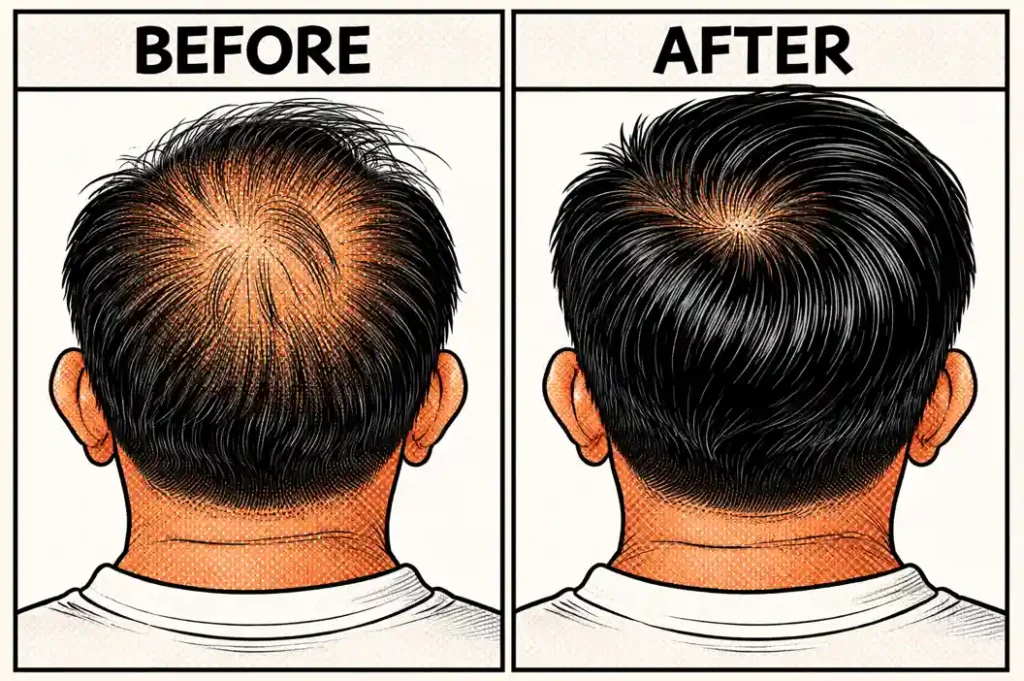
- Potential improvement in hair density or hair shaft thickness
- Regrowth in selected patients depending on the type and severity of alopecia
- Improved management of alopecia areata when appropriate medical treatment is provided
- Resolution or improvement of temporary hair shedding when an underlying trigger is identified and addressed
- Better treatment decisions through objective scalp and hair monitoring
- More appropriate selection of medication, procedures, or hair transplantation
- Results that vary according to diagnosis, treatment method, disease stage, age, genetics, medical history, and individual biological response
- Potential need for continuing treatment because some forms of hair loss are chronic
- Gradual rather than immediate improvement with many medical hair-loss treatments
Important: Hair-loss treatment cannot guarantee complete regrowth, permanent results, or identical outcomes between patients. Results depend on the underlying diagnosis, follicle condition, treatment protocol, adherence, clinician expertise, and individual biological response.
Bottom Line
Alopecia Clinic in Seoul, Korea can provide professional diagnosis and treatment for a wide range of hair-loss conditions, including androgenetic alopecia, alopecia areata, telogen effluvium, and other scalp disorders. However, the appropriate treatment depends primarily on identifying the underlying cause rather than choosing a clinic based on price or popularity.
For international patients, choosing an alopecia clinic in Seoul should not be based simply on the lowest treatment cost, the newest procedure, or the largest number of advertised services. More important considerations include physician qualifications, diagnostic capabilities, evidence-based treatment options, medication safety, treatment transparency, expected outcomes, and follow-up care.
Before traveling to Seoul, patients should prepare information about their medical history, medications, previous hair-loss treatments, family history of hair loss, recent illnesses, weight changes, and treatment objectives.
During consultation, patients should ask:
- What type of alopecia do I have?
- What is causing my hair loss?
- Do I need dermoscopy or laboratory testing?
- Do I need a scalp biopsy?
- What treatment is recommended and why?
- What are the potential side effects?
- How long will it take to evaluate the treatment?
- Will I need long-term treatment?
- What happens if the initial treatment does not work?
- How will follow-up care be managed if I return home?
The fundamental question should always be:
“What is the diagnosis, and is the proposed treatment appropriate for that specific type of hair loss?”
The best approach is to evaluate diagnostic accuracy, medical evidence, physician expertise, treatment suitability, safety, expected outcomes, cost, and long-term follow-up together.
For international patients considering an Alopecia Clinic in Seoul Korea, a qualified medical professional should determine the appropriate treatment after an individualized assessment and discussion of available alternatives.
Table of Contents
What Is an Alopecia Clinic?
An alopecia clinic is a medical facility that evaluates and treats hair loss and scalp disorders. In Seoul, these services are commonly provided through dermatology clinics, specialized hair-loss centers, and hospitals with dermatology departments.
The word alopecia simply means hair loss. It does not describe one single disease.
Hair loss can result from:
- Androgenetic alopecia (male or female pattern hair loss)
- Alopecia areata
- Telogen effluvium
- Nutritional deficiencies
- Thyroid or hormonal disorders
- Scalp infections
- Inflammatory scalp diseases
- Traction from hairstyles
- Medication-related hair loss
- Scarring alopecia
- Physical or psychological stress
- Rapid weight loss or major illness
This distinction matters because the treatment for one type of alopecia may be ineffective—or inappropriate—for another.
The American Academy of Dermatology emphasizes that effective treatment begins with identifying the cause. Dermatologists may examine the scalp and hair, perform a hair-pull test, order blood tests, or occasionally perform a scalp biopsy when the diagnosis is uncertain.
Why Consider an Alopecia Clinic in Seoul?
Seoul is one of Asia’s major medical-care centers, with extensive dermatology services and an established infrastructure for international patients.
Korea’s official Medical Korea system allows foreign patients to search for registered medical institutions and provides information about medical services. The government also operates Medical Korea Information Centers at Seoul Station and Incheon International Airport.
Korea’s international-patient system is not simply a tourism marketing program. Medical institutions seeking to attract foreign patients are subject to registration requirements, and the system includes requirements related to specialist staffing and medical malpractice liability insurance.
This gives international patients an important practical screening tool:
Before booking an alopecia treatment in Seoul, verify that the medical institution is properly registered to serve international patients when applicable.
Korea reported more than 1.17 million foreign patients in 2024, demonstrating the scale of the country’s international healthcare infrastructure. Dermatology is among the medical fields with substantial international demand.
What Type of Hair Loss Do You Have?
One of the most important questions an alopecia specialist should answer is:
“Why am I losing my hair?”
1. Androgenetic Alopecia
Androgenetic alopecia is commonly called:
- Male pattern hair loss
- Female pattern hair loss
- Pattern hair loss
- Hereditary hair loss
It is the most common form of patterned hair loss.
In men, typical signs include:
- Receding temples
- Thinning at the crown
- Gradual reduction in hair density
- Increasing visibility of the scalp
Women more commonly develop diffuse thinning over the top of the scalp while the frontal hairline may remain relatively preserved.
Treatment is generally more successful when started earlier because progressively miniaturized follicles become increasingly difficult to restore.
2. Alopecia Areata
Alopecia areata is an immune-mediated form of hair loss that can produce:
- Round or oval bald patches
- Eyebrow loss
- Eyelash loss
- Beard loss
- More extensive scalp hair loss
Unlike typical pattern hair loss, alopecia areata can develop relatively suddenly.
Diagnosis may involve scalp examination with a dermatoscope, and in selected cases blood tests or biopsy.
Treatment depends on the severity and extent of disease. Options can include corticosteroid injections, topical therapies, and systemic treatments such as JAK inhibitors for appropriate patients.
3. Telogen Effluvium
Telogen effluvium is characterized by increased shedding rather than the classic progressive pattern of androgenetic alopecia.
It can occur after:
- Significant illness
- Surgery
- Major psychological stress
- Rapid weight loss
- Childbirth
- Severe dietary restriction
- Certain medications
A patient may notice substantially more hair on the pillow, in the shower, or on a hairbrush.
Importantly, treating telogen effluvium is often about identifying and correcting the trigger, rather than immediately pursuing aggressive hair-growth procedures. Some cases resolve spontaneously after the underlying cause has been addressed.
How Does an Alopecia Clinic in Seoul Diagnose Hair Loss?
A professional consultation should be more than simply looking at the scalp for a few seconds.
A comprehensive evaluation may include:
Step 1: Medical History
The dermatologist may ask about:
- When hair loss started
- Whether shedding was sudden or gradual
- Family history
- Recent illness
- Weight changes
- Diet
- Medications
- Hormonal changes
- Pregnancy or childbirth
- Stress
- Hair-styling practices
- Previous hair-loss treatments
Step 2: Scalp Examination
The physician evaluates:
- Hair density
- Hair shaft diameter
- Miniaturized hairs
- Scalp inflammation
- Scaling
- Redness
- Scarring
- Distribution of hair loss
Step 3: Dermoscopy
A dermatoscope provides magnified visualization of the scalp and follicles.
This can help distinguish different types of alopecia and identify features that are difficult to see with the naked eye.
Step 4: Laboratory Testing
Blood tests are not automatically necessary for every patient.
They may be considered when the medical history or examination suggests:
- Iron deficiency
- Thyroid disease
- Nutritional problems
- Hormonal abnormalities
- Other systemic conditions
The AAD notes that blood testing may be appropriate when disease, vitamin deficiency, or hormonal imbalance is suspected.
Step 5: Scalp Biopsy
A biopsy is not routinely required for ordinary pattern hair loss.
However, it can be useful when a dermatologist suspects an unusual or inflammatory/scarring alopecia and needs microscopic confirmation.
Hair Loss Treatments Available in Seoul
Treatment should be selected according to the diagnosis.
Minoxidil
Topical minoxidil is one of the best-established medical treatments for androgenetic hair loss.
It can:
- Stimulate hair growth
- Improve hair density
- Slow progression in some patients
- Strengthen or maintain existing hair
However, patients should have realistic expectations.
Minoxidil does not normally restore a completely bald scalp to its original density.
Results also require patience. The AAD reports that visible improvement can take approximately 6–12 months, and continued use is generally necessary to maintain benefits.
Finasteride
Finasteride is a prescription medication commonly used for male pattern hair loss.
It works by reducing the conversion of testosterone to dihydrotestosterone (DHT), a hormone involved in follicular miniaturization in androgenetic alopecia.
Evidence supports finasteride as an effective treatment for male pattern hair loss, and it may be used alone or alongside minoxidil.
However, it is not appropriate for everyone.
Potential adverse effects can include sexual side effects and mood-related symptoms, and treatment requires individualized medical assessment. Finasteride also has important pregnancy-related precautions.
This is one reason an actual medical consultation is preferable to purchasing hair-loss medication without professional assessment.
Dutasteride
Dutasteride also inhibits the conversion of testosterone to DHT and is used in some clinical settings for androgenetic alopecia.
Its use for hair loss can differ according to country, regulatory status, physician practice, and individual circumstances.
Patients should therefore ask the Seoul dermatologist:
“Is this treatment officially approved for my indication in Korea, or is it being prescribed off-label?”
That question helps distinguish evidence-based medical care from marketing claims.
Low-Dose Oral Minoxidil
Some dermatologists use low-dose oral minoxidil for selected patients with pattern hair loss.
Although it can be convenient, oral minoxidil is a systemic medication and is not simply a stronger version of topical minoxidil.
A physician may need to consider:
- Blood pressure
- Heart history
- Fluid retention
- Dizziness
- Other medications
It should therefore be prescribed and monitored by a qualified physician.
Treatment for Alopecia Areata
Alopecia areata requires a different therapeutic strategy.
For limited patchy disease, dermatologists may use corticosteroid injections directly into affected areas. The AAD reports that, when effective, regrowth may become visible within several months.
For extensive or severe alopecia areata, systemic therapies—including JAK inhibitors—may be considered for appropriately selected patients.
The important principle is:
Do not assume that every bald patch is ordinary male or female pattern hair loss.
A rapidly appearing bald patch should be evaluated by a dermatologist.
What About PRP, Lasers, Microneedling, and Other Procedures?
Seoul has many clinics offering non-surgical hair treatments, including procedures marketed as:
- PRP
- Scalp injections
- Microneedling
- Low-level light/laser therapy
- Growth-factor treatments
- Scalp care programs
These treatments should be evaluated carefully.
The existence of a procedure does not automatically mean that it is the best treatment for your diagnosis.
For example, low-level laser devices have shown some promising findings, but the evidence base is not as established as that for standard medical therapies such as minoxidil and finasteride for androgenetic alopecia.
A useful question to ask a clinic is:
“What evidence supports this treatment for my specific type and stage of hair loss?”
A good physician should be able to explain the expected benefit, limitations, risks, number of sessions, and alternatives.
When Is a Hair Transplant Appropriate?
Hair transplantation is different from medical treatment.
A transplant moves genetically resistant hair follicles from a donor region to areas affected by hair loss.
It may be appropriate for selected patients with stable androgenetic alopecia, but it does not necessarily stop the underlying progression of hair loss.
For this reason, physicians may recommend medical management before or alongside transplantation.
A transplant is also less appropriate when the diagnosis is an active inflammatory or scarring alopecia unless the underlying disease has been adequately evaluated and controlled.
How Much Does Alopecia Treatment Cost in Seoul?
There is no single standard price for an alopecia clinic in Seoul.
The total cost can vary considerably depending on:
| Treatment | Main cost factors |
|---|---|
| Dermatology consultation | Clinic type, physician, examination |
| Dermoscopy | Whether included in consultation |
| Blood testing | Number and type of tests |
| Prescription medication | Drug, dosage, duration |
| Scalp injections | Medication and number of treatment areas |
| PRP | Number of sessions and protocol |
| Laser/light treatment | Device and treatment schedule |
| Hair transplant | Graft number, technique, surgeon, facility |
Be cautious of websites advertising a single “complete hair-loss treatment price” without explaining exactly what is included.
For international patients, request a written treatment estimate before starting a multi-session program.
How to Choose the Best Alopecia Clinic in Seoul
There is no universally “best” hair-loss clinic because the appropriate clinic depends on your diagnosis.
Instead, use this checklist.
Look for a clinic that:
- Has a qualified dermatologist or appropriate specialist.
- Performs diagnostic evaluation before recommending treatment.
- Uses dermoscopy when clinically appropriate.
- Explains the diagnosis clearly.
- Discusses both benefits and risks.
- Provides realistic expectations about regrowth.
- Explains how long treatment will take.
- Offers follow-up monitoring.
- Can provide medical records or treatment documentation.
- Has appropriate support for international patients if you are visiting Korea from abroad.
For international patients, the official Medical Korea directory can be used to verify registered institutions. Korea’s registration system is specifically designed to improve the safety and reliability of healthcare for foreign patients.
Seoul Alopecia Clinic: Questions to Ask at Your First Appointment
Before starting treatment, consider asking:
1. What is causing my hair loss?
2. Is it androgenetic alopecia, alopecia areata, telogen effluvium, or another condition?
3. Do I need blood tests?
4. Do I need a scalp biopsy?
5. What is the first-line treatment for my diagnosis?
6. How long before I should expect measurable improvement?
7. What happens if the treatment does not work?
8. What side effects should I monitor?
9. Do I need lifelong treatment?
10. What happens if I stop treatment?
11. Are the medications being used approved for my condition in Korea, or are they off-label?
12. Can you provide my diagnosis, prescription, treatment records, and photographs in English?
These questions can help you distinguish a medically driven treatment plan from a procedure-driven sales approach.
What International Patients Should Know
If you are traveling to Seoul specifically for hair-loss treatment, plan for follow-up.
This is particularly important because many hair-loss treatments require months rather than days to evaluate properly.
A short trip to Seoul may be sufficient for:
- Initial consultation
- Diagnosis
- Dermoscopy
- Laboratory testing when necessary
- Prescription
- Some injection-based treatment
But it may not be sufficient to judge final hair regrowth.
For example, minoxidil generally requires months of consistent use before its effectiveness can be meaningfully evaluated.
International patients should also request:
- Diagnosis in English
- Medication names and doses
- Treatment instructions
- Side-effect information
- Follow-up schedule
- Clinical photographs when appropriate
- Contact information for follow-up questions
The official Medical Korea Information Center provides assistance with medical-service information and reservations and offers multilingual support.
Red Flags When Choosing a Hair-Loss Clinic
Be particularly cautious if a clinic:
- Guarantees 100% hair regrowth
- Claims one treatment works for every type of alopecia
- Says medication is unnecessary for everyone
- Promises dramatic results within a few weeks
- Uses only marketing photographs instead of diagnosis
- Does not explain medication risks
- Pressures you into purchasing a large package immediately
- Cannot explain what condition you actually have
- Refuses to provide treatment records
- Makes unsupported claims about “stem cells” or “growth factors”
Hair follicles have biological limitations. A credible clinic should discuss what can realistically be improved—and what cannot.
Alopecia Clinic in Seoul Korea: What Results Should You Expect?
The realistic objective of hair-loss treatment is often stabilization plus improvement, rather than complete restoration.
For androgenetic alopecia, successful treatment may mean:
- Less shedding
- Slower progression
- Increased hair shaft thickness
- Improved coverage
- Partial regrowth
- Better preservation of existing follicles
Early treatment generally offers a better opportunity to preserve miniaturizing follicles.
For alopecia areata, the prognosis can be different because the disease can fluctuate and spontaneous regrowth can occur in some cases. Treatment therefore depends heavily on disease extent, duration, and activity.
FAQ Section

What should I look for in an alopecia clinic in Seoul Korea?
When choosing an alopecia clinic in Seoul Korea, look for a qualified dermatologist who can identify the underlying cause of hair loss before recommending treatment. A reliable hair loss clinic in Korea should provide appropriate scalp examination, explain treatment options, discuss potential risks, and offer follow-up care.
What hair loss treatments are available in Seoul?
Hair loss treatment in Seoul may include topical or oral medications, scalp treatments, injections, low-level light therapy, and hair transplantation, depending on the diagnosis. Treatments for androgenetic alopecia can differ substantially from those used for alopecia areata or telogen effluvium.
Is Seoul a good destination for alopecia treatment?
Seoul has an extensive dermatology and medical-care infrastructure, making it an attractive option for patients seeking alopecia treatment in Korea. International patients should evaluate individual physicians and clinics based on diagnostic expertise, evidence-based treatment, communication, and follow-up rather than relying solely on advertising or price.
How is hair loss diagnosed at a Seoul alopecia clinic?
A Seoul hair loss clinic may evaluate your medical history, hair-loss pattern, scalp condition, and hair density. Depending on the situation, a dermatologist may use dermoscopy and recommend laboratory tests or a scalp biopsy when clinically appropriate. Accurate diagnosis helps determine the most suitable treatment.
How long does hair loss treatment take in Korea?
The timeline for hair loss treatment in Seoul depends on the underlying condition and treatment used. Chronic pattern hair loss generally requires ongoing management and several months before results can be evaluated, while some temporary forms of hair shedding may improve after the underlying trigger is addressed.
Final Takeaway: Choosing an Alopecia Clinic in Seoul Korea
The most important decision is not choosing the clinic with the most impressive advertising—it is choosing a medical team that correctly identifies why you are losing hair.
For patients considering an alopecia clinic in Seoul, Korea, the ideal pathway is:
Diagnosis → Cause identification → Evidence-based treatment → Monitoring → Adjustment → Long-term maintenance
For androgenetic alopecia, established options such as minoxidil and finasteride can play an important role for appropriately selected patients. For alopecia areata, treatment may involve corticosteroids or systemic therapies depending on severity. Other causes require completely different approaches.
If you are an international patient, also verify the clinic’s registration status and make sure you understand the diagnosis, treatment plan, expected timeline, risks, and follow-up arrangements before paying for a package.
In short, Seoul can be a strong destination for professional hair-loss evaluation and treatment, but the safest strategy is to choose a dermatologist based on diagnostic expertise and evidence-based care—not on promotional claims alone.
References
- American Academy of Dermatology (AAD) — Hair Loss: Diagnosis and Treatment
American Academy of Dermatology – Hair Loss Diagnosis and Treatment - Medical Korea — Registered Medical Institutions for International Patients
Medical Korea – Registered Medical Institutions - Medical Korea — Information and Support for International Patients
Medical Korea – International Patient Services

Korea Med Tour – Trusted Blog for Medical Tourism in Korea
Korea Med Tour is a trusted medical tourism content platform providing accurate, research-based healthcare information for international patients considering treatment in Korea.
Our editorial team specializes in global patient guidance, treatment insights, clinic selection, and medical travel planning. All content is developed using verified medical sources and structured editorial review processes to ensure clarity, safety, and reliability.
We are committed to helping international patients make informed and confident medical travel decisions when choosing Korea as their healthcare destination.