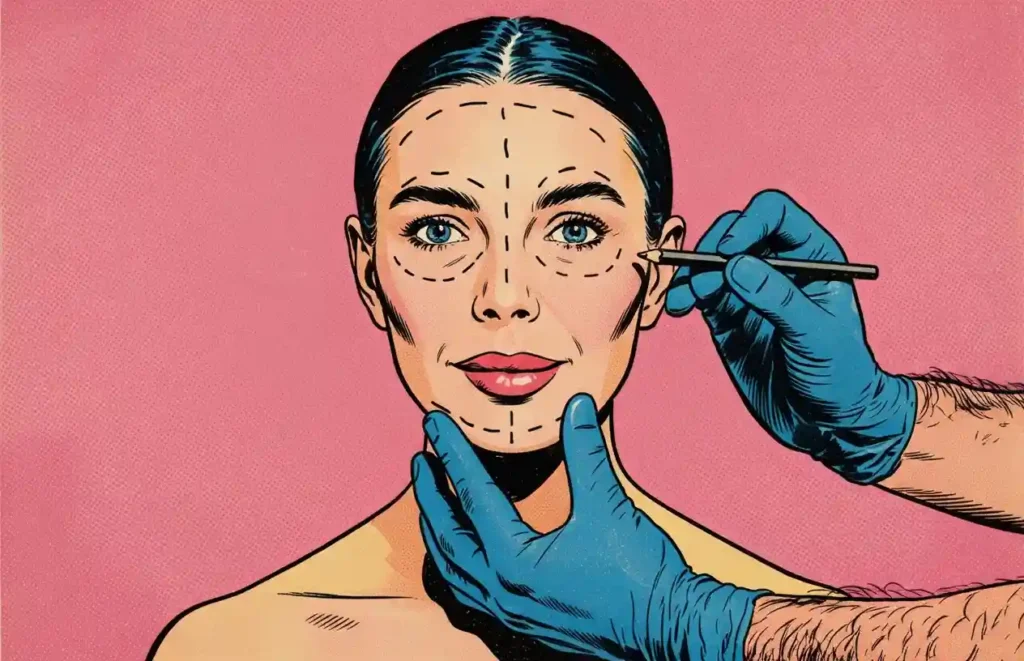
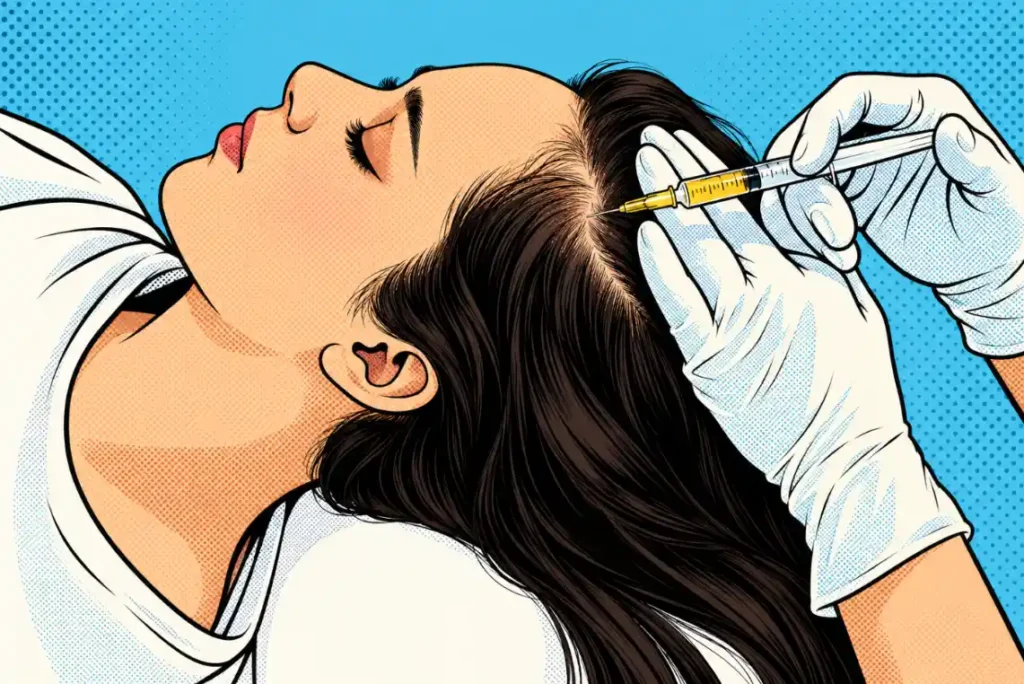

What is stem cell treatment for hair regeneration in Seoul, Korea?
KoreaMedTour.com
Stem cell treatment for hair regeneration in Seoul, Korea is an emerging regenerative approach designed to support weakened hair follicles and potentially improve hair density and thickness. Research involving stem cells, secretomes, and extracellular vesicles shows promising early results, but long-term effectiveness and standardized protocols remain under investigation.
Quick Summary
Stem cell treatment for hair regeneration in Seoul, Korea refers to emerging regenerative approaches designed to support weakened or miniaturized hair follicles and potentially improve hair density and thickness. Treatments may involve adipose-derived stem cells, stem-cell-derived secretomes, extracellular vesicles, or other regenerative preparations. The appropriate approach depends on the type and stage of hair loss, follicular condition, medical history, treatment goals, and the evidence and regulatory status of the specific treatment.
Key Insights
- Stem cell hair regeneration: An emerging regenerative approach intended to support weakened or miniaturized hair follicles
- Hair loss: Can result from androgenetic alopecia, hormonal changes, inflammation, nutritional factors, medical conditions, medications, or other causes
- Androgenetic alopecia: A common form of patterned hair loss associated with progressive follicular miniaturization
- Regenerative hair treatment: May include adipose-derived stem cells, secretomes, conditioned media, extracellular vesicles, or related biological factors
- Treatment assessment: May involve medical history, scalp examination, trichoscopy, standardized photographs, hair density assessment, and evaluation of previous treatments
- Treatment selection: Hair-loss type, stage, remaining viable follicles, medical history, treatment goals, risks, evidence, and individual response should guide treatment decisions
- Clinical evidence: Early human studies have reported potential improvements in hair density or thickness, but evidence remains developing and treatment protocols are not standardized
- Hair transplantation: Moves viable donor follicles to areas of hair loss and may be considered when substantial permanent hair loss has occurred
- International patients: Patients visiting Seoul should arrange consultation, diagnosis, treatment planning, cost information, scheduling, aftercare, and follow-up support
- Important consideration: The newest, cheapest, or most heavily promoted stem cell hair treatment is not automatically the most appropriate; diagnosis, medical evidence, physician expertise, regulatory status, safety, and realistic expectations should guide treatment decisions
Why It’s Safe & Trusted
- Hair regeneration treatment should begin with an appropriate medical assessment by a qualified healthcare professional
- Consultation should identify the type, distribution, duration, progression, and potential cause of hair loss
- A dermatologist or hair-restoration specialist may distinguish androgenetic alopecia, diffuse hair loss, alopecia areata, inflammatory scalp conditions, scarring alopecia, and other causes
- Treatment should consider the patient’s age, medical history, current medications, scalp condition, previous hair-loss treatments, and treatment goals
- Patients should be informed whether the proposed treatment uses live stem cells, stem-cell-derived secretome, extracellular vesicles, conditioned media, or another biological preparation
- Patients should ask what scientific evidence supports the exact treatment protocol being offered
- Patients should receive clear information about expected benefits, treatment limitations, possible side effects, downtime, and alternatives
- Regenerative treatment should not automatically replace established hair-loss treatments such as medically appropriate medication or hair transplantation
- Patients should be cautious about guaranteed hair regrowth, permanent results, dramatic before-and-after claims, or unsupported claims about “100% regeneration”
- International patients should confirm how follow-up appointments, medication management, and complication care will be handled after returning home
- Clinics should explain realistic treatment expectations rather than guarantee permanent or complete hair restoration
- Patients should understand that hair growth is gradual and meaningful evaluation may require several months
- Treatment selection should be based on clinical evidence, patient suitability, safety, and appropriate medical assessment rather than social-media trends or marketing claims
Clinical Advantages
- Professional hair-loss diagnosis: Helps distinguish androgenetic alopecia, diffuse thinning, alopecia areata, inflammatory conditions, and other causes
- Individualized treatment planning: Treatment can be selected according to hair-loss type, follicular condition, medical history, previous treatment, and individual goals
- Follicular assessment: Trichoscopy and standardized photographs can help evaluate miniaturization and remaining viable follicles
- Regenerative treatment assessment: A specialist can determine whether an emerging regenerative approach is clinically appropriate
- Risk assessment: Professional evaluation can identify medical or scalp conditions that require treatment before regenerative procedures
- Evidence-based treatment: Established medications and surgical options may be considered alongside or instead of regenerative approaches when clinically appropriate
- Combination planning: Regenerative treatment may be discussed as part of a broader hair-restoration strategy when appropriate
- Treatment monitoring: Periodic evaluation can assess changes in hair density, hair thickness, scalp condition, and treatment response
- Long-term planning: Hair-loss management may require maintenance treatment because underlying androgenetic or other progressive conditions can continue
- International patient coordination: Seoul clinics serving overseas patients may provide interpretation, scheduling, treatment planning, medical documentation, and follow-up coordination
- Realistic treatment planning: A professional consultation can determine whether regenerative therapy, medication, hair transplantation, combination treatment, or continued observation is appropriate
- Evidence-based selection: Treatment should be based on clinical evidence and patient suitability rather than device popularity, celebrity promotion, or marketing claims
Best Candidates for Stem Cell Hair Regeneration in Seoul, Korea
- Adults concerned about gradual hair thinning or hair loss
- Patients with early or moderate androgenetic alopecia
- Individuals with miniaturized but potentially viable hair follicles
- Patients experiencing diffuse hair thinning
- Individuals who want professional evaluation before beginning regenerative hair treatment
- Patients considering regenerative medicine as part of a broader hair-restoration strategy
- Individuals who have previously tried conventional hair-loss treatment but want to discuss additional options
- Patients considering stem cell-derived, secretome, or extracellular-vesicle-based hair treatments
- International patients seeking hair regeneration treatment in Seoul
- Patients who want to understand whether regenerative therapy, medication, hair transplantation, or combination treatment is appropriate
- Individuals who understand that treatment results vary according to hair-loss type, follicular condition, treatment method, adherence, and individual biological response
- Patients who have realistic expectations regarding treatment timelines, downtime, maintenance, and possible treatment limitations
Additional medical evaluation may be particularly important for patients with sudden, rapidly progressing, patchy, painful, inflamed, or scarring hair loss, because the underlying condition may require a different diagnostic and treatment approach.
Expected Outcomes
- More accurate identification of the type and cause of hair loss
- Improved assessment of hair follicle density and miniaturization
- Potential improvement in hair density in selected patients who respond to regenerative treatment
- Potential improvement in hair shaft thickness in some patients
- More appropriate selection of regenerative therapy, medication, hair transplantation, or combination treatment
- Better understanding of factors that may contribute to ongoing hair loss
- Improved long-term hair-loss management through professional assessment and monitoring
- Potential improvement in the appearance of thinning areas when viable follicles respond to treatment
- Better treatment decisions through objective baseline photographs and follow-up assessment
- Reduced likelihood of inappropriate treatment selection
- Results that vary according to hair-loss type, follicular condition, treatment protocol, medical history, adherence, and individual biological response
- Potential need for maintenance treatment because some forms of hair loss can continue to progress
- Gradual rather than immediate changes with many hair-regeneration treatments
- Possible temporary redness, swelling, tenderness, bruising, or other local reactions depending on the procedure performed
Important: Stem cell hair regeneration cannot guarantee permanent hair regrowth, complete restoration of lost hair, or identical outcomes between patients. Results depend on the underlying hair-loss condition, follicular viability, treatment protocol, medical evidence, clinician expertise, adherence, and individual biological response.
Bottom Line
Stem Cell Treatment for Hair Regeneration in Seoul, Korea is an emerging area of regenerative medicine that may help support weakened or miniaturized hair follicles in selected patients. Current approaches may involve stem cells, stem-cell-derived secretomes, extracellular vesicles, or other biological factors. However, the evidence and treatment protocols are still developing.
For international patients, choosing a Seoul hair-regeneration treatment should not be based simply on the lowest cost, newest technology, or strongest promotional claims. More important considerations include physician qualifications, accurate hair-loss diagnosis, follicular assessment, evidence supporting the specific treatment, regulatory status, treatment safety, realistic outcomes, and follow-up care.
Before traveling to Seoul, patients should prepare information about their medical history, current medications, previous hair-loss treatments, allergies, scalp conditions, cosmetic procedures, and treatment objectives.
During consultation, patients should ask:
- What type of hair loss do I have?
- What is causing or contributing to my hair loss?
- Are my hair follicles still viable in the thinning areas?
- Is regenerative hair treatment appropriate for my condition?
- What type of stem cell or regenerative preparation is being used?
- Are live stem cells being administered?
- Is the treatment based on stem cells, secretome, extracellular vesicles, or another preparation?
- What clinical evidence supports this specific treatment?
- Is the treatment approved or being provided as part of an authorized clinical research program?
- What are the potential risks and side effects?
- How many treatment sessions may I need?
- When should I expect measurable changes?
- What is the estimated total treatment cost?
- Will I need maintenance treatment?
- Could medication or hair transplantation be more appropriate?
- How will follow-up care be managed if I return home?
The fundamental question should always be:
“What type of hair loss do I have, and is the proposed regenerative treatment appropriate for my specific condition?”
The best clinical approach is to evaluate diagnostic accuracy, medical evidence, physician expertise, treatment suitability, follicular condition, regulatory status, safety, expected outcomes, cost, downtime, and long-term maintenance together.
For international patients considering stem cell treatment for hair regeneration in Seoul, Korea, a qualified medical professional should determine the appropriate treatment after an individualized assessment and discussion of available alternatives.
Table of Contents
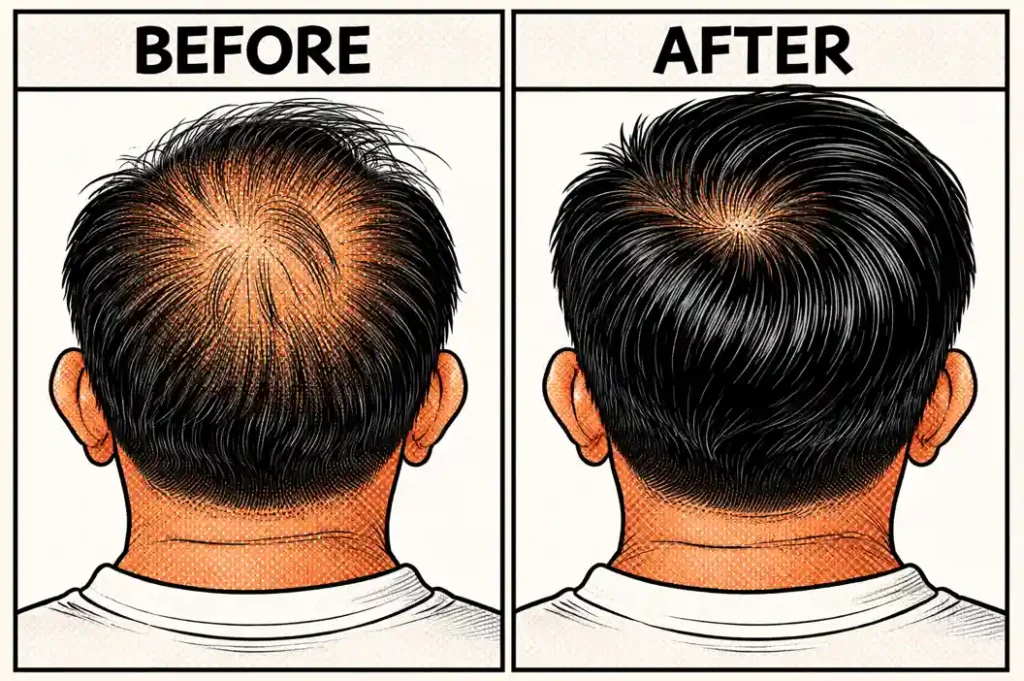
What Is Stem Cell Hair Regeneration?
Stem cell hair regeneration refers to regenerative approaches designed to influence the biological environment around hair follicles.
Unlike a traditional hair transplant, which moves existing follicles from one part of the scalp to another, regenerative treatments attempt to support the function of existing but weakened follicles.
Several approaches are described in scientific literature:
- Adipose-derived stem cells (ADSCs)
- Adipose-derived stem cell secretome
- Stem-cell-conditioned media
- Extracellular vesicles or exosome-related preparations
- Cell-derived growth factors and signaling molecules
- Experimental cell-based follicular regeneration
The terminology can be confusing because clinics sometimes use “stem cell,” “exosome,” “secretome,” “growth factor,” and “regenerative therapy” interchangeably. These are not necessarily the same treatment.
That distinction is critical when comparing clinics in Seoul.
How Could Stem Cells Affect Hair Growth?
Hair follicles are dynamic structures that cycle through different phases:
- Anagen — active growth
- Catagen — transition
- Telogen — resting
- Exogen — shedding
In androgenetic alopecia, genetically susceptible follicles gradually become smaller through a process called follicular miniaturization.
The resulting hairs become:
- thinner,
- shorter,
- less pigmented,
- and eventually difficult to see.
The theoretical goal of regenerative medicine is to modify the follicular microenvironment and encourage follicles to remain or return to a more productive growth state.
Research has identified several biological pathways of interest, including signaling involving Wnt/β-catenin, vascular growth factors, dermal papilla activity, inflammation, and cellular communication.
A 2026 systematic review of adipose-derived mesenchymal stem-cell secretome research reported that experimental studies have shown effects on dermal papilla cells and hair-cycle signaling, while preliminary clinical studies have reported improvements in hair density and shaft thickness. The authors nevertheless emphasized that clinical evidence remains heterogeneous.
A simplified way to understand the concept
Conventional hair transplantation:
Donor follicle → moved → bald/thinning area
Regenerative approach:
Existing weakened follicle → biological stimulation/support → potentially improved follicular activity
These approaches can also be complementary in selected patients.
Who May Consider Regenerative Hair Treatment?
The potential target population is generally different from someone with completely inactive or permanently destroyed follicles.
A person may be considered for regenerative therapy when they have:
- Early or moderate androgenetic alopecia
- Diffuse thinning
- Miniaturized follicles that remain present
- Reduced hair density
- Some response to conventional treatment but inadequate cosmetic improvement
- A desire to explore regenerative options before or alongside transplantation
Early intervention matters because once follicles become severely miniaturized or permanently destroyed, restoring substantial hair density becomes more difficult. The American Academy of Dermatology notes that treatment started earlier in hereditary hair loss can help preserve follicles and improve the opportunity for regrowth.
However, not every type of hair loss should be treated with a regenerative procedure.
Sudden shedding, patchy alopecia, inflammatory scalp disease, nutritional deficiencies, thyroid disorders, medication-related shedding, and scarring alopecia require appropriate diagnosis first.
The AAD emphasizes that identifying the underlying cause is the first step in treating hair loss.
What Does the Evidence Show?
One of the most important developments is that regenerative hair research is moving from laboratory studies toward controlled human trials.
A randomized controlled study published in 2025 investigated autologous adipose-derived adult stem cells in women with female pattern hair loss. The study included 33 participants and reported improvements in hair thickness, hair count, and hairs per follicular unit at 12 and 24 weeks. The researchers also observed changes in markers associated with the hair-growth cycle.
Another randomized, double-blind, vehicle-controlled study evaluated an adipose-derived stem cell constituent extract in androgenetic alopecia. Among 38 randomized participants, the treatment group showed greater changes in hair count and hair diameter over 16 weeks than the control group.
There is also research specifically connected to South Korean dermatological research. A 2024 study involving researchers and dermatology institutions in Korea examined adipose stem-cell-derived exosomes in hair regeneration and investigated both biological mechanisms and clinical outcomes.
These findings are scientifically interesting, but they should not be interpreted as proof that every commercial “stem cell hair treatment” offered in Seoul produces the same results.
Why?
Because treatments may differ in:
- Cell source
- Cell processing
- Cell concentration
- Whether live cells are used
- Whether secretome or extracellular vesicles are used instead
- Injection technique
- Treatment frequency
- Combination therapies
- Patient selection
- Follow-up period
Consequently, evidence for one preparation cannot automatically be transferred to another commercial product.
Stem Cells vs. Exosomes vs. Secretome
This is one of the most important distinctions for international patients.
| Treatment | Basic concept | Evidence status |
|---|---|---|
| Stem-cell-based therapy | Uses cells or cell-derived preparations | Emerging |
| ADSC secretome | Uses biologically active substances released by stem cells | Emerging |
| Conditioned media | Contains factors produced by cultured cells | Experimental/emerging |
| Exosome/extracellular-vesicle therapy | Uses cellular signaling vesicles | Emerging |
| Minoxidil | Medication affecting hair growth | Established |
| Finasteride | DHT-related medication for appropriate patients | Established |
| Hair transplantation | Moves existing follicles | Established surgical treatment |
The terminology used in advertising should therefore be examined carefully.
For example, “stem cell therapy” does not automatically mean that live stem cells are injected into the scalp.
A clinic should be able to explain exactly what material is being administered.
How Is Stem Cell Hair Treatment Performed in Seoul?
Protocols vary between medical institutions, but an evaluation commonly begins with a scalp and hair assessment.
Step 1: Diagnosis
A physician should determine:
- Type of alopecia
- Pattern of thinning
- Duration of hair loss
- Family history
- Previous treatments
- Scalp condition
- Medication history
- Relevant medical conditions
Trichoscopy or other photographic measurement can help document follicular density and miniaturization.
Step 2: Establish a baseline
Good clinical documentation may include:
- Standardized scalp photographs
- Hair density measurements
- Hair shaft thickness
- Trichoscopy
- Hair-pull assessment where appropriate
- Laboratory testing when clinically indicated
Step 3: Determine treatment suitability
The physician should discuss whether conventional treatment, regenerative treatment, transplantation, or a combination is appropriate.
Step 4: Administration
Depending on the protocol, the material may be delivered through scalp injections or another localized application technique.
The exact procedure should be explained before treatment, including the source and processing of the biological material.
Step 5: Follow-up
Hair does not regenerate overnight.
Meaningful assessment generally requires standardized follow-up rather than judging the result immediately after treatment.
How Long Does Hair Regeneration Take?
Hair biology is slow.
Patients should be cautious about clinics promising dramatic changes within days or a few weeks.
Clinical research has reported measurable changes over periods such as 12–24 weeks, but individual response varies.
A practical monitoring schedule may include:
Baseline → 1 month → 3 months → 6 months → longer-term assessment
Photographs should be taken under similar:
- lighting,
- camera angle,
- hair length,
- hairstyle,
- and scalp conditions.
This is especially important because hairstyle and lighting can create the appearance of improvement or worsening.
What Are the Risks?
Regenerative medicine should not be considered risk-free simply because a product is described as “natural,” “autologous,” or “stem-cell-derived.”
Potential risks depend heavily on the actual product and procedure.
Possible concerns include:
- Pain or tenderness
- Swelling
- Redness
- Bleeding
- Infection
- Inflammatory reactions
- Allergic or immune reactions
- Unexpected tissue effects
- Contamination during processing
- Lack of treatment response
Regulatory authorities have also warned consumers about inadequately studied regenerative products. The U.S. FDA specifically notes that unapproved stem-cell and exosome products can carry risks and that marketing claims may exceed available evidence.
This does not mean that all regenerative medicine research is unsafe. It means patients should distinguish carefully between an appropriately regulated clinical study and a commercial treatment making broad claims without adequate evidence.
What About Stem Cell Hair Treatment Regulations in Korea?
This is particularly relevant to medical tourists.
South Korea has a legal framework governing advanced regenerative medicine. Under the Advanced Regenerative Medicine and Advanced Biopharmaceuticals Safety and Support Act, designated regenerative medicine institutions conducting advanced regenerative medicine clinical research must undergo the applicable review and approval processes. Current Korean law also contains requirements concerning informed consent and, for applicable studies, safety monitoring and long-term follow-up.
The Ministry of Food and Drug Safety has also described requirements surrounding designated regenerative-medicine institutions, research plans, and review procedures.
Therefore, an international patient should ask a Seoul clinic:
“Is this treatment an approved medical procedure, or is it being provided as part of an authorized clinical research program?”
That single question can reveal important information about the treatment’s regulatory status.
Is Stem Cell Hair Regeneration Better Than Minoxidil or Finasteride?
There is no scientifically justified universal answer.
Established treatments have substantially longer clinical histories.
For example, the American Academy of Dermatology identifies topical minoxidil as an established treatment for several forms of hair loss. It can reduce hair loss and stimulate some regrowth, although results take time and treatment generally needs to continue to maintain benefits.
Finasteride is another established treatment for appropriate male patients with androgenetic alopecia. The AAD reports that it can slow further hair loss and may produce some regrowth, while also emphasizing that potential adverse effects should be discussed with a dermatologist.
Regenerative treatments are better viewed as an emerging category, rather than a proven replacement for established therapy.
In some clinical strategies, regenerative approaches may eventually become part of a broader treatment plan that includes medication, scalp procedures, and transplantation.
Stem Cell Therapy vs. Hair Transplantation
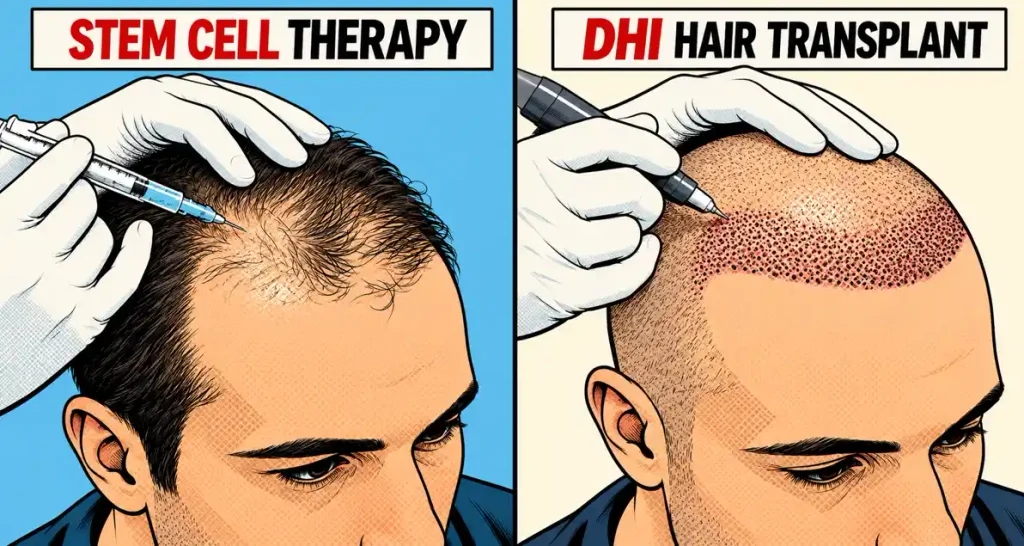
The two procedures solve different problems.
Regenerative treatment
Potential objective:
Improve the performance of existing weakened follicles.
Potential advantage:
- Minimally invasive compared with transplantation
- May be considered earlier in the course of thinning
- Does not require moving a large number of follicles
Limitation:
- Cannot reliably recreate a completely absent donor follicle
- Evidence remains developing
- Results can vary substantially
Hair transplantation
Objective:
Move viable follicles from a donor area to areas of hair loss.
Potential advantage:
- Provides actual follicular relocation
- Established surgical technique
- Can create substantial cosmetic improvement in appropriately selected patients
Limitation:
- Surgical procedure
- Limited donor supply
- Requires careful planning
- Does not necessarily stop ongoing native-hair miniaturization
For advanced baldness, regenerative therapy should therefore not automatically be presented as an alternative to transplantation.
How to Choose a Seoul Clinic for Hair Regeneration
International patients should evaluate the medical protocol, not just the clinic’s marketing.
Ask these questions before paying a deposit:
1. What exactly is being injected?
Ask for the precise terminology and product description.
2. Are these live stem cells?
Or is it:
- secretome,
- conditioned media,
- extracellular vesicles,
- exosomes,
- growth-factor preparation,
- or another product?
3. What is the source?
For example:
- autologous adipose tissue,
- another human source,
- cultured cells,
- or a manufactured biological preparation.
4. What evidence supports this exact protocol?
Ask for peer-reviewed human clinical studies rather than laboratory research alone.
5. How are outcomes measured?
Look for objective measurements rather than only before-and-after photographs.
6. What are the known risks?
A credible medical consultation should discuss risks as well as potential benefits.
7. What happens if there is no response?
Ask whether the physician recommends conventional treatment, transplantation, observation, or another approach.
8. What follow-up is provided?
International patients should know who will monitor their results after returning home.
A Practical Example for an International Patient
Consider a 45-year-old man visiting Seoul with gradual crown thinning.
Rather than immediately receiving a regenerative injection, a medically responsible process would first establish whether the patient has androgenetic alopecia and determine how much miniaturization remains.
If substantial numbers of miniaturized follicles are still present, the physician might discuss conventional therapy and emerging regenerative options.
If the patient has extensive permanent baldness with limited remaining follicles, transplantation may need to be discussed instead.
The key point is that the diagnosis determines the treatment strategy—not the popularity of the procedure.
FAQ Section

What is stem cell treatment for hair regeneration in Seoul, Korea?
Stem cell treatment for hair regeneration in Seoul, Korea is an emerging regenerative therapy intended to support weakened or miniaturized hair follicles. Depending on the protocol, treatment may involve adipose-derived stem cells, stem-cell-derived secretomes, extracellular vesicles, or related biological factors. Clinical evidence is promising but still developing.
Does stem cell hair treatment in Seoul actually regrow hair?
Stem cell hair treatment in Seoul may improve hair density or thickness in some patients, particularly when viable but weakened follicles remain. Early clinical studies have reported encouraging results, but outcomes vary and current evidence does not establish guaranteed or permanent hair regrowth.
Who is a good candidate for hair regeneration treatment in Korea?
Candidates for hair regeneration treatment in Korea may include people with early or moderate androgenetic alopecia, diffuse thinning, or miniaturized follicles that remain active. A dermatologist should first identify the cause and stage of hair loss before recommending regenerative therapy.
What is the difference between stem cell and regenerative hair therapy in Seoul?
Regenerative hair therapy in Seoul is a broader term that can include stem cells, secretomes, conditioned media, growth factors, and extracellular vesicles. “Stem cell treatment” does not necessarily mean that live stem cells are injected. Patients should ask the clinic exactly what biological material is being used.
Is stem cell hair regeneration better than hair transplantation in Korea?
Stem cell hair regeneration and hair transplantation in Korea address different aspects of hair loss. Regenerative therapy aims to support existing weakened follicles, while transplantation moves viable donor follicles to areas of thinning or baldness. The appropriate approach depends on the patient’s diagnosis, follicular condition, degree of hair loss, and treatment goals.
Final Takeaway: Stem Cell Hair Regeneration in Seoul in 2026
Stem cell–based hair regeneration is a promising but still developing area of hair-loss medicine. Research involving adipose-derived stem cells, secretomes, conditioned media, and extracellular vesicles has produced encouraging signals regarding hair density, thickness, and follicular activity. Recent clinical studies provide more human evidence than was available several years ago, but treatment protocols remain heterogeneous and larger, longer-term studies are needed.
For someone considering stem cell treatment for hair regeneration in Seoul, Korea, the most important factors are:
- Correct diagnosis of the type of hair loss
- Assessment of remaining viable follicles
- Clear identification of the biological product being used
- Evidence supporting the specific protocol
- Appropriate Korean regulatory status
- Transparent discussion of risks
- Objective baseline and follow-up measurements
- A realistic comparison with established treatments
- A long-term treatment strategy rather than a single procedure
Most importantly, “stem cell” should not be treated as a guarantee of hair regrowth. In 2026, the scientifically responsible position is that regenerative hair treatments are an active and promising field of research, while established therapies and hair transplantation continue to have a more mature evidence base for appropriately selected patients.
For medical tourists visiting Seoul, a consultation with a qualified dermatologist or hair-restoration specialist should therefore begin with diagnosis and treatment planning, not with the assumption that regenerative therapy is automatically the best option.
References
- Ministry of Food and Drug Safety (MFDS), Republic of Korea. Regulations on Procedures and Methods for Approval of High-Risk Advanced Regenerative Medicine Research Plans. The regulation establishes procedures for reviewing and approving high-risk advanced regenerative medicine research plans.
MFDS – High-Risk Regenerative Medicine Research Approval - Ministry of Food and Drug Safety (MFDS), Republic of Korea. Advanced Regenerative Medicine and Advanced Biopharmaceuticals Safety and Support Act. MFDS information describes Korea’s framework for advanced regenerative medicine, including designated institutions and review and approval procedures for clinical research.
MFDS – Advanced Regenerative Medicine Framework

Korea Med Tour – Trusted Blog for Medical Tourism in Korea
Korea Med Tour is a trusted medical tourism content platform providing accurate, research-based healthcare information for international patients considering treatment in Korea.
Our editorial team specializes in global patient guidance, treatment insights, clinic selection, and medical travel planning. All content is developed using verified medical sources and structured editorial review processes to ensure clarity, safety, and reliability.
We are committed to helping international patients make informed and confident medical travel decisions when choosing Korea as their healthcare destination.